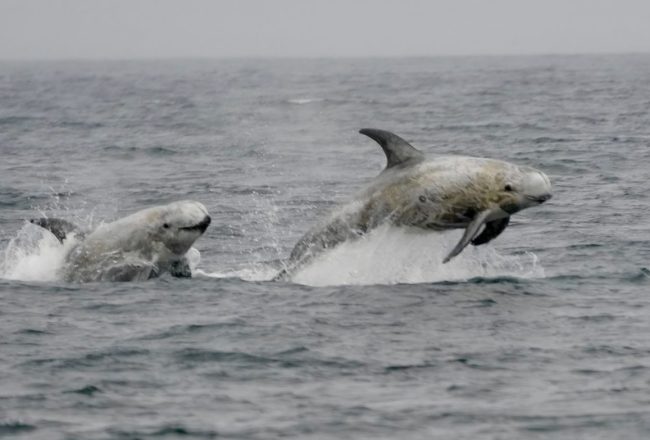
21 Dolphins Taken Captive as Taiji Hunts Begin
 10Sep
10Sep
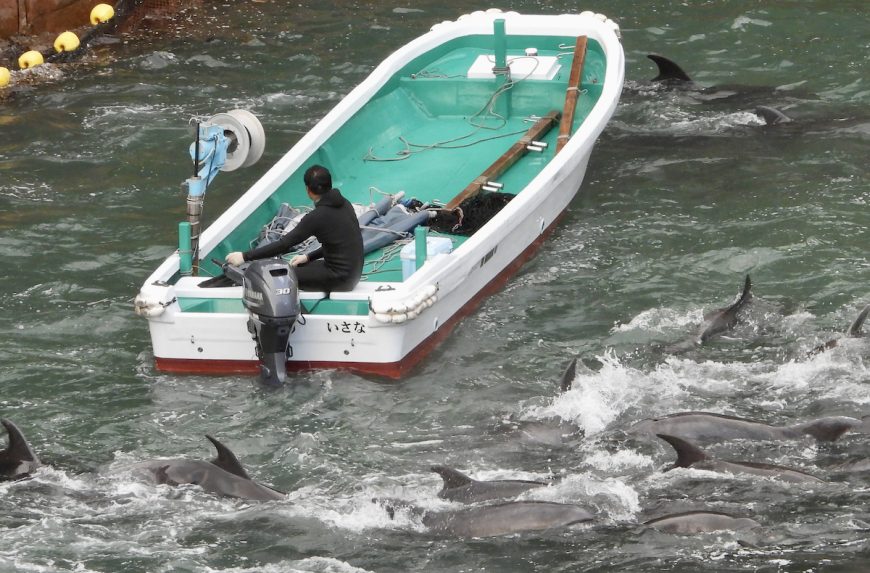
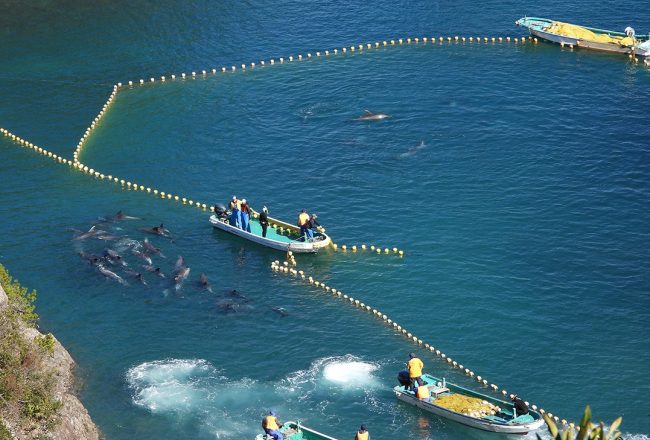
Taiji, Japan: On September 1, the first day of the dolphin hunting season, hunters located a large pod of bottlenose dolphins swimming in the waters off Taiji. The dolphins were chased toward shore by banger boats and, amidst confusion, chaos and fear, the pod was eventually driven into the Cove, where nets were closed behind them.
Over the next two days, each member of the pod was separated, inspected and evaluated. The reason? To choose suitable mammals for aquariums and marine parks. By the time the captive selection process was over, 21 bottlenose dolphins had been taken from the wild. Twenty-one dolphins who, only days earlier, had been swimming freely with their families, in a wild, aquatic world they are uniquely designed to thrive in. And the days afterward? The dolphins refused food. Japanese activists witnessed trainers repeatedly tossing dead fish into the tanks, only to pull them back out with handheld nets.
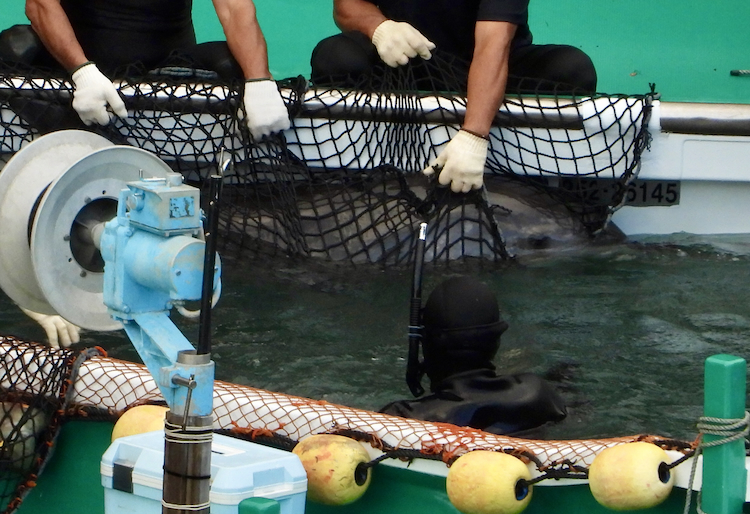
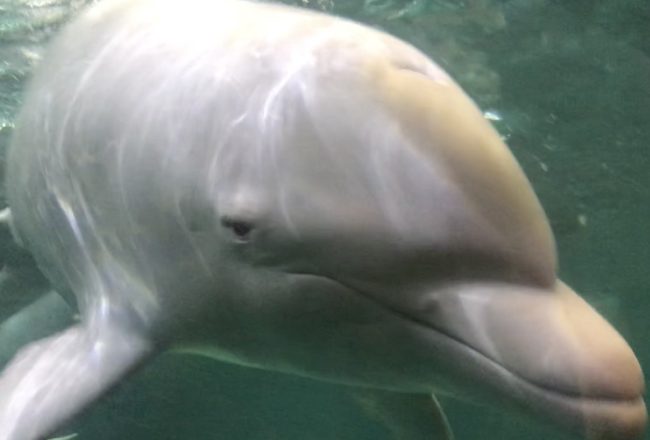
Once a member of a pod, and now, a victim: bottlenose dolphin selected for captivity, Taiji, Japan. Credit: Rikako Fukumoto
Bottlenose dolphins, with their familiar “friendly” appearance and ability to be trained, are most frequently selected for captivity. But behind the dolphin smile lies a highly aware and intelligent being. Wild dolphins routinely travel vast distances, choose whom to associate with, spend considerable time foraging and navigate a constantly changing environment. To place them in manmade confinements and remove their ability to make decisions and choices can only be classed as cruelty. To witness such displays is not entertaining.
And when the show is over?
For captive dolphins, there is no “going home” after the performance. Depending on the facility, dolphins may be moved to holding or back pools, remain in their primary pool, undergo additional training or husbandry sessions, be fed, or simply spend the remaining hours between shows circling their enclosures. Their entire lives from the moment they are captured, or born in captivity are controlled by human caretakers.
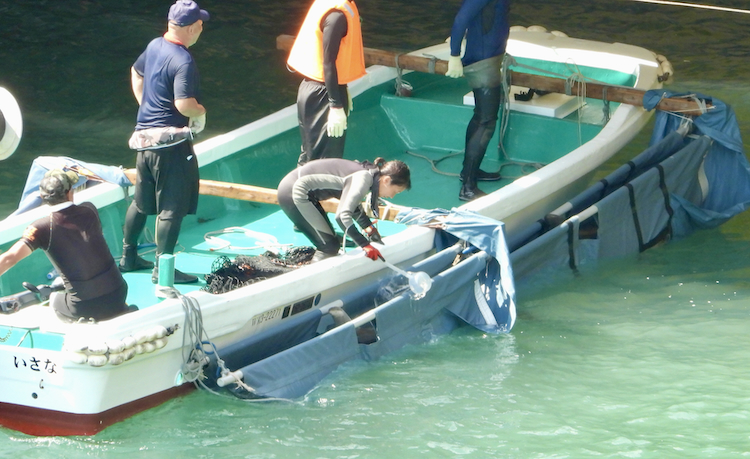
Bottlenose dolphin after being caught from the wild is selected for “life” in captivity, Taiji, Japan. Credit: Rikako Fukumoto
For over two decades, Dolphin Project has worked tirelessly to expose the reality behind dolphin captivity and the brutal hunts that supply wild-caught dolphins to the captive entertainment industry. From placing Cove Monitors on the ground to document the drives, captures and slaughters to share this information with the world, to financing legal actions challenging aspects of the drive hunts, including quotas and the species targeted, our efforts are constantly evolving. We also continue to support local Japanese activists in their efforts to raise awareness throughout Japan.
Related:
Beyond the Cove: How Captivity Sustains the Hunts
How You Can Help
➡️ LEARN MORE about Dolphin Project’s campaign in Taiji, Japan.
➡️ Pledge NOT to buy a ticket to a dolphin show.
➡️ CONSIDER MAKING A DONATION: Legal actions take a great deal of time and resources, including challenging certain aspects of the drive hunts, such as quotas and the species captured and slaughtered. We must also continue to raise funds to put people on the ground in Taiji and pursue new and future legal actions and lawsuits. Dolphin Project also supports Japanese activists working to raise awareness throughout Japan, as well as those who travel to Taiji to bear witness and speak out against the hunts. There is always more work underway. Please consider making a donation in support of our efforts to end the dolphin hunts.
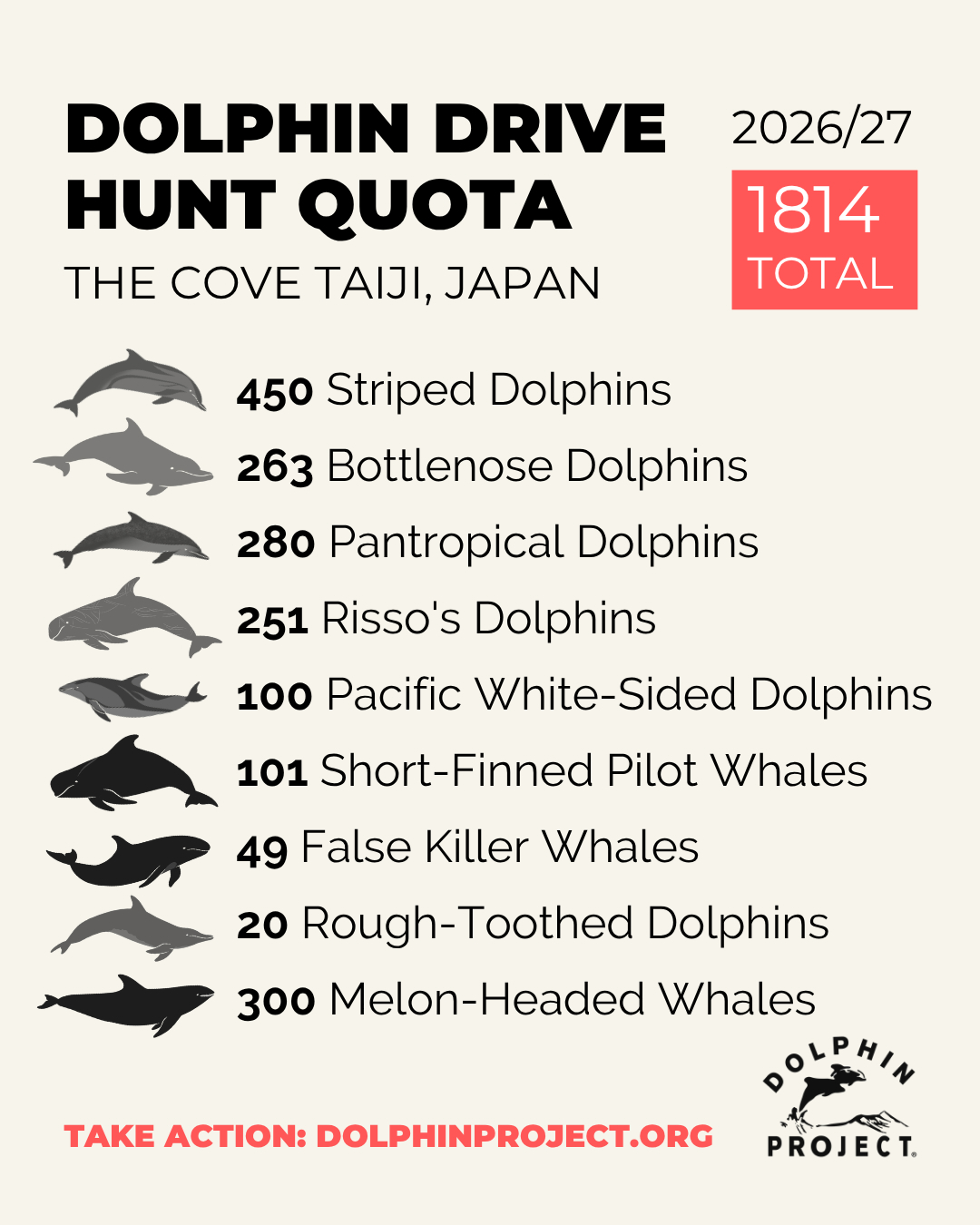
2026-27 Taiji, Japan Dolphin Hunting Quota
Featured image: On the first day of the 2026-27 dolphin hunts, a large pod of bottlenose dolphins was found and driven into the Cove, Taiji, Japan. Credit: Rikako Fukumoto

Related posts
Beyond the Cove: How Captivity Sustains the Hunts
From Freedom to Circles: Angel’s Story