Another Damning USDA Miami Seaquarium Inspection
 07Feb
07Feb
Update 2/9/24: As reported by the Miami Herald, Miami Seaquarium has lost its accreditation from American Humane’s animal welfare certification, leaving the facility in violation of its lease with Miami-Dade county. According to Seaquarium’s website, the only remaining certification is from the Alliance of Marine Mammal Parks and Aquariums (AMMPA). However, as per the terms of the lease, the facility requires a minimum of two certifications by AMMPA and by American Humane, or a similar third-party validated program. Miami-Dade Mayor Daniella Levine Cava has stated that county lawyers are attempting to meet with Seaquarium’s lawyers to discuss next steps. More to follow.
Update 1/9/24: In a follow-up inspection by the United States Department of Agriculture Animal and Plant Health Inspection Service (USDA), several critical problems cited during previous inspections still exist.
—————
Broken bolts in a dolphin’s mouth, noxious odors permeating the air in parrots’ housing, a sea lion refusing food due to eye pain — these are the latest findings in a United States Department of Agriculture Animal and Plant Health Inspection Service (USDA) report — and they are devastating.
The report, dated October 16, 2023 was obtained via the Freedom of Information Act. As unbelievable as this sounds, it would appear conditions for the animals housed at the facility have gotten worse. From this report, one of the most disturbing findings is that the attending veterinarian (AV) made the determination that certain actions needed to be taken, however the facility did not follow through with these actions. Without adequate medical care, animals can suffer — and it seems many at Miami Seaquarium are.
“At the same time Miami Seaquarium was touting that Lolita was receiving the best medical care possible before her untimely death, the complete opposite seems to be true for many of the animals confined at the facility. This is the type of damning medical report you would expect from facilities in third and fourth world countries. It’s my opinion that The Dolphin Company should not be allowed to care for any animals under any circumstance. It’s time for Miami to end this nightmare and cancel the Seaquarium’s lease and retire all the animals.” ~ Lincoln O’Barry, Dolphin Project
Amongst the latest findings:
- Medical records for multiple animals state that the veterinarian was unable to perform necessary diagnostics as the facility no longer had access to an ultrasound, radiography, or endoscopy. It was also noted that there was no access to a functioning anesthesia machine for emergencies.
- “Sushi”, an adult female California sea lion was in so much pain from delayed cataract surgery that she completely refused to eat. At the time of inspection, cataract surgery had still not been scheduled. Allegedly, she was euthanized in January 2024.
- An ultrasound exam was needed for “Onyx”, a male bottlenose dolphin but there was no ultrasound available.
- Radiographs or CT scans were needed to be performed on “Ringo” and “Cayman”, two male bottlenose dolphins to confirm that had no active infections, but no imaging was available.
- For five years, no full annual physical exams had been performed on the three adult manatees held at the facility, because the facility had not provided scales that could be used in these enclosures.
- “Zo”, a dolphin housed at Flipper Stadium, was kicked in the mouth by a member of the public during an animal encounter.
- “Ripley”, a dolphin housed at Flipper Stadium presented to trainers with a two-inch nail, mangrove pods, and small pieces of shell in his throat. Another dolphin, “Bimini” on a separate occasion, presented to trainers with a broken bolt in her mouth.
- A section on the facility’s perimeter fence where barbed wire is on top was drooping.
- At the time of inspection at the facility’s vet clinic, there were a large number of ants present on and inside the cabinet housing vitamins and supplements used for the marine mammals. The staff stated that they had arrived that morning to find ants all over the front room of the clinic, which they cleaned to the best of their abilities.
- “Romeo”, an adult male manatee, at the time of inspection, was still being housed alone in Pompano Pool 1.
- In the Tropical Wings section, there were multiple indoor and outdoor metal enclosures that showed evidence of excessive rust.
- In the indoor enclosure housing 9 penguins, there was an excessive accumulation of moisture condensation on the ceiling. This led to numerous spots of black growth as well as areas of bubbling and peeling paint that was starting to droop down into the enclosure.
- In the trailer that provides indoor housing for 11 parrots, there was a strong noxious odor permeating the air. This odor was present even after the trailer had been cleaned.
- In the enclosure housing 29 flamingos, there was an area of poor drainage along the water feature where the ground had eroded, containing stagnant, murky water with green algae growing in it. Bugs were also seen gathered along the edges of this muddy area.
Read the USDA Inspection Report dated 1/9/24.
Read the USDA Inspection Report dated 10/16/23.

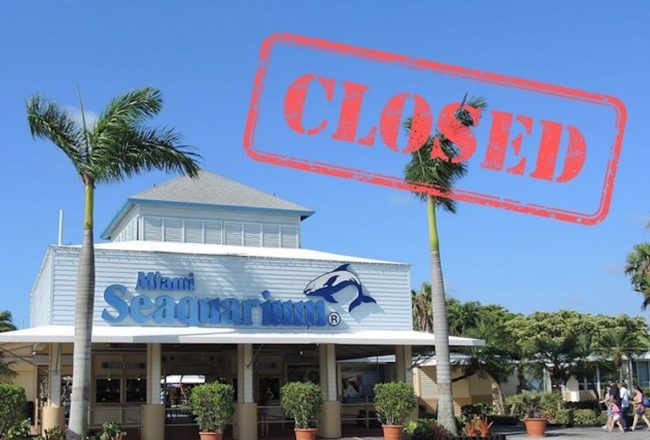
Miami Seaquarium. Credit: DolphinProject.com
The time is NOW to retire the animals at Miami Seaquarium!
“A dead sea lion with cataracts, a two inch nail in a dolphin’s throat, a broken bolt in a dolphin’s mouth, a dolphin kicked in the face by a guest, no ultrasound, no endoscope, and stagnant murky water with algae. This inspection took place just two months after the death of Tokitae, also known as Lolita. Based on this report, and several preceding it, the attending veterinarian appeared unable to provide adequate care — and this is unacceptable. Toki and the rest of the animals deserve better. Shame on the county, the mayor, USDA, and the veterinarians.” ~ Dr. Jenna Wallace, DVM, a veterinarian at the Miami Seaquarium who was briefly employed until July 2021, and present during the June 2021 inspection of the facility.
On January 21, 2024, Miami-Dade Mayor Daniella Levine Cava sent a letter to the management of Miami Seaquarium, stating that the County is “…[pursuing] the termination of the Amended and Restated Lease Agreement.” The letter describes the County’s “…deep-seated concerns regarding the quality of care provided to the animals at the Seaquarium.” Citing “…multiple and repeated instances of animal welfare violations” as documented by the United States Department of Agriculture (USDA), the letter states that “…the Lessee has failed to promptly rectify these matters, culminating in the issuance of a Notice of Intent to Confiscate four animals by the USDA.” (This is the first time in three decades that the USDA has taken such an action with regards to marine mammals.)
YOUR HELP IS URGENTLY NEEDED — TAKE ACTION NOW:
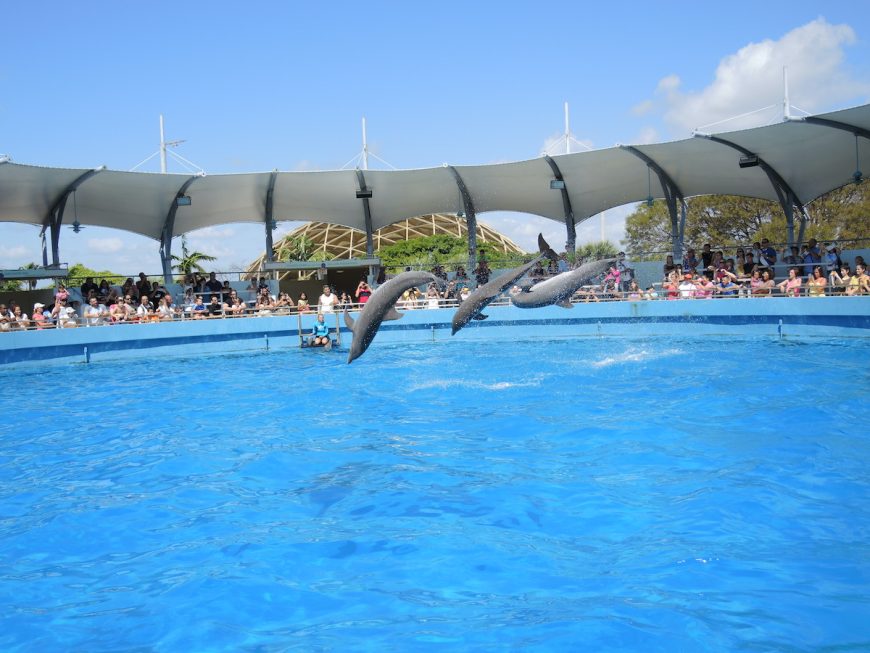
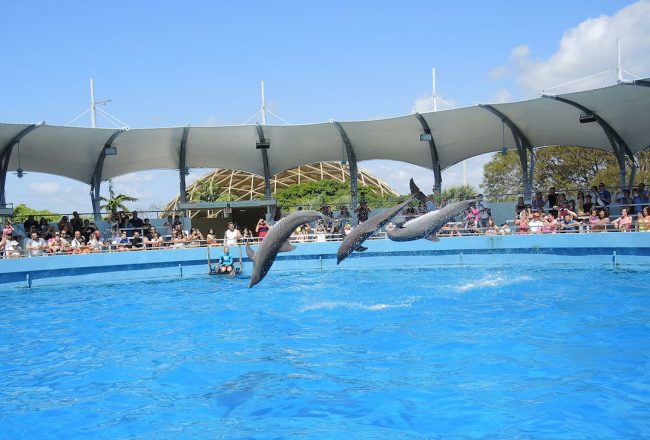
Featured image: Performing dolphins at Miami Seaquarium. Credit: Creative Commons Attribution-Share Alike 3.0 Unported license; user: Pietro

Related posts
Marineland Gets Conditional Approval to Export Mammals
One Dolphin’s Story: Bimini