Are Captive Dolphins Being Abandoned?
 09Jul
09Jul
A number of social media posts about seemingly abandoned dolphins in tanks have been going viral. This has led to a multitude of questions: Are these animals actually abandoned? Why is no one confiscating them? Why aren’t there more retirement and rehabilitation sanctuaries for dolphins and other whales?
While Dolphin Project advocates for the immediate rescue of all captive cetaceans — either into proper sanctuaries where they can retire in peace and dignity, or readapted into their original home range (where feasible), the majority of these dolphins are under corporate ownership.
Captive dolphin facilities and the local governments are ultimately the parties responsible for the welfare of the animals, and a confiscation cannot be done without express legal permission. As an example, in Bali we were able to confiscate Rocky, Rambo, Johnny and Dewa in partnership with the local government. Dolphin Project has been a part of a number of other dolphin rehabilitation cases, and an imperative key to making these become a reality is the cooperation of authorities.
The biggest hurdle to ending dolphin and other whale captivity is opposition from the multi-billion dollar industry that holds these animals captive for profit. Although they often try to flip the script and blame activists, animals trapped in captivity are a problem the industry itself has created.
Are dolphins in Mexico being abandoned after the new anti-captivity laws?
A historic legal reform recently happened in Mexico, including banning the keeping of marine mammals in concrete tanks, and banning their breeding. These reforms indicate that the current generation of captive dolphins will be the last in Mexico. These are massive steps towards the goal of ending dolphin captivity, in a country where captive dolphins have been exploited as tourist attractions for decades.
Part of the legal reform also requires that the remaining captive dolphins be moved out of concrete tanks to sea pens within 18 months. There has been no indication that these dolphins will be “abandoned.” The dolphinariums that currently keep them will still be responsible for their care upon their move to sea pens. This is still an active situation, and we are in close contact with the Empty The Tanks Mexico team regarding the approximately 350 captive dolphins in Mexico. We will be sure to share updates and any calls to action.

The dolphinarium at Hotel Barceló in the Riviera Maya is now closed. Credit: Federal Attorney for Environmental Protection (PROFEPA), Mexico
What about the orcas and dolphins at Marineland d’Antibes?
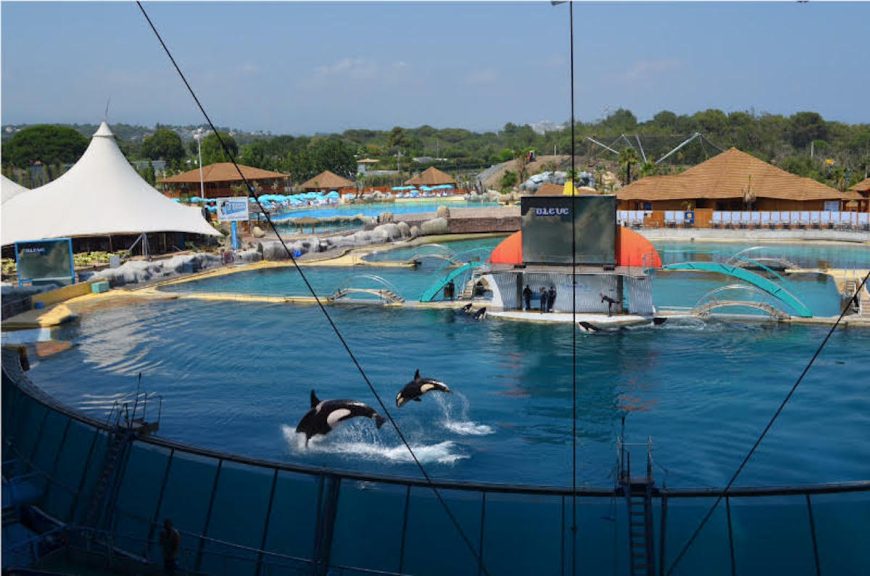
Marineland d’Antibes in France, where two orcas and 12 bottlenose dolphins remain incarcerated, is closed to the public. The condition of the tanks have raised alarms. Last year, an orca named Inouk died a painful death after swallowing a piece of metal. Concerns are high for something like this happening again. As the animals are still in danger, we urge authorities in France to act quickly. Trainers and staff at the facility are still on-site feeding the animals every day. While the animals have not been abandoned, they should not be left to live out their lives in concrete tanks. Dolphin Project continues to offer support to a number of other groups within France advocating for these orcas and bottlenose dolphins.
Can more dolphin and whale sanctuaries be established?
It is often falsely spread by the captivity industry that cetaceans can never successfully be reintroduced into their natural habitat. Dolphin Project Founder/Director Ric O’Barry has pioneered readaptation for captive dolphins across the world, and has successfully demonstrated that it is possible to return captive dolphins to their original home range under the proper circumstances. Dolphin Project is actively engaged in scouting potential sites for future sanctuary facilities in locations around the globe to serve as permanent homes for captive dolphins who cannot safely return to the wild. This is no small feat, as many factors must be considered, including: site location, access to a source of fish, pollution and temperature concerns, protection from storms, as well as the legal regulations and negotiations.
In September 2019, BKSDA Bali Forestry Department in Bali, Indonesia and the Ministry of Forestry initiated the idea for a first ever permanent dolphin rehabilitation, release and retirement facility for formerly performing dolphins. Working with local partners Jakarta Animal Aid Network, with Dolphin Project providing the financial support and supervision, the team built the Umah Lumba Rehabilitation, Release and Retirement Center in Bali. Rocky, Rambo and Johnny, three dolphins confiscated from the Melka Hotel from the same region, underwent rehabilitation here.
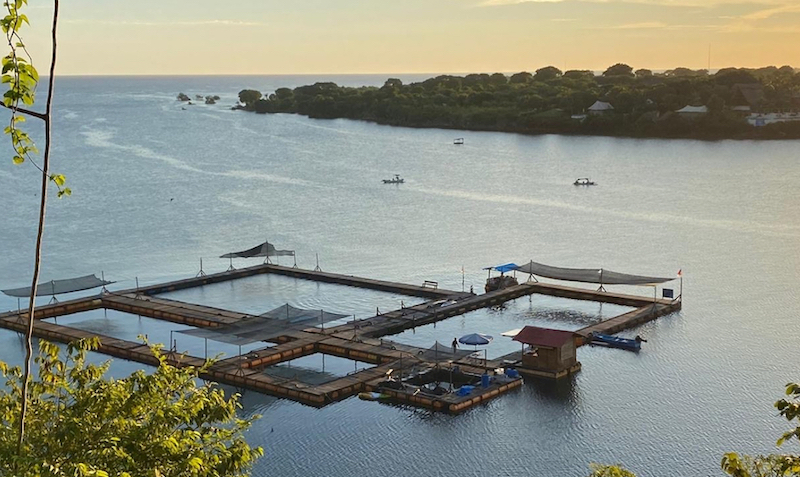
Umah Lumba Center, West Bali, Indonesia. Credit: DolphinProject.com
There is urgency, but there is also hope
While we continue our efforts to convince authorities that non-releasable dolphins should be allowed to retire in real ocean sanctuaries, it is also important to not lose sight of the bigger picture.
In recent years, massive steps of progress have been made to phase out cetacean captivity. Thanks to collective activism, 80+ dolphinariums have closed or never opened. Bans or restrictions on captive breeding in Mexico, Canada and other parts of the world will prevent countless future generations of dolphins from a lifetime of exploitation. Dolphin and other whale captivity is finally waning in some parts of the world, and it’s up to all of us to keep the pressure on to continue turning the tide.
What can be done to help?
Your voices matter! One important action you can take is to contact your local lawmakers and ask that they help protect dolphins through bans on dolphin and other whale captivity. Discussions should also take place regarding the establishment of ocean sanctuaries, where former show dolphins can live out their lives without ever again having to entertain humans.
Featured image: Marineland d’Antibes in France. Credit: Mai Li O’Barry


Related posts
Beyond the Cove: How Captivity Sustains the Hunts
Concrete in a Dolphin’s Mouth After Transfer