Beyond the Cove: How Captivity Sustains the Hunts
 24Aug
24Aug
Every year, the waters off Taiji, Japan, become the setting for a practice that has drawn international concern for decades.
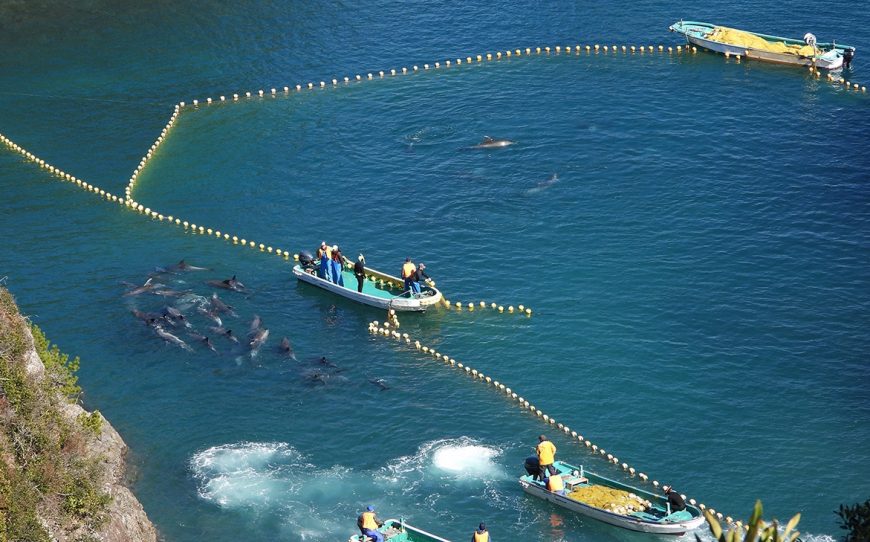
During Taiji’s dolphin hunting season, which typically spans from September until March, boats leave the harbor in search of migrating pods. When dolphins are found, hunters drive them toward the coastline and into the shallow waters of the Cove. There, families are separated, dolphins killed, and others selected alive for captivity.
For much of the world, the reality of what happens in this small Japanese coastal town first came into focus through The Cove, the Academy Award-winning documentary that exposed Taiji’s dolphin hunts to an international audience. More than sixteen years after the film brought unprecedented attention to the Cove, the hunts continue.
One of the most important reasons to keep raising awareness about Taiji is a connection that can easily be overlooked: the relationship between the hunts and the global captive dolphin industry.

Imagine one day swimming wild and free. And the next, having your freedoms taken away, Taiji, Japan. Credit: DolphinProject.org
When a pod is driven into the Cove, not every dolphin faces the same fate.
Some may be killed. Others may eventually be released. And some – often young dolphins considered suitable for training and display – may be selected for the captive dolphin industry. For those animals, being spared from slaughter often means a lifetime of suffering.
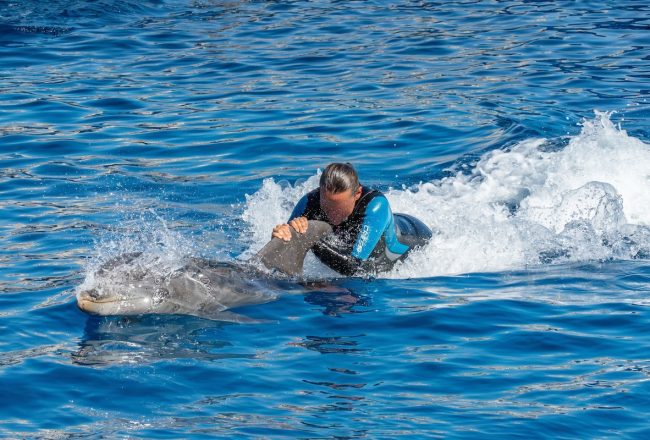
A wild dolphin selected for captivity is separated from its pod and the ocean environment it has known since birth. Instead of traveling through open waters alongside other dolphins, this once free-roaming mammal may ultimately spend its life confined in an artificial environment, used for entertainment, or human interaction.
Dolphin Project Cove Monitors document a dolphin hunt in Taiji, Japan. Credit: DolphinProject.org
The international demand for dolphins used in marine parks, dolphin shows and interactive attractions provides a strong economic incentive for live capture. This is why the fight against dolphin captivity and the fight to end Taiji’s hunts cannot be separated. As long as people are willing to pay to see dolphins perform, swim with them or interact with them in captivity, there will be a market for obtaining dolphins to supply these facilities.
But that also means we have the power to help change it.
By refusing to buy tickets to dolphin shows, swim-with-dolphin programs and other attractions that exploit dolphins for entertainment, we reduce the demand that helps keep this industry alive.
The future we are fighting for is one where dolphins are no longer captured, traded or confined for our entertainment – but remain wild, where they have always belonged.
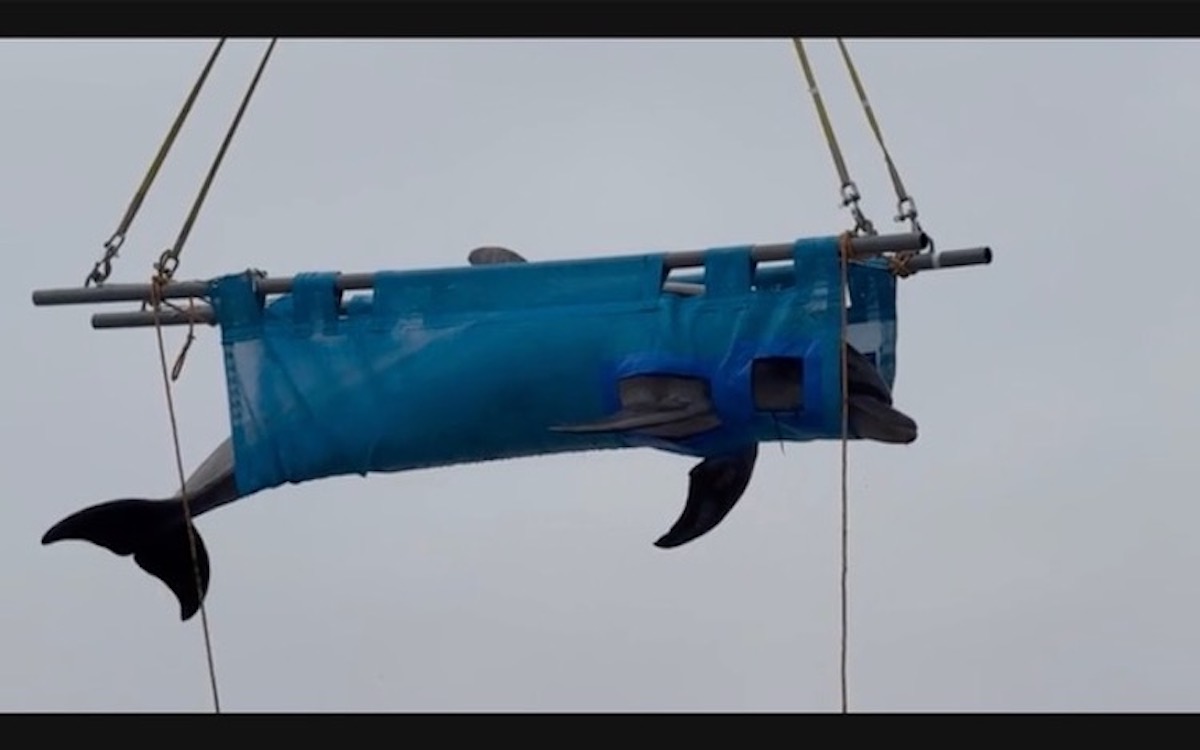
Wild-caught bottlenose dolphin is transported to an unknown destination for a “life” in captivity, Taiji, Japan. Credit: DolphinProject.org
How You Can Help
➡️ LEARN MORE about Dolphin Project’s campaign in Taiji, Japan.
➡️ DONATE: Legal actions take a great deal of time and resources, including challenging certain aspects of the drive hunts, such as quotas and the species captured and slaughtered. We must also continue to raise funds to put people on the ground in Taiji and pursue new and future legal actions and lawsuits. Dolphin Project also supports Japanese activists working to raise awareness throughout Japan, as well as those who travel to Taiji to bear witness and speak out against the hunts. There is always more work underway. Please consider making a donation in support of our efforts to end the dolphin hunts.
Featured image: Bottlenose dolphins captured from the wild for entertainment, Taiji, Japan. Credit: LIA/DolphinProject.org

Related posts
25 Dolphins Taken Captive as Taiji Hunts Begin
Concrete in a Dolphin’s Mouth After Transfer