Captive Breeding Fuels Dolphin Suffering in Malta
 21Sep
21Sep
Mediterraneo Marine Park in Malta exemplifies the long-term harm caused by captive dolphin breeding programs. Since opening in 1992, the park has commercialized dolphins in choreographed shows and close-contact encounters with tourists, treating these highly intelligent marine mammals as mere props for superficial entertainment and photo opportunities.
According to Ceta-Base, a global database tracking captive dolphins, four male dolphins from the Black Sea were transferred to the park in August 1992. All four are now dead. In 2003, six wild-caught dolphins – two males, three females, and one of unknown gender – were imported from Cuba. Of this group, only one survives: Sol. Captured in 2000, Sol spent three years confined in a holding tank at the National Aquarium in Cuba before being sold to Mediterraneo Marine Park.
According to online records, none of the Russian dolphins reproduced, but several of the Cuban dolphins did. Between 2010 and 2019, the park’s breeding program resulted in six known births. Of these, four dolphins – all males – remain alive. Sol, the last surviving wild-caught dolphin at the facility, is father to two of them.

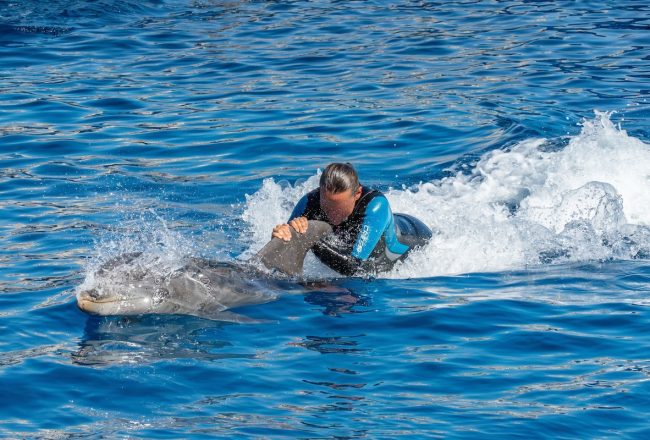
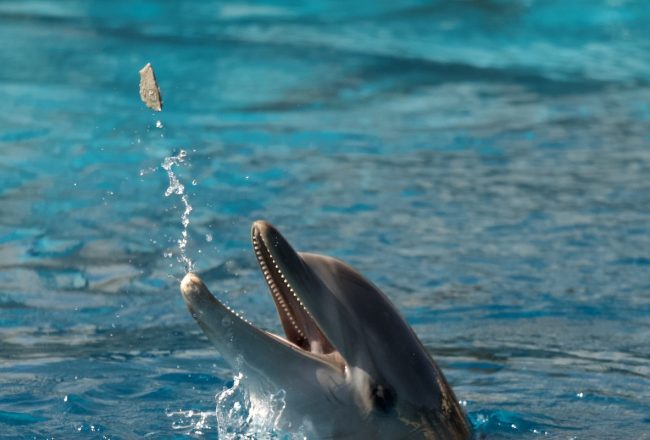
This is Luqa or Rohan, one of the captive-born dolphins held at Mediterraneo Marine Park. Trapped in a barren tank and forced to entertain tourists, he faces a lifetime of confinement with nothing to look forward to. Shockingly, authorities continue to allow the park to breed dolphins — despite the undeniable cruelty of their conditions. Credit: Waves Not Walls
Current dolphin population at Mediterraneo Marine Park:
- Sol: Wild-caught male from Cuba, captured in 2000.
- Ninu: Male, born at Mediterraneo Marine Park in July 2010. His mother was Onda (now deceased), a wild-caught dolphin from Cuba. His father was Lucas, also wild-caught in Cuba, who died at the park in 2013.
- Cha: Male, born at Mediterraneo Marine Park in December 2010. His mother was Mar (now deceased), a wild-caught dolphin from Cuba. His father is listed as unknown.
- Rohan: Male, born at Mediterraneo Marine Park in December 2018. His mother was Mar (wild-caught from Cuba and now deceased), and his father is Sol (also wild-caught from Cuba).
- Luqa: Male, born at Mediterraneo Marine Park in October 2019. His mother was wild-caught Onda from Cuba, now deceased. His father is wild-caught Sol from Cuba.
Source: Ceta-Base
Ninu and Luqa were born to Onda, a wild-caught Cuban female who died in 2021. Cha and Rohan were born to Mar, another wild-caught female from Cuba who also died in 2021. A third female, Malita, born in captivity in 2014, died that same year. Even though all three dolphin deaths – Onda, Mar, and Malita – were reportedly caused by lead poisoning, the park was allowed to continue operating.
To date, 11 dolphins have died at Mediterraneo Marine Park, according to Ceta-Base.
Most dolphins in European facilities today were born in captivity, the off-spring of wild-caught individuals from Cuba and the U.S. Dolphinarium operators often argue that captive-born dolphins “don’t know any better” and therefore don’t suffer. However, even setting aside the emotional toll of lifelong incarceration – an aspect consistently ignored by the dolphinarium industry – the physical reality is undeniable.
Captive-born dolphins share the same physiology as their wild relatives. Their sleek bodies are designed for speed, diving, and long-distance travel. These highly social predators have evolved to live in complex, dynamic marine environments. Even dolphins that naturally inhabit shallow coastal waters are always on the move – surfing waves, navigating, exploring, and hunting. In captivity, they are confined to stagnant concrete pools, denied space, natural stimulation, and the rhythms of the sea.
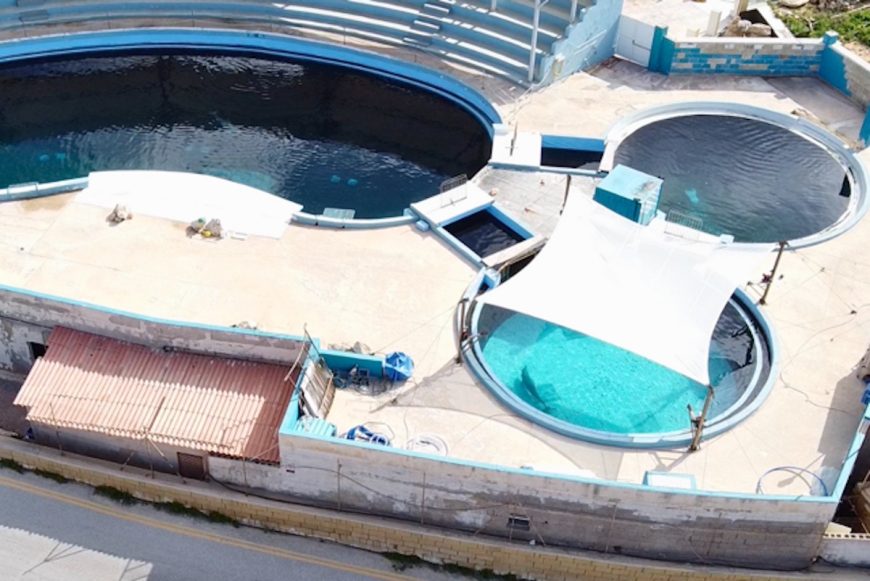
In July 2025, drone footage captured by Earth Systems Association revealed the park’s deplorable tanks, leading many to believe the facility had been abandoned. Sadly, it hasn’t. Sol, Ninu, Cha, Rohan, and Luqa remain trapped in crumbling conditions while authorities turn a blind eye.
Today, no female dolphins remain at Mediterraneo Marine Park, raising critical questions: How will the park continue to stage shows and tourist encounters far into the future? Will it attempt to import new females to resume breeding?
It’s hard to imagine that park operators aren’t already considering their options. The five remaining males won’t live forever, and without new females, the business model – reliant on repetitive performances and controlled interactions – will eventually collapse.
No dolphin should be born into such a cruel existence: raised in a barren tank, exploited for entertainment, and denied the life nature intended. These dolphins will never swim freely in the ocean, hunt their own prey, ride waves, or choose their companions. Instead, they spend their lives in cramped tanks, manipulated through food control to perform degrading tricks, kiss strangers, and pose for photos.
Captive breeding perpetuates the cycle of suffering. Dolphins are bred, trained, and sold to maintain a fantasy for paying tourists. The park markets joy, but the dolphins pay with their lives. Customers who fall for the scheme pay nearly $200 for a 30-minute thrill and then move on, but the dolphins remain trapped in their tanks. For them, captivity is forever.

Looking at the gloomy concrete tanks at Mediterraneo Marine Park, it’s impossible to comprehend how Maltese authorities have allowed this cruelty to continue for decades. While circus-like shows and swim-with-dolphins programs draw in paying tourists, it’s the dolphins who pay the ultimate price. One was captured in Cuba over 25 years ago; the other four were born in captivity – the offspring of wild-caught Cuban dolphins who have since perished. Captive-born or not, all dolphins suffer in confinement. It’s time to put compassion before profit and revoke Mediterraneo Marine Park’s licence to exploit these intelligent, sentient beings. Credit: Waves Not Walls
In response to the park’s long history of dolphin suffering, Dolphin Project has joined the Waves Not Walls campaign – a coalition of six organizations working to end dolphin captivity in Malta: Earth Systems Association, Animal Liberation Malta, Friends of the Earth Malta, Marine Connection, TideBreakers, and Dolphin Project.
Together, we call on the Maltese authorities to prohibit all dolphin imports and to end the facility’s breeding program. No dolphin should be born only to suffer and die in a tank. For too long, dolphins have endured lifelong confinement in small concrete enclosures, forced to perform for human entertainment. Mediterraneo Marine Park must stop breeding dolphins only to use them as tourist attractions until they die.
After weeks of public pressure and growing media scrutiny, Maltese authorities have finally agreed to investigate the living conditions at the park. One only needs to look at the run-down tanks to understand that these dolphins are suffering. We are hopeful that the investigation will lead to a clear and decisive outcome: the exploitation of captive dolphins in Malta must end – once and for all.
Featured image: Since its opening in 1992, Mediterraneo Marine Park has seen the deaths of several dolphins – both wild-caught and captive-born – within its deteriorating tanks. The evidence of ongoing suffering is undeniable. We urge the Maltese authorities to take immediate action and end this cruelty once and for all. Credit: Waves Not Walls

Related posts
Beyond the Cove: How Captivity Sustains the Hunts
Concrete in a Dolphin’s Mouth After Transfer