Empty the Tanks: What It Means and Why It Matters
 01May
01May
Some people within the animal welfare community say they no longer support the Empty The Tanks campaign.
“I can’t continue to advocate for emptying the tanks when there is no sanctuary for dolphins to go to.”
Or more bluntly:
“If you emptied all the tanks, what would happen to the dolphins?”
It’s an understandable question. It comes from wanting to be responsible. But it is based on a misunderstanding of what “Empty The Tanks” actually means.
The slogan has never been a literal plan for activists to physically remove animals from facilities overnight. No one is proposing to barge into dolphinariums and release dolphins into the ocean.
Empty The Tanks is a call to end the system of confining cetaceans in tanks as a normal, accepted practice. It is an appeal to implement a long-term plan with the goal of phasing out captivity entirely: stopping breeding, capture, trade, and the multi-billion-dollar industry built around their exploitation.
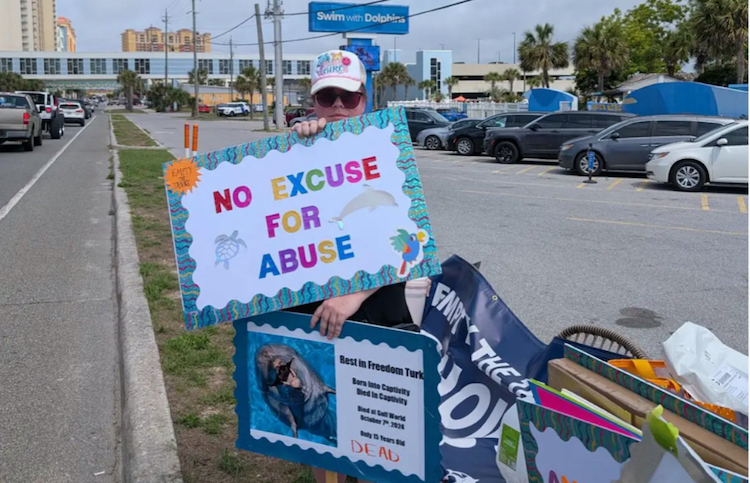
Empty the Tanks protest at the now-defunct Gulf World Marine Park. Credit: Katie Bashore
Rachel Carbary, who started the Empty The Tanks event 14 years ago, has been very clear that Empty The Tanks does not mean reckless release. She says:
“Empty the Tanks is not a radical movement demanding the release of all captive marine mammals back into the wild. While some animals may be suitable candidates for release, others would need to be retired to sea sanctuaries, where they can spend the rest of their lives in natural sea water, experiencing the ocean around them.”
We cannot wait until there are sanctuaries to protest dolphins’ continued confinement and suffering. Sanctuaries only get built when there is sustained pressure to move away from captivity. That pressure does not exist while tanks are still treated as acceptable.
This is where the disagreement gets stuck between two positions. Critics say captivity cannot end without sanctuaries, yet sanctuaries will not be established unless people are working to end captivity. If the requirement is that everything must be already in place before a change is possible, then nothing ever changes. Dolphins will continue to be bred and exploited in tanks indefinitely.
The campaign was never based on waiting for all solutions to be in place first. It was created to push for those solutions to become real.
The dolphins already in captivity require long-term care, and any transition away from dolphinariums has to account for that. Sanctuaries will require cooperation between governments, experts, and people inside the industry, including trainers and staff. This is not a process done against them, but one that must include them.
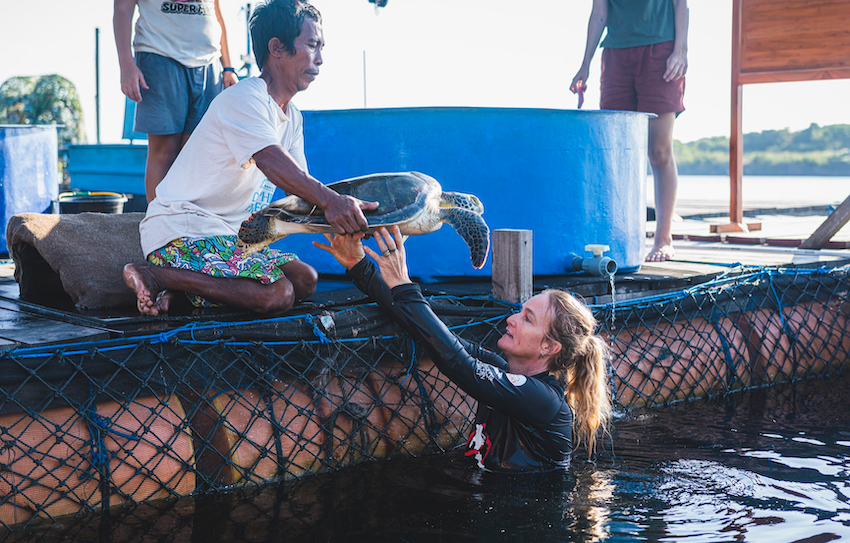
At our multi-purpose Umah Lumba Center in West Bali, Indonesia, not only have dolphins been rehabilitated and released, but turtles also receive care. Credit: DolphinProject.org
It is also important to make clear that this transition will take time. Phasing out captivity will take years, and sanctuaries will need to be developed alongside that process. Many of the dolphins currently in tanks will likely remain there for the rest of their lives. In the meantime, their living conditions must be improved. This includes repairing deteriorating tanks, improving water quality, reducing stress, and providing shade and enrichment.
So when we say “Empty the Tanks,” we are not describing immediate logistics. We are rejecting the idea that this system can continue unchallenged.
We can still take a clear position on cruelty even when the transition is prolonged and complicated. Practical challenges don’t change the end goal. The lack of immediate solutions is no reason to abandon an event that brings much-needed attention to what captive dolphins are still going through every single day of their lives.

Related posts
Your Voices Made a Difference!
Help Us End Dolphin Captivity!