Indonesia’s Dolphin Hunting Village
 05Feb
05Feb
While on a trip to the island of Lembata, Indonesia to provide training on whale and dolphin rescue and stranding response, we visited Lamalera, a whale-hunting village located just 50 kilometers away. And what we witnessed was horrifying.
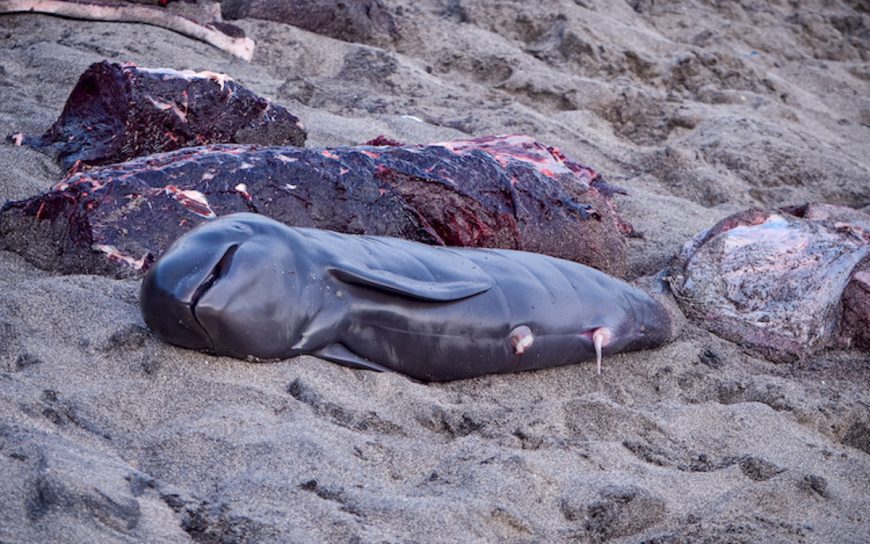
Eight pilot whales were being dragged onto the beach, steel hooks piercing their heads. A lifeless unborn calf lay beside its butchered mother, the water stained red with blood.

This year we returned to Lembata to provide training on whale and dolphin rescue and stranding response. The training was attended by numerous fishermen representing various fishing communities. Credit: DolphinProject.com
This so-called “traditional whaling village” has strayed far from its original traditions, using modern outboard engines in their quest to brutally slaughter whales and dolphins. Every marine mammal passing through these waters is now at risk.
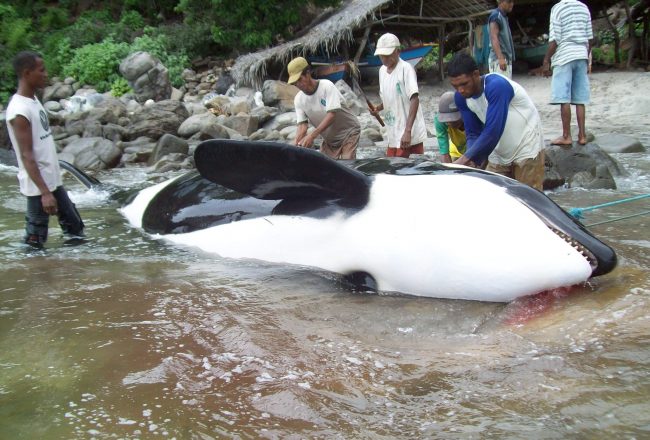
My first visit to this village was in 2011, where I witnessed the slaughter of orcas. I returned in 2017 and saw the exact same tragedy: a family of orcas – a mother, a baby, and another adult – lying lifeless on the shore, with children playing on their bodies before adults arrived to carve them up. Tragically, nothing has changed.

Our team surveys a horrific pilot whale slaughter in the village of Lamalera on the island of Lembata, Indonesia. Credit: DolphinProject.com

Child plays on the body of a slaughtered pilot whale in the village of Lamalera on the island of Lembata, Indonesia. Credit: DolphinProject.com
The meat, which was once intended solely to feed the villagers, is now sold far beyond the community. This commercial aspect has led to unsustainable practices, as there are no longer any limits on the numbers, species, or conditions of the marine mammals being hunted.
A Tradition Lost

All that is left of this beautiful pod of pilot whales, Lamalera, Lembata, Indonesia. Credit: DolphinProject.com
Under the International Whaling Commission (IWC) the village is exempt from a whaling ban, as their practices are supposedly conducted in a traditional manner for subsistence. However, photographic evidence provides undeniable proof that the hunts are no longer traditional.
The rules of whale hunting once stated:
- no more than three toothed whales should be killed per year to sustain the village,
- hunting should only occur between May and November,
- only traditional canoes should be used for the hunt, and
- pregnant females should never be targeted, with hunting restricted to adult males.
However, these rules are no longer observed, with hunts occurring outside the traditional season, where even pregnant females are slaughtered. This unsustainable exploitation is exacerbated by the village’s growing population, and as such, marine mammal populations continue to decline. Marine mammals reproduce slowly, and with pregnant females being hunted, immediate action is essential to prevent irreversible damage.
Featured image: Pilot whale dragged onto beach after being brutally slaughtered in the village of Lamalera on the island of Lembata, Indonesia. Credit: DolphinProject.com
Related:
Indonesian Dolphin Hunting
Orca Family Slaughtered in Indonesia

Related posts
Pilot Whales Killed in Season’s First Faroese Hunt
Faroese Dolphin Slaughter: An Eyewitness Account