Is Sound Pollution Threatening Orcas’ Survival?
 21Nov
21Nov
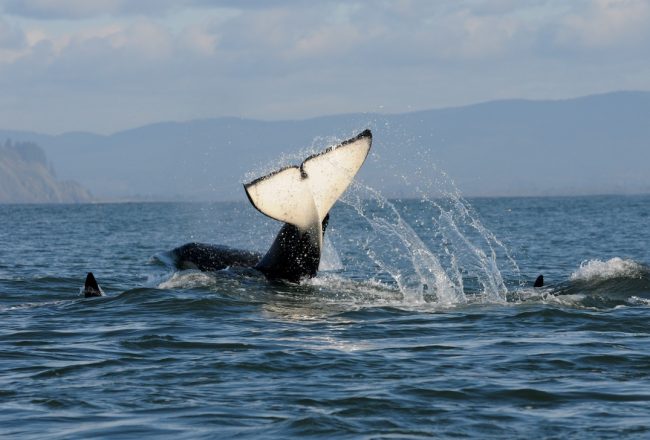
According to a study published by Global Change Biology in September, 2024, noise from both commercial and recreational vessels could be impacting the survival of both Northern and Southern Resident orca populations.
The study, titled: “Males miss and females forgo: Auditory masking from vessel noise impairs foraging efficiency and success in killer whales” by Jennifer B. Tennessen, Marla M. Holt, Brianna M. Wright, M. Bradley Hanson, Candice K. Emmons, Deborah A. Giles, Jeffrey T. Hogan, Sheila J. Thornton, Volker B. Deecke demonstrates that vessel noise interferes with multiple phases of foraging and overall hunting success of the orcas as they rely on sound to facilitate these hunts.
The study goes on to state that the search for prey increased with noise level – meaning that the more time individuals spend in noisier conditions, the more energy the mammals expend. The result is a lack of foraging efficiency, and less food consumed over time. Male and female orcas are both affected by noise levels, but for different reasons. Noise impairs males’ abilities to capture prey, while females forgo foraging opportunities under the same conditions. It is also hypothesized that a lack of caloric intake amongst females could be contributing to the high rate of failed pregnancies within the Southern Resident orcas.
Southern Resident orcas usually spend the warmer months in the waters around Washington state and southwest British Columbia. However, the whales will travel as far south as Monterey Bay, California and north towards Alaska as they search for Chinook salmon, their primary food source.
With an estimated 74 Southern Resident orcas left, this study highlights the need for immediate protections for the mammals. In June, 2024, the Government of Canada announced new measures and funding to protect the Southern Resident orcas, including:
- two mandatory speed-restricted zones near Swiftsure Bank, effective June 1 to November 30, 2024,
- two interim sanctuary zones off Pender and Saturna Islands, effective June 1 to November 30, 2024,
- a voluntary speed reduction zone in Tumbo Channel, off the North side of Saturna Island,
- the continued requirement for vessels to stay at least 400 metres away from all killer whales, and a prohibition from impeding the path of all killer whales in Southern British Columbia coastal waters between Campbell River and Ucluelet, including Barkley and Howe Sound. This is now in effect until May 31, 2025,
- an agreement with local whale watching and ecotourism industry partners to abstain from offering or promoting tours viewing Southern Resident killer whales,
- fishery closures for commercial and recreational salmon fisheries in key Southern Resident killer whale foraging areas in 2024 and 2025, and
- additional actions to reduce contaminants in the environment affecting whales and their prey.
What can I do to help?
All of our combined actions are necessary to save these vulnerable orca populations. A good place to start is by visiting the NOAA Fisheries: Saving the Southern Resident Killer Whales page for ways to get involved.
Related:
Sources used in this blog:
- Global Change Biology – Males miss and females forgo: Auditory masking from vessel noise impairs foraging efficiency and success in killer whales
- Capital Daily – Salish Sea too noisy for killer whales to hunt
- Canada.ca – Government of Canada announces new measures and funding to protect Southern Resident killer whales
Featured image: A young resident killer whale chases a chinook salmon in the Salish Sea near San Juan Island, Washington, September, 2017. Credits: John Durban (NOAA Fisheries/Southwest Fisheries Science Center), Holly Fearnbach (SR3: SeaLife Response, Rehabilitation and Research) and Lance Barrett-Lennard (Vancouver Aquarium’s Coastal Ocean Research Institute). Creative Commons Attribution-Share Alike 2.0 Generic license.

Related posts

Stronger Protections for Orcas in Canada
If Not Now, Then When?