Kolmården Dolphinarium Fails Inspection
 11Mar
11Mar
Kolmården Dolphinarium in Sweden is facing criticism after an unannounced inspection, according to a Swedish news outlet named SVT. The Östergötland County Administrative Board carried out the visit after receiving complaints from the public that the dolphins could be suffering from health problems linked to water quality. The Board found deficiencies in animal husbandry, a formal acknowledgment that the dolphins’ care was not meeting basic standards.
Kristoffer Hellberg, head of department at the County Administrative Board, told SVT: “At this point, I cannot go into what the deficiencies are. But we received a complaint from the public and considered that there was a reason to carry out an inspection. During the inspection, we were able to identify deficiencies at the dolphinarium.”
Kolmården Zoo, which is a member of the European Association of Zoos and Aquaria (EAZA), responded to SVT News in writing, stating that they welcome inspections and take the report seriously. They emphasized that their animals are cared for by trained veterinarians, zoologists, and experienced caretakers. Words that sound reassuring, but no statement can change the reality of dolphins confined to small indoor pools and used in shows.
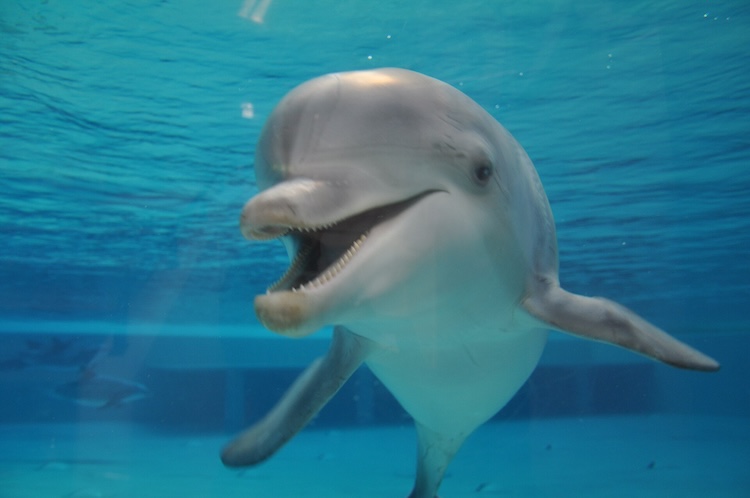
A dolphin peers through the glass at Kolmården Zoo’s indoor dolphin stadium in Sweden. The facility, in operation for nearly six decades, recently failed an inspection after authorities identified deficiencies in animal husbandry. Credit: Creative Commons Attribution-Share Alike 3.0 Unported license, author: Zoostar
The problems at Kolmården Dolphinarium are not new. Since the facility opened in 1969, dozens of dolphins have died there. For decades, Kolmården operated as a breeding facility, supplying dolphins to other parks in Europe. During the period 1969 to 1989, Kolmården imported several dolphins captured in U.S. or Cuban waters. Today, one wild-caught Cuban dolphin remains. The remaining nine dolphins at the zoo were born in captivity, eight of them at Kolmården and one at SeaWorld Orlando, USA.* The dolphins languish in stark, indoor chlorinated tanks, with little sunlight and no natural stimulation. Past attempts at “enrichment” have even been deadly: in January 2024, a dolphin named Nephele, captured in the Gulf of Mexico in 1989, died after choking on artificial seaweed staff added to the tank in order to make the barren habitat more “dynamic.” During a meeting with zoo officials several years ago, promises were made to build an outdoor pool so the dolphins could at least experience real sunlight every once in a while, but these plans never materialized. The zoo announced in 2022 that it would close the dolphinarium, yet the dolphins remain confined and performing.
The County Administrative Board will follow up on Kolmården’s corrective actions. But the underlying problem remains: captivity itself is the deficiency. Every ticket sold to see these dolphins perform is a vote for exploitation. Until the public stops rewarding the industry, inspections and PR statements are just empty words, while the dolphins remain trapped behind concrete walls.
*Source: cetabase.org
Related:
SVT news piece, 3/5/26
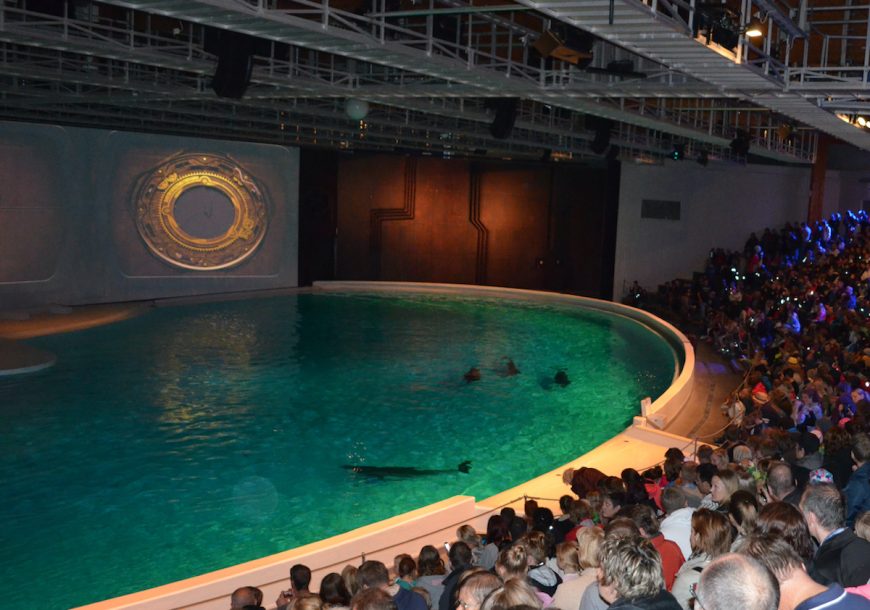
Featured image: When we inspected Kolmården Zoo’s dolphinarium several years ago, we found dolphins confined to a stark, indoor amphitheater filled with chlorinated water, cut off from even the most basic elements of nature. Since the facility — ironically named Marine World — opened in 1969, dozens of dolphins, including several captured in the wild, have died there. Credit: Helene O’Barry
