Malta’s Captive Dolphins and the Myth of Conservation
 28Jul
28Jul
In 2014, Malta banned animal performances in circuses, a landmark decision that should have ended the use of dolphins in shows and swim-programs at Mediterraneo Marine Park. But it didn’t. According to local NGOs I’ve spoken with, Mediterraneo Marine Park uses a legal loophole by labeling itself a zoo. In other words, its status as a recognized zoo has allowed it to continue selling tickets to dolphin shows. But putting animals in cages and calling yourself a zoo doesn’t make your practices ethical – and it certainly isn’t conservation.
Mediterraneo Marine Park appears focused on leveraging the zoo label while functioning as an entertainment venue for tourists, borrowing the credibility of conservation without earning it. When the park insists on being called a zoo, it likely aims to project an image of a responsible facility grounded in science, animal care, and dolphin conservation. But what visitors actually see is a choreographed circus act: dolphins spinning and tail walking on cue, beaching themselves to music and applause. These shows don’t foster respect for wildlife – they do the opposite: They reduce intelligent, complex beings to stage props.

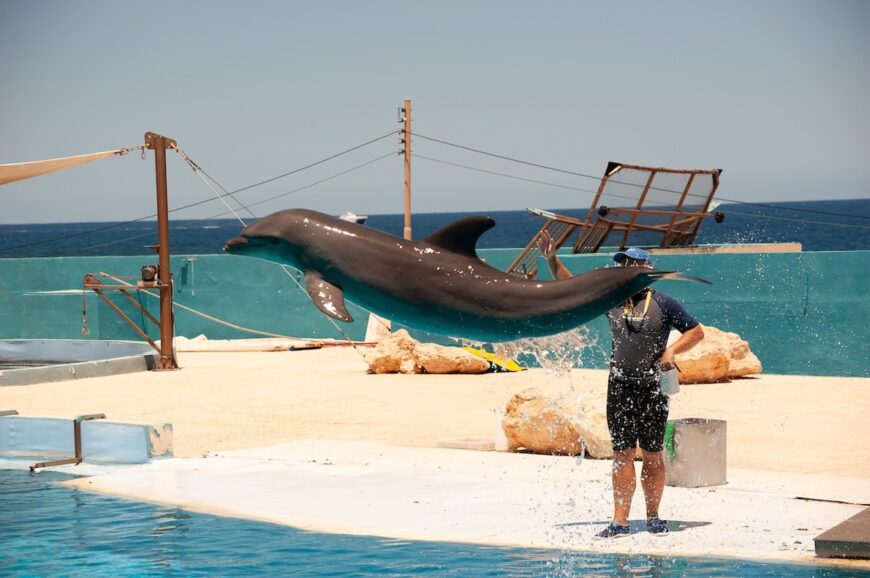
This photo was taken at Mediterraneo Marine Park in July 2025. Beaching onto a concrete platform is not natural dolphin behavior – it’s a trained stunt, rooted in captivity. Audiences often cheer, drawn to the full-body view and photo opportunity, but the performance underscores the circus-like existence these animals are forced to endure. Credit: Concerned Citizens of Malta
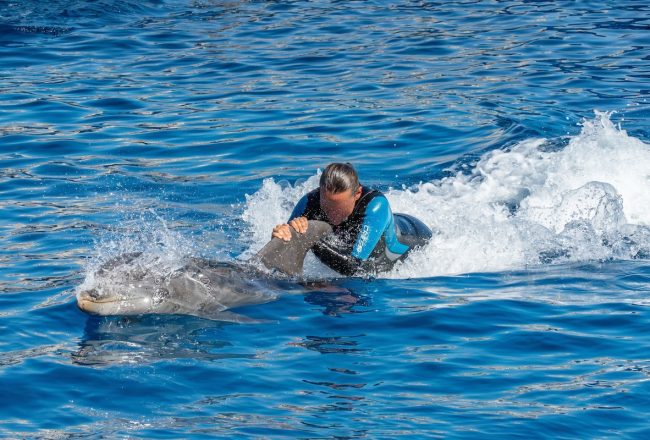
The dolphin stadium at Mediterraneo Marine Park is far from a natural habitat. It consists of stark concrete tanks – barren, shallow, and entirely disconnected from the ocean environment these animals are meant to inhabit. Some dolphins at the park are used in popular ”encounter” programs where visitors pay to touch and pose with them. Marketed as an ”extraordinary experience,” these interactions are actually carefully orchestrated performances. The dolphins have no real choice in participating. Their compliance is maintained through food control – a subtle yet powerful form of coercion where following commands is required to receive a fish.
Mediterraneo Marine Park claims to educate, but what it’s really doing is recycling an outdated model of captivity and spectacle, disguised as awareness. The shows are peppered with shallow facts – ”this is a blow hole,” ”these are fins” – as if basic anatomy justifies lifelong incarceration. You don’t need to imprison a dolphin to point out its fins, and you don’t need to confine it to a concrete stadium for life to show someone where its blowhole is.
A friend in Malta recently sent me a video that summed it all up. As a dolphin swam in endless circles around a cramped tank – able to move only a few meters before hitting a wall – the announcer cheerfully told the audience that dolphins can swim up to 40 kilometers per hour. The irony was painful. This powerful marine predator, built for speed and distance, was trapped in a space no bigger than a backyard pool.
Inside the park, a poster celebrates dolphins’ extraordinary abilities – echolocation to forage, diving deeply for up to 10 minutes at a time. Yet within the shallow, restraining tanks, these natural behaviors are impossible. Echolocation loses its purpose when walls are just meters away. There’s no room to dive, hunt, or explore. Highlighting these facts while denying dolphins the opportunity to express them isn’t education – it’s hypocrisy. It sends the message that it’s acceptable to admire an animal’s abilities while simultaneously denying it every chance to use them.
Still, Mediterraneo Marine Park insists it’s raising awareness. On its website, it features an image of a plastic bottle in the sand and a vague reference to ocean pollution. But using the issue of plastic as a shield to justify dolphin exploitation is absurd. You cannot claim to protect the ocean while confining dolphins to lifeless tanks with no shade, no stimulation, and no escape. It’s like putting birds in cages and claiming it’s to protect the skies.
If Mediterraneo Marine Park truly cared about dolphins and their ocean home, it would stop breeding them in captivity. It would end the shows. It would support sanctuaries and rehabilitation programs – not photo ops and ticket sales. These dolphins are not ambassadors. They are casualties of a profit-driven tourism model that continues to treat wildlife as a commodity.

This is the small, barren dolphin amphitheater at Mediterraneo Marine Park in Malta. Although the park wants to be called a zoo, its website prominently promotes dolphin shows – misleadingly called “presentations” – along with staged swim-with-dolphins programs, all designed to entertain tourists while giving a flawed impression of environmental responsibility. Credit: Animal Liberation Malta (screenshot from drone footage)
On its website, Mediterraneo Marine Park promotes itself as a ”premier tourist attraction” – a curious choice for an establishment that wants to be seen as an ethical zoo. But dolphins are not entertainers. They are intelligent, social, and self-aware beings who belong in the vast, dynamic ocean, not confined to tanks, performing repetitive routines for the amusement of tourists.
I’ve spent years observing captive dolphins. The signs of psychological distress are unmistakable: lethargy, repetitive behaviors, agitation, excruciating boredom, even depression. These are not signs of enrichment or well-being. They are symptoms of suffering.
Defenders of these shows often argue that they inspire learning. But what are they really teaching? That dolphins exist to perform for us? That their value lies in how well they can jump on command?
True education doesn’t normalize exploitation. It fosters empathy. It encourages respect. It teaches children to see wild animals as wild – not as entertainers.
Real conservation protects animals in their natural habitats.
Real education inspires us to keep them there.
Let’s stop pretending.
Dolphin shows are not education – they’re exploitation.
Featured image: There’s a cruel irony in keeping dolphins in tanks within sight of the ocean – the vast, natural world that should be theirs. Born to roam the open sea and dive deep beneath the waves, they’re instead confined to barren pools, performing tricks while their true home glistens just beyond reach. Credit: Concerned Citizens of Malta

Related posts
Beyond the Cove: How Captivity Sustains the Hunts
Concrete in a Dolphin’s Mouth After Transfer