Mangrove Planting = Coastal Conservation
 21Mar
21Mar
In addition to Dolphin Project’s conservation and rescue initiatives across Indonesia, our team has planted nearly 38,000 mangrove seedlings and coconut trees in West Bali. Last year alone, we planted 10,000 rhizophora mucronata mangroves — which is no small feat!
The seedlings were 60cm when they were planted in 2024. Now, one year later, these same trees have reached a height of 130cm and boast a 75% survival rate.

Dolphin Project’s Indonesian team measures the growth of a mangrove tree, West Bali. Credit: DolphinProject.com
This species of mangrove is native to the Indo-Pacific region and East Africa. Their natural habitat includes flat coastal areas and the banks of tidal creeks, making them beneficial in the protection of coastlines and marine ecosystems in West Bali.
“Salt marshes, mangroves, and seagrass beds absorb large quantities of the greenhouse gas carbon dioxide from the atmosphere and store it, thus decreasing the effects of global warming. These types of habitat are known as carbon sinks and contain large stores of carbon accumulated over hundreds to thousands of years.” ~ source: National Oceanic and Atmospheric Administration (NOAA)
We are pleased to continue this important initiative as a healthy coastline = less erosion and provides a habitat for a variety of marine life, as well as supports Dolphin Project’s efforts to be 100% carbon neutral.
Learn more about our community initiatives in Bali.
Please consider supporting our efforts by symbolically planting a tree in Bali.
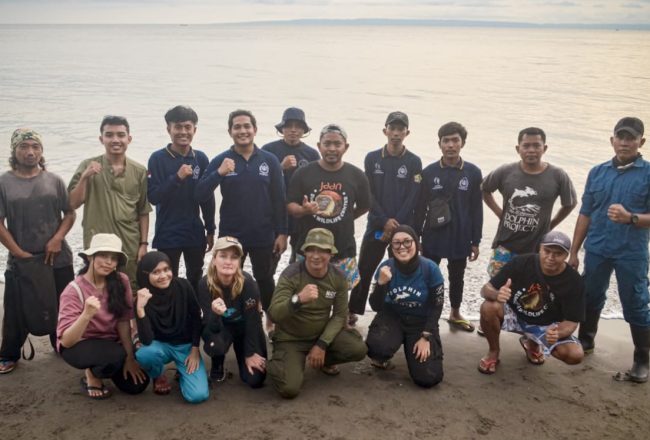
Featured image: Dolphin Project’s Indonesian team examines the progress of the mangrove seedlings we planted one year ago, West Bali, Indonesia. Credit: DolphinProject.com

Related posts
Caring for Bali’s Wildlife and Communities
The Façade of Dolphin Captivity