New Day, Same Dolphin Show
 07Feb
07Feb
February 2 was Groundhog Day, a folksy tradition held in both Canada and the United States, where a groundhog is used to determine whether spring is around the corner, or more winter weather is predicted. If a groundhog sees its own shadow, then one can expect six more weeks of winter. However, if no shadow is seen, then an early spring might be welcomed.
The term, “Groundhog Day” also refers to a scenario that is repeated over and over – and over. The film of the same name, released in 1993, depicts the main character, Phil Connors reliving a day on repeat. Each time he awoke, he engaged in the same behaviors, trapped in some sort of time continuum, of which, there was no forward movement.
Sound familiar? Is this not the life of a captive dolphin?
We can ask ourselves in 2026 – decades after the first dolphins were dumped into tanks and taught tricks to amuse paying customers – what have we really learned from their captivity?
What is there left to learn?
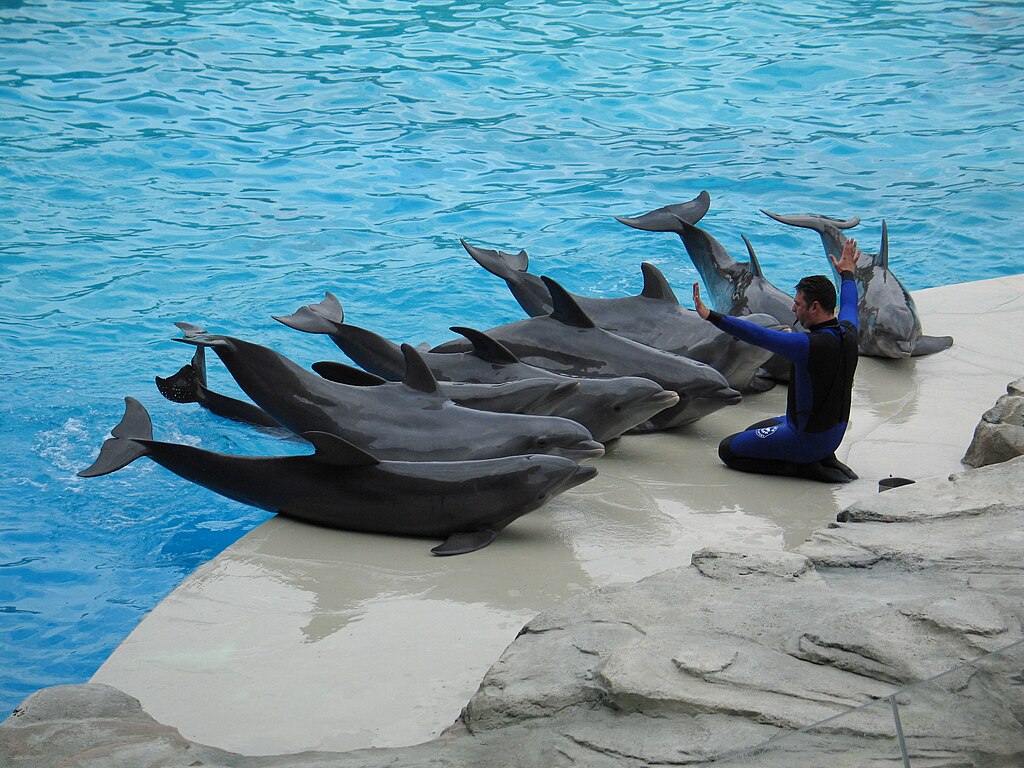
Captive dolphins perform at Oltremare Theme Park in Italy. Credit and license: Roberto Ferrari, Creative Commons Attribution-Share Alike 2.0 Generic license
Over and over we watch them perform high jumps, do tail walks and other acrobatics, all the while, hearing their trainers extoll the dolphins’s virtues – paradoxically – ones which for the most part, can only be fully expressed in the wild. What good does it do to announce that dolphins can swim 50-100 miles a day in the open ocean, in search of prey? That they form strong family and social bonds within their pods? That they demonstrate distinct behaviors including hunting strategies passed down through generations?
Let’s contrast this with the reality captive mammals endure:
Dolphins can only swim from end to end of their enclosures. Given their speed, power and innate curiosity, within seconds, there is nothing left to do, and nothing left that is new. Dolphins are unable to use their echolocation and other predatory skills because there is no need. In captivity, the mammals are fed dead fish, often supplemented with vitamins and medications. Dolphins are often confined to unnatural groupings made up of individuals from different families and even different species, disrupting natural communication and social structures.
This doesn’t even take into consideration other notable concerns like water quality, lack of shade, sound levels, and injuries suffered in captivity. The list goes on and on. But perhaps the greatest loss for captive dolphins is their inability to be curious. Imagine a living being with a large, complex brain, associated with sophisticated mental and emotional processes. Now imagine this same being confined to a sterile space, stripped of choice, novelty, and meaningful social connection.
A world reduced to concrete walls, repetitive routines and forced behaviors – with a mind that is trapped in “Groundhog Day.”
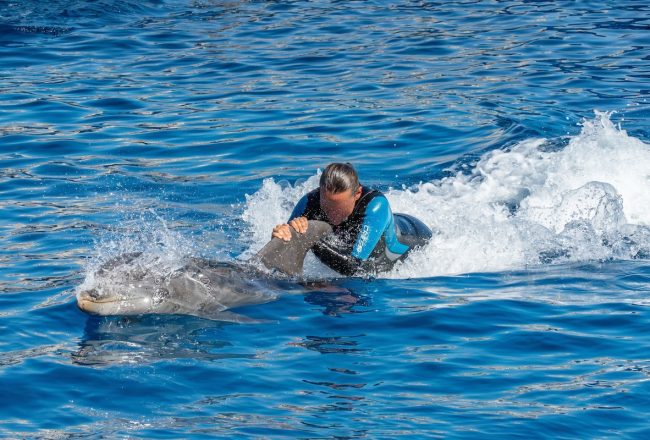
Performing tricks for humans, including swim-with interactions are not normal activities found in nature. Photo: DolphinProject.org
What if dolphin trainers changed their verbiage to reflect this reality? Do you think people would still attend dolphin shows, if they heard words like “boredom, stress, aggression, unable to use innate skills?” It’s an interesting question – and one that begs consideration.
If YOU are curious about learning more about the existence of dolphins in captivity, please visit our Captivity Industry campaign section on our website.
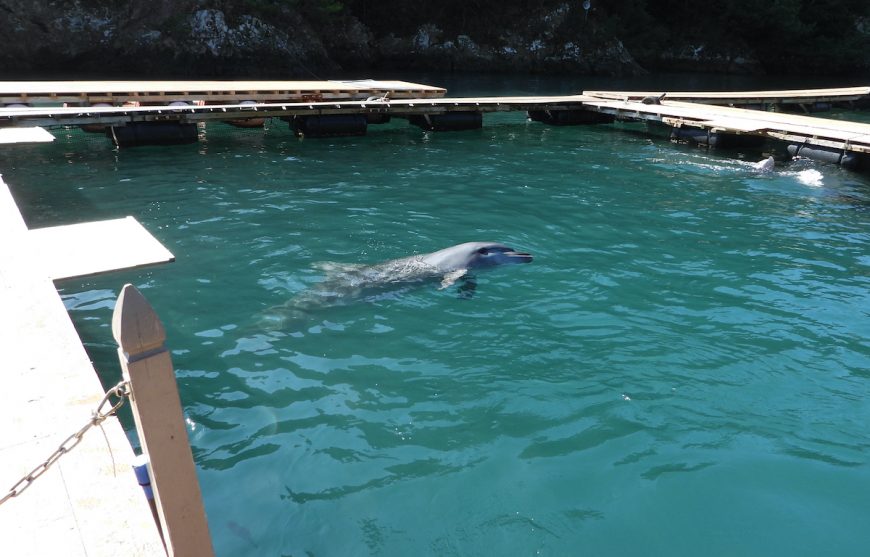
Featured image: “Life” in captivity is no life at all, Taiji Whale Museum, Taiji, Japan. Credit: DolphinProject.org

Related posts
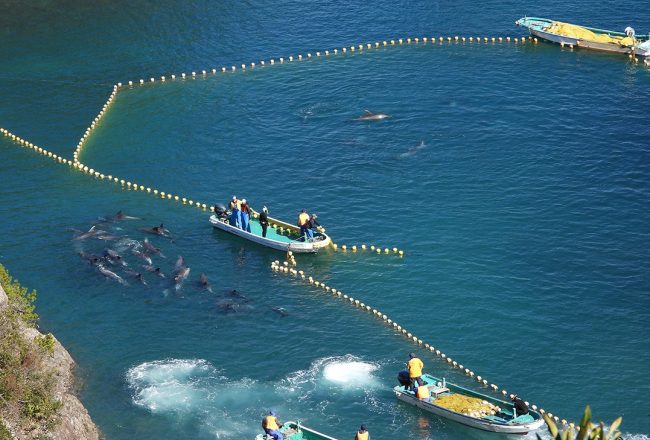
Beyond the Cove: How Captivity Sustains the Hunts
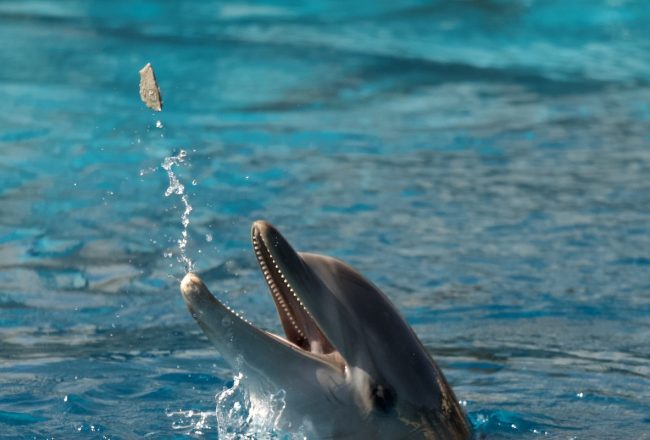
Concrete in a Dolphin’s Mouth After Transfer