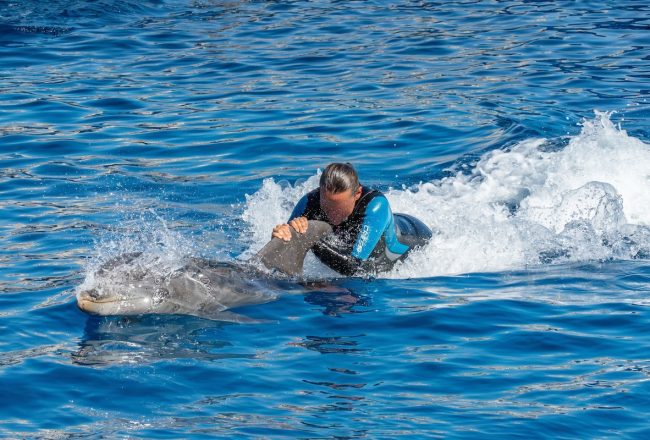
Some Talking Points about Dolphin Captivity
 17Jul
17Jul
If you’re reading this blog, chances are you know at least a little about dolphin captivity. The simple truth is: it’s wrong, and its time we helped people understand why.
It’s likely we have had friends and colleagues who have visited an aquarium or a marine park. Perhaps they walked out with a newfound fascination for dolphins. Maybe they were impressed with their intelligence. Or possibly, they might have simply been in awe of these majestic marine mammals.
Dolphins and other whales are fascinating, but this isn’t because they follow trainer’s orders. Or jump through hoops. Or tailwalk to dance music. And, they most certainly are majestic, but how would one actually know this, viewing these free-roaming creatures of the sea in walled tanks, cut off from their natural environment?

Bottlenose dolphins await instructions from their trainer, Marineland, Canada. Credit: Cynthia Fernandez
I have always believed that education equals empowerment. The more you know, the more you are able to make informed decisions, based on knowledge. However, it’s more than that: it’s also about compassion. If we are going to help people understand the inherent cruelty of keeping dolphins and other whales in confinement, we need to reach out with understanding. Attractions that feature dolphins aren’t cheap, and people who spend their hard-earned money likely do so because they like dolphins! So how can we communicate in a compassionate, yet factual manner to help people understand that what they are supporting isn’t in the dolphins’ best interests – or theirs?
Start with education
Facts about Dolphin Captivity – is an excellent Dolphin Project resource that explains the reality of dolphin captivity.
Frequently Asked Questions about Captivity – this Q&A provides a deeper dive into the dolphin captivity issue
Take Action – ready to add your voice to the multitude of people who have decided to take action for dolphins?
Acknowledge people’s love of dolphins
How to Watch Whales and Dolphins Responsibly – offer alternatives to seeing dolphins in marine parks or aquariums
Suggest watching high-quality documentary films about dolphins, which often use state-of-the-art technology to “capture” the mammals’ natural behaviors without involving capture of any kind!
Suggest participating in an earth-based activity such as a beach cleanup, or volunteering at an event – doing good feels good, too!
*️*️*️*️*️
Most important is that we dialogue with respect, while keeping an open mind. For it’s the sharing of knowledge that helps us all make better choices, for ourselves, and for those whose voices have been silenced.

Common dolphin and calf swimming wild and free, Dana Point, California. Credit: Cynthia Fernandez

Related posts
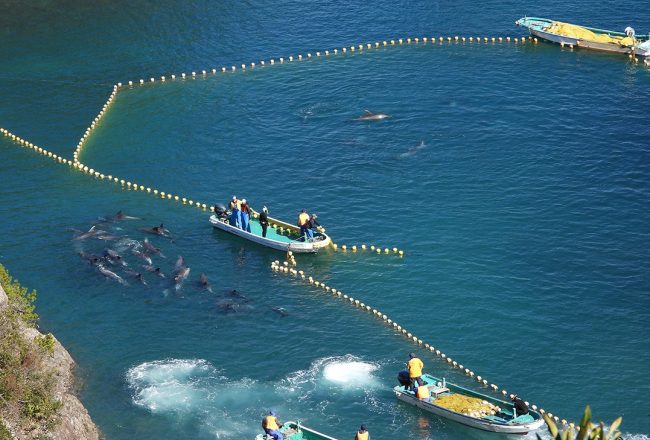
Beyond the Cove: How Captivity Sustains the Hunts
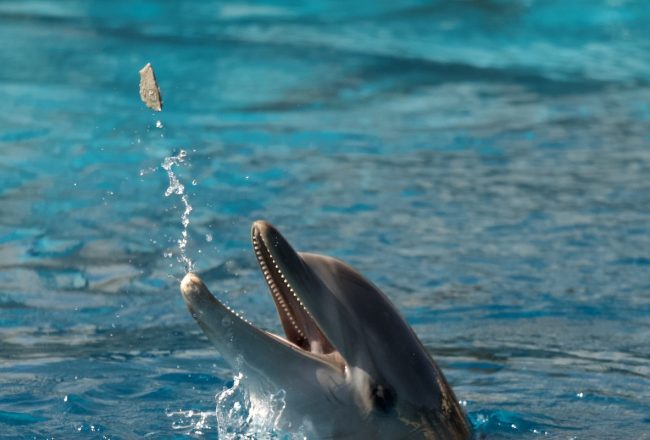
Concrete in a Dolphin’s Mouth After Transfer