Subservience Isn’t Entertaining
 20Feb
20Feb
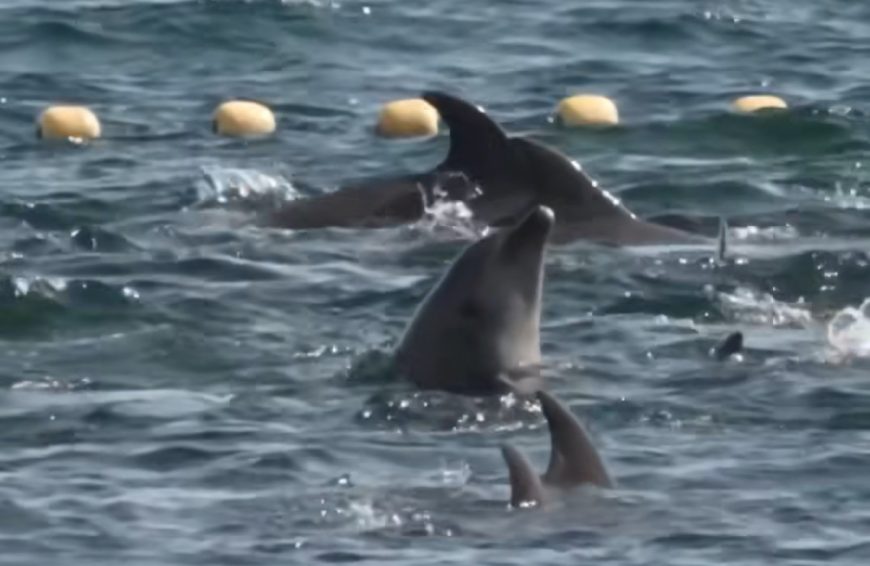
At the time of this writing, a pod of approximately 40-50 bottlenose dolphins have been driven into the Cove – site of the Academy award-winning movie of the same name – in Taiji, Japan. The pod had been swimming in the wild waters of the North Pacific: mothers with their babies, and other family members could have made up this grouping. They could have been foraging, playing, resting or simply exploring their aquatic world in their species-specific way. In other words, they were living – until they weren’t.
High-powered boats with loud engines began chasing the pod. And, without warning, they were suddenly forced to fight for their freedom, and their lives. The hunts are never discriminatory: the very young and the very old are all fair game, at least, until they are herded into shallow waters where their fate is decided. But during these hunts, when the dolphins are fleeing from this alien threat, no one takes stock if an animal sinks underneath the surface, exhausted or too injured to continue. No one notices, and no one cares.
Imagine fast forwarding to a few months from now: Taiji’s “graduates” are now performing high jumps, or ball balances on their rostrums, or maybe even high-fiving their pectoral fins to a human hand. How did a sophisticated free-roaming mammal of the sea suddenly become so subservient? That’s where the narrative of dolphin shows at aquariums and marine parks fall apart. When audiences realize that they are watching subservience – behaviors enacted to obtain food “rewards” for survival – it no longer feels educational, nor entertaining. It feels – degrading.

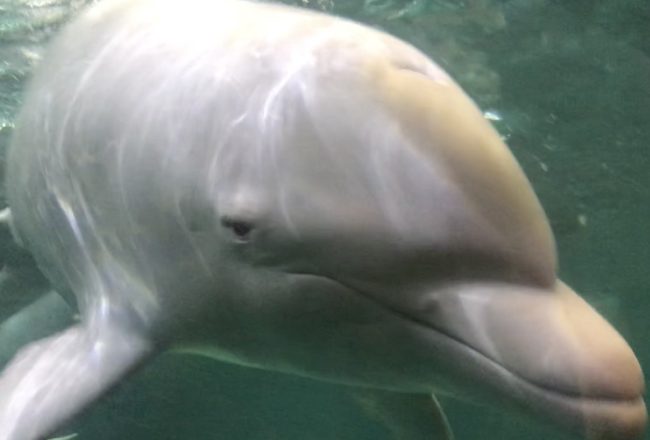
Bottlenose dolphin spyhops in captivity, Taiji, Japan. Credit: DolphinProject.com
We don’t know the fate of this pod yet. Some could end up being selected for captivity, where the above-described scenario becomes reality. Others could be slaughtered for meat which has been long-known not to be safe for human consumption. Others might get released back into open waters. The pattern of Taiji’s drive hunts repeats over, and over, and over.
What we can surmise, in real time, is how the pod is faring. Based on descriptions noted by on-the-ground Cove Monitor Cynthia, the pod is agitated, confused and afraid. They have every reason to be. So the next time you see an ad featuring a smiling bottlenose dolphin (an anatomical, not an emotional feature), be a smart consumer and realize what is really being promoted.
And say NO.
Update 2/21/25: From this drive, seven dolphins were taken captive; one calf and one captive died in the process.
LEARN MORE about Dolphin Project’s campaign in Taiji, Japan.
Featured image: A pod of bottlenose dolphins are driven into the Cove, Taiji, Japan. Credit: DolphinProject.com

Related posts
25 Dolphins Taken Captive as Taiji Hunts Begin
Beyond the Cove: How Captivity Sustains the Hunts