Taiji Whale Museum Dolphin Trade Exposed
 12Mar
12Mar
The truth is, as long as dolphinariums are buying dolphins from Taiji, the hunts will continue.
It’s not surprising that the government-owned Taiji Whale Museum – a prominent fixture in the town of Taiji – withdrew it’s membership from the Japanese Association of Zoos and Aquariums after JAZA agreed to ban its members from sourcing dolphins captured in the town’s infamous dolphin drive hunts. Ten years since their withdrawal, nothing has changed, their inventory largely comprised of wild-caught dolphins.
Documents acquired as a result of Dolphin Project and Life Investigation Agency’s (LIA’s) ongoing legal actions reinforce the reality that the aquarium and marine park dolphin trade are inextricably tied to Taiji’s dolphin drive hunts.

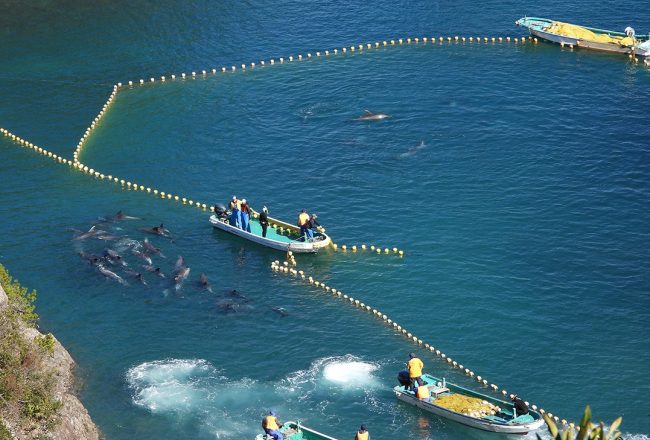
Bottlenose dolphins driven into the Cove during captive selection, Taiji, Japan. Credit: DolphinProject.com/LIA
Between the years of 2011 and 2020, a total of 249 dolphins across seven species were purchased by the Taiji Whale Museum from the town’s drive hunts. These include: short-finned pilot whales, false killer whales, Risso’s dolphins, bottlenose dolphins, Pacific white-sided dolphins, striped dolphins and spotted dolphins. The breakdown per year is as follows:
- 2011 – # dolphins purchased: 8
- 2012 – # dolphins purchased: 13
- 2013 – # dolphins purchased: 11
- 2014 – # dolphins purchased: 33
- 2015 – # dolphins purchased: 4
- 2016 – # dolphins purchased: 24
- 2017 – # dolphins purchased: 51
- 2018 – # dolphins purchased: 55
- 2019 – # dolphins purchased: 38
- 2020 – # dolphins purchased: 12
TOTAL: 249 dolphins
Each of these dolphins was subjected to an aggressive drive, forced into the Cove against their will, inspected and ultimately taken from their pod for a “life” dictated by humans. All for profit. And it didn’t end there. The balance of these pods was either released, or slaughtered for human consumption. Dolphin Project Cove Monitors have routinely documented trainers working alongside hunters, a terrifying thought if you consider that these same individuals are responsible for the dolphins’ welfare.

Risso’s Dolphins, Taiji Whale Museum, Taiji, Japan. Credit: DolphinProject.com
Between the years of 2011 and 2020, a total of 157 dolphins across six species were sold by the Taiji Whale Museum. These include: false killer whales, Risso’s dolphins, bottlenose dolphins, Pacific white-sided dolphins, striped dolphins and spotted dolphins. The breakdown per year is as follows:
- 2011 – # dolphins sold: 4
- 2012 – # dolphins sold: 5
- 2013 – # dolphins sold: 5
- 2014 – # dolphins sold: 4
- 2015 – # dolphins sold: 11
- 2016 – # dolphins sold: 2
- 2017 – # dolphins sold: 15
- 2018 – # dolphins sold: 61
- 2019 – # dolphins sold: 39
- 2020 – # dolphins sold: 11
TOTAL: 157 dolphins*
Imagine the enormous profits that selling wild-caught dolphins is generating for Taiji. Past sales have netted amounts between $30,000 and $128,626 USD per dolphin, with the price depending on such factors as species, age, level of training, etc. And how are these cetaceans being captured? Through the drive hunts – amidst the brutality of the hunts themselves, the gruesome injuries endured by the dolphins, and the slaughters. All of this is connected – and driven by the almighty dollar. The truth is, as long as dolphinariums are buying dolphins from Taiji, the hunts will continue.
*Note: These numbers do not represent all of the dolphins sold out of Taiji. They only represent dolphins sold by the Taiji Whale Museum.

Wild-caught bottlenose dolphin in sling as it’s loaded onto a truck to be transferred to an unknown destination, Taiji, Japan. Credit: DolphinProject.com
What progress has been made?
In recent years, a growing number of places around the world have banned importing dolphins from Taiji, with some places banning captivity altogether. This is largely due to documentation showing the extreme cruelty of the hunts.
While these are positive steps in the right direction, there is still much work to be done. The dolphin captivity industry is very interconnected, and many dolphinariums that are not currently purchasing dolphins from Taiji still have international influence. For example, newer marine parks in China with orca and dolphin stadiums bear a striking resemblance to the biggest-name marine parks in the United States. There have also been multiple instances of facilities in the United States and Australia, as well as the International Marine Animal Trainer’s Association (IMATA) hosting programs to teach dolphin trainers who work with wild-captured dolphins. In addition, Taiji has a full-time training facility where Dolphin Project and LIA have regularly documented foreign dolphinarium employees being trained.
What’s next for the Taiji campaign?
Dolphin Project and LIA have won all lawsuits filed against the dolphin hunting and captivity industry. Legal actions take a great deal of time and resources, but we believe that shifting our campaign focus will have a greater chance to not only expose aspects of the hunts that were previously inaccessible, but also to end the hunts as a whole. Dolphin Project team members spent the last few weeks of the 2024-25 dolphin hunting season on the ground in Taiji, collecting documentation for use in these legal actions.
RELATED:
How Taiji Profits off of Dolphins’ Suffering
Read more about our campaign in Taiji, Japan.
Please consider making a donation in support of our efforts to end the dolphin drive hunts.
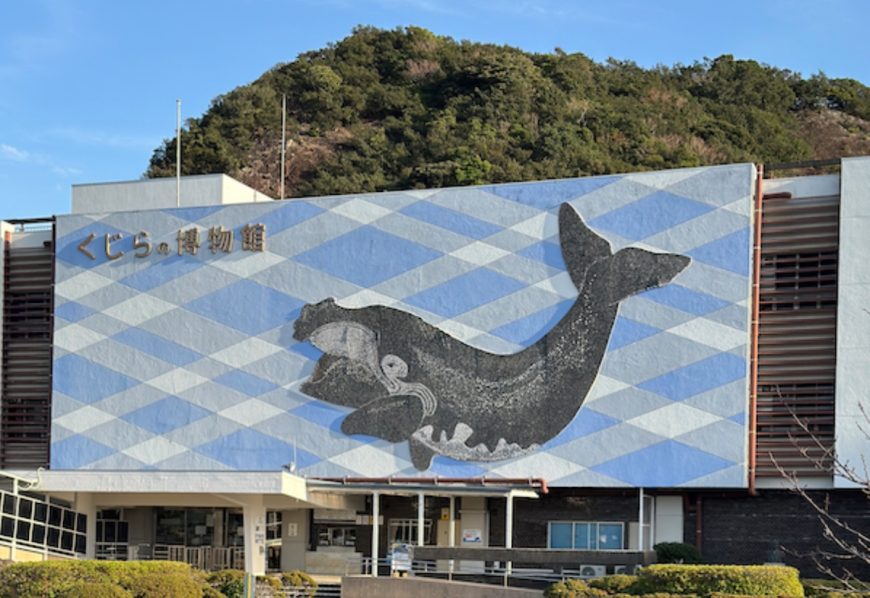
Featured image: Entrance of the Taiji Whale Museum, credit: DolphinProject.com

Related posts
Beyond the Cove: How Captivity Sustains the Hunts
Concrete in a Dolphin’s Mouth After Transfer