Taiji’s Dolphin Drive Season Ends in Dramatic Decline
 02Mar
02Mar
Far fewer dolphins were slaughtered or taken captive during the 2023/24 dolphin hunting season in Taiji, Japan than any other year since Dolphin Project started monitoring and documenting the hunts.
The 2023/24 Taiji dolphin drive hunt season has come to an end, with historically low numbers of dolphins being slaughtered or captured. While the loss of life or freedom for even one dolphin is both tragic and unacceptable, the downward trend in numbers is very positive.
The numbers show just how ridiculous the quotas set by the Japan Fisheries Agency are. For this hunting season, the total quota was 1824 dolphins, while the estimated number of dolphins captured and/or slaughtered was 415 – less than a quarter of what was permitted. There is no way to know with certainty what caused the decrease in numbers. Perhaps the exploitation of dolphins in the area over the years resulted in reduced populations passing by Taiji. Maybe it was due to an El Niño year resulting in the Kuroshio current being farther offshore for longer than normal. Could it have been the result of climate change, with warmer waters keeping the dolphins away? Likely, it was a combination of all these factors.
Ric O’Barry, Founder/Director of Dolphin Project returns to Taiji
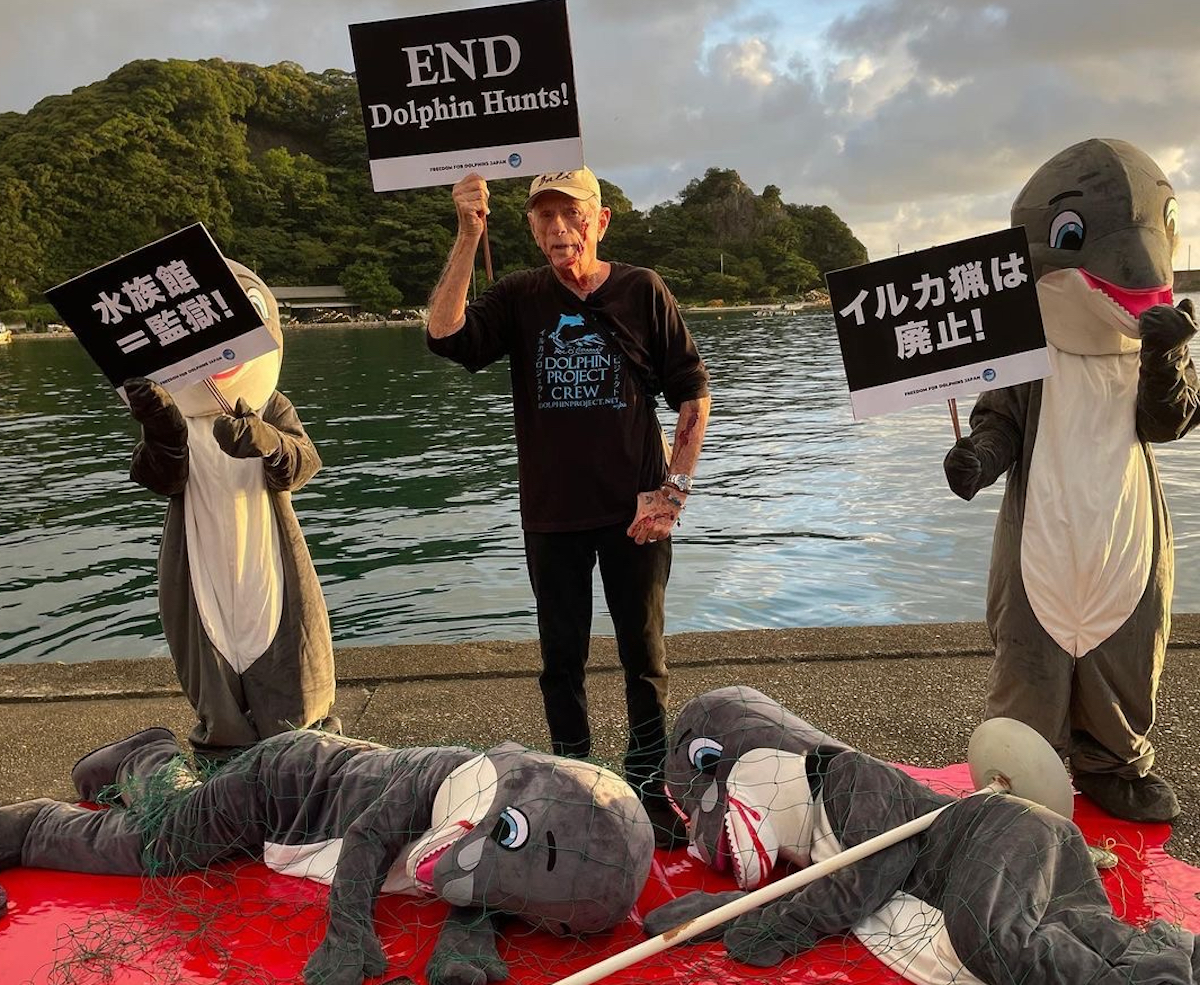
Ric O’Barry returns to Japan. Credit: DolphinProject.com
The season included another historical event – the return of Dolphin Project’s Founder/Director, Ric O’Barry to Japan after being illegally deported from the country in 2016. During his visit, O’Barry visited the Cove, where he was featured in the 2009 Academy Award-winning documentary of the same name — a movie which sparked international outrage over the dolphin drive hunts in Taiji.
Seven years ago O’Barry was detained by Japanese immigration officials after arriving into Narita International Airport. He was repeatedly interrogated, and after refusing to leave Japan willingly, spent 19 days in captivity. He was finally deported the following month, with Dolphin Project immediately beginning legal proceedings against the deportation. In 2019, Ric O’Barry made history as the first and only foreigner who had been deported from Japan, fought the deportation and won. The court in Japan agreed that the deportation had been baseless and illegal. Permission to return to Japan was granted. The pandemic delayed his return but on the first day of this season, Ric O’Barry stood on the ground at the Cove, side by side, in solidarity with Japanese activists and protested the opening of the dolphin drive hunt season.
“Fourteen years ago I sat in a coffee shop in Taiji with Ric O’Barry, talking about his history and experiences in Japan. I remember asking him, “What is it going to take to end this, what can I do?” His answer was simple: “Find and support Japanese citizens, they are the only ones who can make this appeal to the Japanese public.” He was right. Now, 14 years later there are more Japanese citizens showing up across Japan to document and share these horrors within their own communities than ever before.” ~ Tim Burns, Dolphin Project Campaign Coordinator
Global awareness of the suffering of captive dolphins increasing

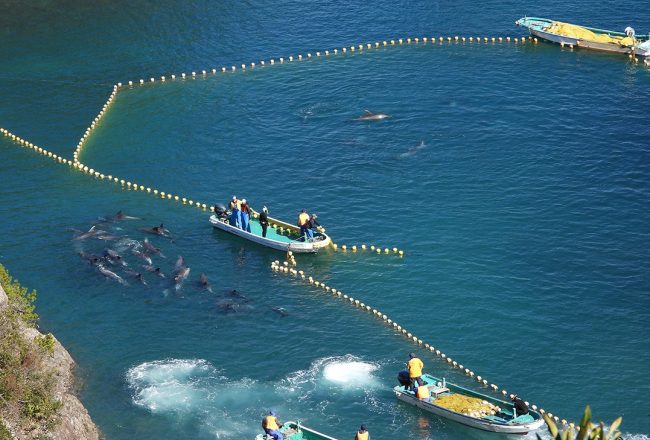
Bottlenose dolphins herded into the Cove during captive selection, Taiji, Japan. Credit: LIA/Dolphin Project
The decline in dolphins captured for the captive trade tells an especially encouraging story. It speaks to the success in raising awareness about the cruelty of captivity, and the connection between the captive industry and the Taiji drive hunts.
Dolphin Project has worked relentlessly to raise global awareness about the truth behind the dolphin smile for many years, with positive results surfacing in Taiji. Most people, once made aware of this embrace the “don’t buy a ticket” movement. These same people tend to spread awareness themselves, with many becoming actively involved in the fight to bring the hunts to an end.
The most popular dolphin species for aquariums is the bottlenose dolphin. When a pod of bottlenose is driven into the Cove (during a very grueling and cruel process), each and every dolphin is inspected before it’s decided which to take and which to reject. Divers pounce on a dolphin, subdue it and drag it to the waiting skiff where it is forced against the side. Then, while held tightly in place by a net, it is carried under the tarps to be measured and examined. Those deemed suitable for captivity are then taken to a sea pen where their transformation to life as a captive dolphin will begin – exploited for human entertainment, and never to see their family or the open ocean again.
There were three bottlenose drives this season, with the last drive presenting as quite unusual. On the first day, half the pod was inspected with seven dolphins taken. Yet strangely, on day two, four dolphins were carried from the sea pens in the harbor back to the Cove, where they were released and rejoined their pod. To take three dolphins from a pod of about 60 shows the lack of need for more captives. In total, 14 bottlenose dolphins were taken for captivity this season, the lowest number since Dolphin Project has been monitoring. This figure, combined with an overall decrease over the past few years would indicate a decline in the demand for captive dolphins. Dolphin captivity is based on supply and demand, and it is undeniable that the demand has been greatly reduced. Dolphin Project will continue to educate on the perils of captivity until there is not a single dolphin held in a tank.
Over the years, the diversity of dolphins captured has also declined. This season, no species other than bottlenose were taken for captivity. A trip to Moriura Bay at feeding time where many of the captive dolphins are kept explains the most likely reason for the decline: the sea pens are full of dolphins who can be seen leaping out of the water in anticipation of food. Pacific white-sided and pantropical spotted dolphins who were last captured during the 2020-21 season can be seen, which indicates they have been held there, unsold, for the past three years. We believe this represents strong evidence that supports a declining demand for captive dolphins.
Dolphin Project uses the outreach of social media to continually spread awareness about the cruelty of dolphin captivity, using a variety of online platforms to reach new audiences. Our website has a variety of age-specific educational resources available to encourage educators to discuss the topic of dolphins, the captive industry and the drive hunts in their classrooms. Youth have the power to make positive change for dolphins. As Ric O’Barry emphasizes: “Education, education, education!”
Japan’s animal cruelty laws only apply to land animals

2023/24 estimated drive hunt statistics, Taiji, Japan

This season, the estimated 401 dolphins slaughtered is the lowest number recorded since Dolphin Project began documenting the hunts. While the season started out slowly, January and February brought more successful drives, sadly, with striped dolphins often the victims. For Risso’s dolphins, the numbers slaughtered went down slightly, while melon-headed whales fared better. Just as the number of species captured declined, so did the number of species slaughtered. This season, four out of the nine species the hunters can take were driven into the Cove, including bottlenose dolphins, Risso’s dolphins, striped dolphins and melon-headed whales.
The slaughters put the cruelty of these hunts on full display. Orphaned, young dolphins were dumped at sea, unlikely to survive. Some died during this process, their lifeless bodies carried to the butcher house. Numerous dolphins suffered by getting entangled in nets or throwing themselves onto the rocks in futile attempts to escape the hunters.
Imagine the terror an air-breathing mammal feels as it is tangled up, or dragged by its flukes through the water, while struggling to breathe. The fear and terror are unimaginable. Striped dolphins, a deep water, offshore species always suffer greatly in the Cove. Rarely seeing a shoreline, they panic as they are forced into these shallow waters, manhandled by hunters while being dragged under the tarps to their deaths. Although the hunters claim these hunts are humane, the documentation shows otherwise, with dolphins routinely seen injured and bloodied. No living being should have to endure this degree of cruelty. While Japan does have animal cruelty laws, those laws end at the water’s edge and only apply to land animals.
Shifting tactics, hopes of permanent change

Ren Yabuki, Director of Life Investigation Agency celebrates victory in Japanese courts. Credit: LIA
While still maintaining a presence during part of the hunting season to document and expose Taiji’s ongoing atrocities, Dolphin Project has shifted tactics. For the past few years, we have collaborated with many Japanese activists, including Life Investigation Agency (LIA), headed up by campaign director Ren Yabuki. Our efforts now are largely centered around supporting legal actions against the drive hunts and education within Japan. We are currently focused on LIA’s lawsuit preparations and filings. These lawsuits require the meticulous gathering of evidence as well as financial support while the lawsuits work their way through the Japanese legal system.
The success of the lawsuit against Taiji for redaction of information about the hunts and Taiji’s captive dolphin trade was a huge victory, even though the verdict was appealed and is still in the court system. To recap, on April 22, 2022, Ren Yabuki, Director of Life Investigation Agency in conjunction with Dolphin Project, filed a lawsuit against the town of Taiji over the redaction of information from public documents related to the handling of cetaceans. These included: sales contracts, invoices, export documents, and inventories for live cetaceans. On September 29, 2023, Wakayama District Court Judge Ayako Takahashi ruled that the decision made by the town of Taiji not to disclose information relating to the dolphin drive hunts was deemed illegal. The town objected, stating that if this information was to be made public, it would infringe upon their reputation, and suggest that the town is profiting unfairly from the sale of cetaceans.
A positive outcome is hoped for and expected shortly for this case. This information will give much-needed insight into all aspects of the hunts and the captive trade in Taiji. In addition, other lawsuits are being prepared, with evidence currently being compiled.
Your help is urgently needed to put an end to Taiji’s dolphin hunts

Striped dolphin panics before dragged under the tarps to slaughter. Credit: LIA/Dolphin Project
Filing lawsuits and seeing them through appeals is costly, but we believe this is the best way to help ensure the hunters are held accountable for their actions. While documenting and exposing the hunts are important, exploring all legal avenues is crucial to help bring these hunts to an end. Now more than ever, we need to keep the pressure on Taiji and we need your support to continue our work. Captive sales are down, and the number of dolphins slaughtered is down. Your donation will help Dolphin Project continue to fight for a permanent end to Taiji’s barbaric cruelty against dolphins, and help us to continue to support Life Investigation Agency in their legal battles against the dolphin drive hunts.
There is clear evidence that progress is being made in the fight to end these hunts. Let’s keep fighting for the dolphins of Taiji and for dolphins that are exploited all around the world!
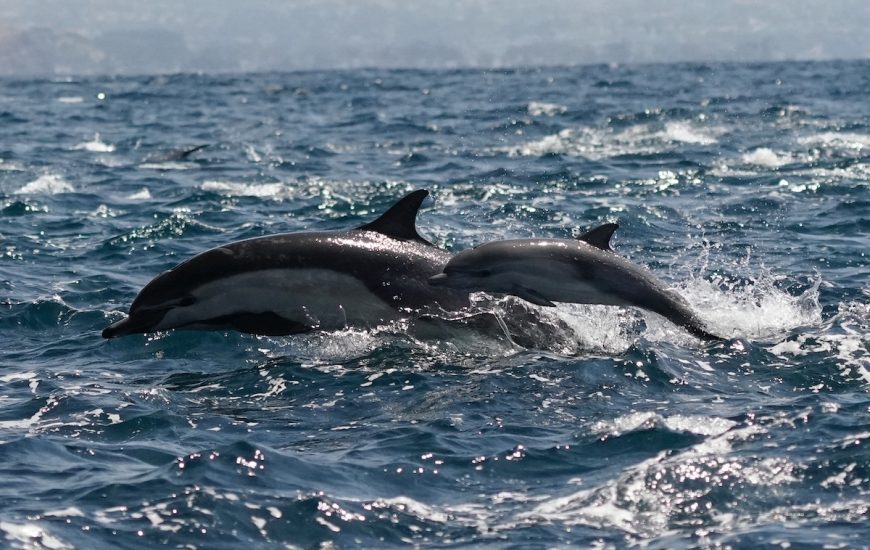
Featured image: Common dolphin and calf swimming wild and free! Credit: Cynthia Fernandez
RELATED:
Learn more about the dolphin hunts in Taiji, Japan
PLEASE SUPPORT THE LEGAL INITIATIVES IN JAPAN BY DONATING TODAY.


Related posts
25 Dolphins Taken Captive as Taiji Hunts Begin
Beyond the Cove: How Captivity Sustains the Hunts