Tekoa at Loro Parque: 25 Years Trapped
 08Dec
08Dec
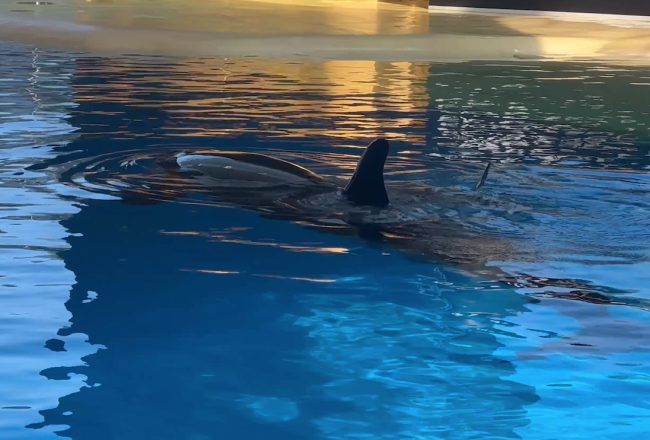
Tekoa at Loro Parque recently turned 25, a milestone that masks a lifetime spent in captivity.
He was born on November 8th, 2000, at SeaWorld Orlando. His father, Tilikum, was captured in Iceland at around two years old. His mother, Taima, was born in captivity and died from stillbirth complications in June 2010. Taima’s mother, Gudrun, was also captured in Iceland, and her father, Kanduke, was taken from British Columbia.
Tekoa spent the first five years of his life at SeaWorld in the United States before being sent to Loro Parque in Tenerife, Spain, on a so-called breeding loan. He was shipped there alongside three other orcas – Skyla, Kohana, and Keto – all of whom have since passed away.
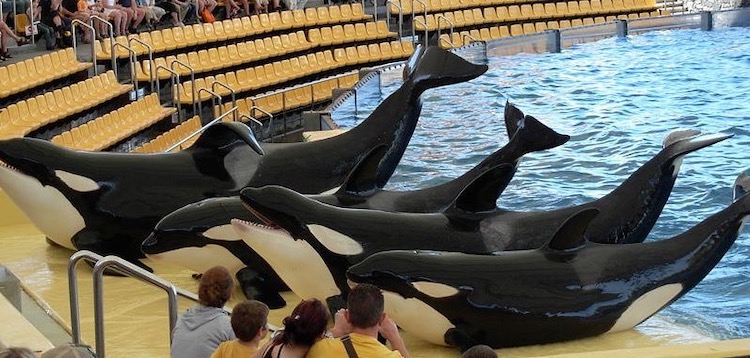
From left to right: Keto, Kohana, Tekoa, and Skyla on the concrete slide-out at Loro Parque´s orca show stadium. Today, Tekoa is the only survivor of the original four orcas sent from SeaWorld in the United States in 2006. Despite overwhelming scientific evidence that orcas belong in the oceans, not performing tricks in tanks, Loro Parque continues to advertise its orca collection as a “must-see” tourist attraction. Credit: Valentin666; Inherently Wild: https://inherentlywild.co.uk
Today, Tekoa lives with Morgan, a once-wild orca believed to have come from a pod off Norway’s coast, as well as Morgan’s young son Teno, and Adán, who was born to Kohana in 2010. But while dolphinariums sometimes refer to these groupings as “pods,” they bear little resemblance to the complex, multi-generational families often seen in nature. In the wild, orcas form lifelong bonds and choose their companions freely. In captivity, that choice is taken away.
Tekoa has endured a quarter of a century behind bars, denied family, freedom, and the space to live as an orca. Built to travel vast distances and hunt with precision, he has never chased live prey or felt the force of an actual ocean wave.
Imagine spending 25 years in a small space with no connection to the outside world, no contact with anything real other than the other trapped beings who share your plight. Life in a concrete theater evokes a kind of imprisonment built for crowds, music, and noise, yet beneath the surface lies a silent, sterile world of walls and echoing emptiness.
Comparing this to a human experience—25 years in a small room without any doors— is not just about physical restriction. It is sensory deprivation, disconnection from nature, and the slow erosion of one’s sense of time and space. The outside world is vivid, dynamic, and ever-changing, but inside, everything is frozen in stillness. That is the kind of world Tekoa, and every other captive orca, is trapped in.
Tekoa’s survival is a testament to his strength, not to the extreme conditions he has been forced to withstand. A birthday cannot erase decades of confinement, nor justify the continued use of orcas as tourist attractions.
On his special day, trainers likely presented Tekoa with a “birthday cake” in front of spectators — a ritual often performed at dolphinariums, as if orcas share our human concept of celebration (though they likely mark meaningful events in their own way in the wild). It is part of the illusion, a way to make the public believe that these intelligent ocean predators belong in an unnatural world of theatrics, music, and show business.

Tekoa, son of world-renowned Tilikum, with the late Keto at Loro Parque in Tenerife, Spain. Since 2006, Tekoa has lost five tank mates: Vicky, Skyla, Ula, Kohana, and Keto. Credit: Helene O’Barry
Tekoa’s monotonous life illustrates the harm caused by confining orcas to concrete tanks. As we mark his 25th year, the question is not how long he can endure but how long we will allow this to continue.
Orcas belong in the ocean, not in man-made stadiums.
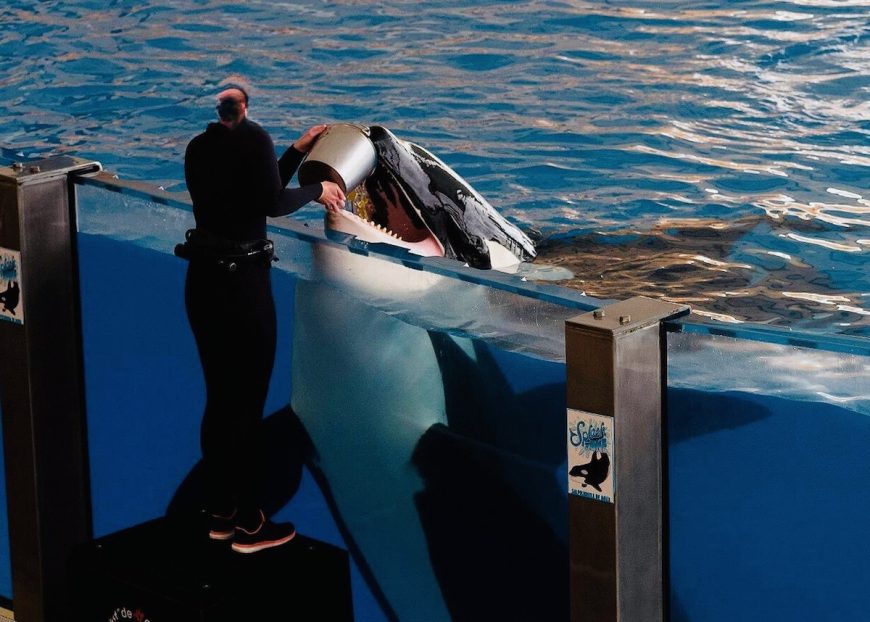
Featured image: In the wild, orcas are apex predators that hunt cooperatively, relying on intelligence, communication, and teamwork to catch their food. In captivity, however, orcas like Tekoa have no choice in how to feed themselves and depend entirely on their trainers, highlighting the unnatural restrictions of life in tanks. Credit: Philip Coburn (provided by Sara Farrell); Inherently Wild

Related posts

Wikie and Keijo: From One Tank to Another?

Wikie and Keijo May be Sent to Loro Parque