The Forgotten Dolphins at Kolmården Zoo
 16Oct
16Oct
In 2022, the Kolmården Zoo in Sweden announced it would be closing its dolphinarium—a decision met with cautious optimism by those of us who have long been advocating for an end to dolphin captivity in Scandinavia. But four years later, the dolphins are still there—confined, performing, and forgotten.
Despite the zoo’s public promise, these intelligent, far-ranging marine mammals remain trapped in concrete tanks, their lives dictated by show schedules and artificial routines.
When we inspected the stadium several years ago, we found dolphins incarcerated in a stark, indoor, chlorinated amphitheater, completely cut off from even the most basic elements of nature. Since the facility, ironically named Marine World, opened in 1969, at least 60 dolphins have perished there.
The most recent death occurred on April 29, 2025. The victim was a 12-year-old female named Pärla, born at Kolmården Zoo in August 2012. According to a Swedish news outlet, she died “unexpectedly and suddenly.” A post-mortem was carried out, but the results have yet to be made public.
Pärla’s story reflects the violent history of the dolphinarium industry. Her mother, Nephele, was captured in the Gulf of Mexico in 1989, sold to the now-closed dolphinarium at Germany’s Hagenbeck Zoo, and later transferred to Kolmården Zoo in 1994. She died a painful death in January 2024 after suffocating on a piece of artificial seaweed—intended as “enrichment”—that became lodged in her throat.
Her father, Pinchi, was captured in Cuba in 1988 and shipped to perform in France and Sweden. He perished in July 2014.

The dolphinarium industry has long used the illusion of a ‘smile’ to convince the public that dolphins are happy in captivity – that they perform because they enjoy it. But this fixed facial expression is not a sign of joy. At Kolmården Zoo, a dolphin peers through the glass, trapped in an artificial world, deprived of space, freedom, and the ability to live as nature intended. There is nothing to smile about in captivity. Credit: Creative Commons Attribution-Share Alike 3.0 Unported license, author: Zoostar
For decades, Kolmården Zoo operated as a breeding facility, supplying young “show-quality” dolphins to other dolphinariums across Europe. But today, European dolphinariums are facing a crisis of their own making: an overpopulation of captive dolphins, with not enough room to house them—even by their own standards. I suspect this surplus is why Kolmården Zoo has failed to relocate its remaining dolphins: other facilities simply have no space left.
A troubling rumor has surfaced that Kolmården Zoo may be considering the sale of its dolphins to facilities in China—a country with no national animal welfare laws to protect them. While unconfirmed, this possibility is being closely monitored by our contacts in Sweden.
We have reached out to Kolmården Zoo to propose a humane alternative: the creation of a seaside sanctuary where the dolphins could retire from performances and finally experience a measure of natural life. So far, the zoo has not responded.
The zoo’s silence is telling. Zoo officials have already made the decision to end dolphin captivity in Sweden permanently. And yet, the dolphins are still performing, and the zoo shows no interest in helping to create a sanctuary for them. Why? One likely reason is industry pressure. The European dolphinarium network is closely connected. These facilities cooperate through breeding exchanges, shared training techniques, and public messaging. If Kolmården Zoo were to support a sea sanctuary, it would disrupt the entire status quo and threaten the industry’s carefully crafted image.
A coastal sanctuary—with seawater, natural stimuli, foraging opportunities, and space to swim—would make every tank in Europe look hopelessly small, bleak, and cruel by comparison. It would expose the truth: that the tanks were never enough. That the performances were never justified. That confinement in show stadiums was never acceptable.
And once the public sees what’s possible, the questions will come:
· Why aren’t other dolphinariums doing this?
· If non-releasable dolphins can live semi-wild lives, why are they still kept in barren concrete tanks?
· What have we been supporting all these years?
The industry fears this reckoning—and so it resists sanctuaries at all costs. Instead of embracing change, dolphinariums pressure one another to maintain a united front. The unspoken rule is simple: Don’t set a new standard. Don’t admit there’s a better way.
And that’s exactly why Kolmården Zoo must act. Not just for its own dolphins, but to break the systemic cover-up that sustains the entire dolphin captivity system.

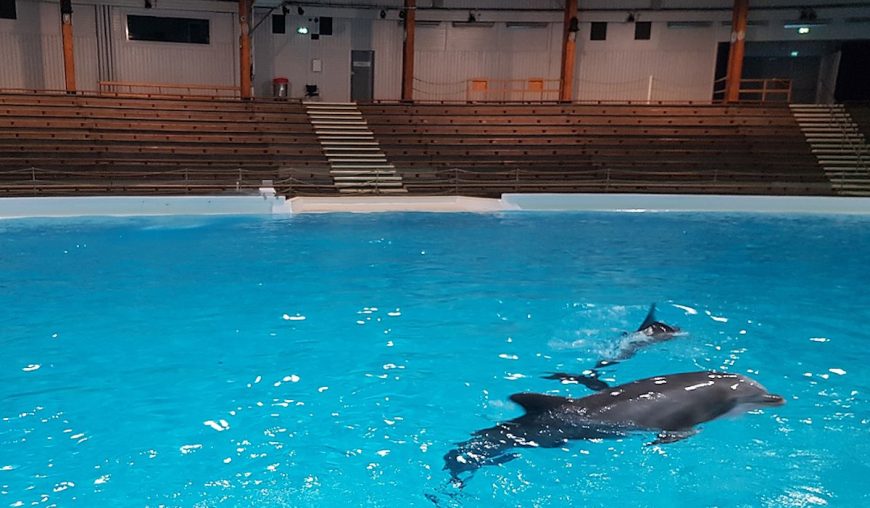
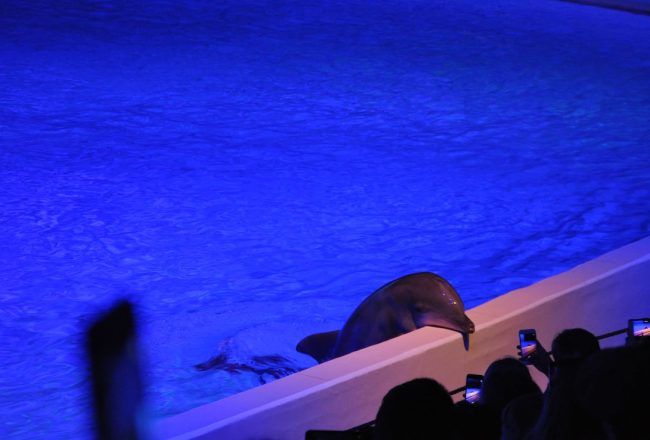
In the cold, artificial light of Kolmården Zoo’s dolphin stadium, two dolphins drift in a world of concrete and steel, stripped of everything that makes a dolphin’s life whole. One leans against the tank wall, a silent expression of resignation in a place designed for control and manipulation. This is the stark reality behind the performances: a sterile, lifeless prison where over 60 dolphins have died. Credit: Creative Commons Attribution-Share Alike 4.0 International license, author: Kigsz
Following Pärla’s death, dolphin shows were briefly suspended. A zoo spokesperson told the Swedish newspaper Aftonbladet:
“The fact that animals are born and die is a natural part of everyday life for us and in nature.”
This attempt to normalize the death of dolphins in sterile, indoor show stadiums—as if dying under artificial lights, far from the sea, is part of any natural life cycle—is deeply misleading. It’s not nature. It’s captivity.
The same spokesperson added:
“It is obviously extra tough for the animal keepers who work closely with the dolphins.”
As if the pain of losing a self-aware, intelligent being is somehow worse for the humans than for the dolphins themselves. This kind of narrative continues to center around human emotions while ignoring the very real suffering of the animals.
Meanwhile, Kolmården Zoo continues to promote and sell seat reservations to dolphin shows on its website. The dolphins perform. Audiences applaud. And the list of the dead grows longer.
Kolmården Zoo—and the dolphinarium industry as a whole—refuses to acknowledge what’s now obvious to members of the public: keeping dolphins in tanks is outdated, unethical, and unjustified.
Dolphin sanctuaries are not only viable—they are urgently needed. These coastal refuges would allow former performing dolphins to feel the rhythms of the ocean, swim in spacious environments, and live out their lives without demands of constant performance.
What’s missing isn’t possibility—it’s the will to change.
Kolmården Zoo has been exploiting dolphins for decades—breeding them, using them for entertainment, and normalizing the idea that it’s acceptable to confine free-ranging, sonar-dependent predators in oppressive show arenas. They have institutionalized the practice of turning one of the ocean’s top predators into performing circus clowns, and dolphins in other European dolphinariums are suffering because of it.
Now that they’ve made the decision to end dolphin captivity, they owe it to the dolphins not to send them to another exploitative dolphin stadium, but to end the cycle of exploitation altogether—by giving them a life outside of the tank and retiring them to a true sanctuary.
They must confront the truth: the era of confining free-ranging marine mammals to concrete tanks should be over. Not tomorrow. Not in another four years. Now.
The dolphins at Kolmården Zoo have waited far too long. It’s time to get them out of those dreary tanks—and home to the sea.
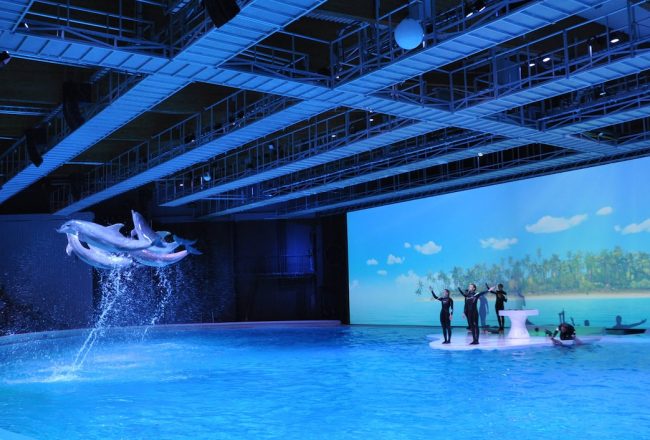
Featured image: Confined and trained to perform for applause, these intelligent and far-ranging beings are reduced to mere entertainers in a barren tank. In between shows, they languish at the surface, with nothing to do and nothing to explore. Kolmården Zoo has profited from dolphin shows for decades, and even now, as it moves toward closing the dolphin stadium, it has yet to acknowledge the undeniable suffering captivity has caused these animals. Credit: Creative Commons Attribution-Share Alike 4.0 International license, author: Kigsz

Related posts
Luna the Dolphin is Dead
Kolmården Zoo: Another Dolphin Dies