
The Manufactured Euphoria of Dolphin Shows
 13Mar
13Mar
Can you feel the excitement – the anticipation that something big is about to happen? That special something that you, privileged as you are, will soon witness?
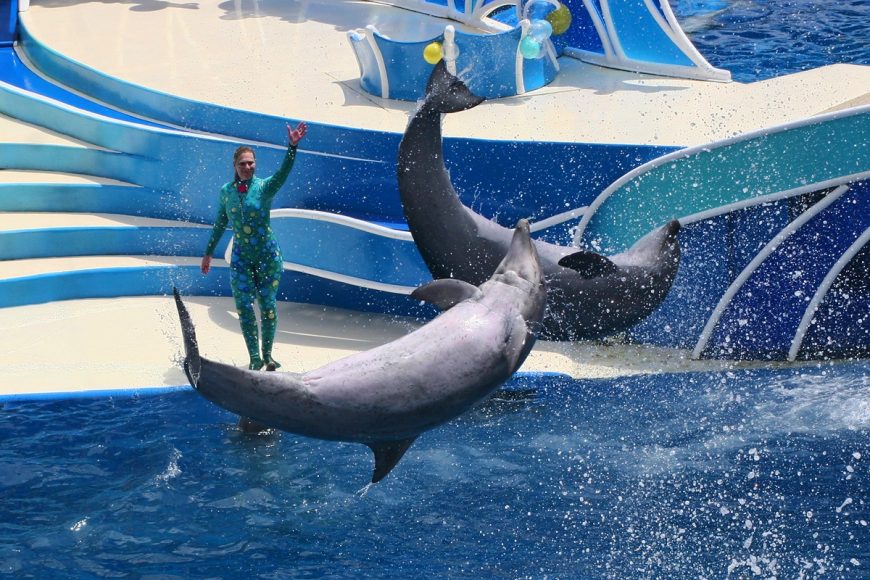
And there they are. Multiple dolphins suddenly approach the beaming trainer, eager to start the show. Unable to stop yourself, you begin to clap, swept away by the euphoria of the moment. Their sleek bodies and incredible agility seem almost mystical. Their very presence – these creatures from the depths of the sea – feels like a gift. That they “chose” to spend their time with you seems priceless.
Speaking of price, you feel compelled to do more, to show your appreciation. Maybe you’ll purchase a season pass as a contribution toward their care. Maybe you’ll buy souvenirs to bring this memory home. Or maybe you’ll just linger after the show for the opportunity to grab a photo, smiling in gratitude alongside their friendly faces.
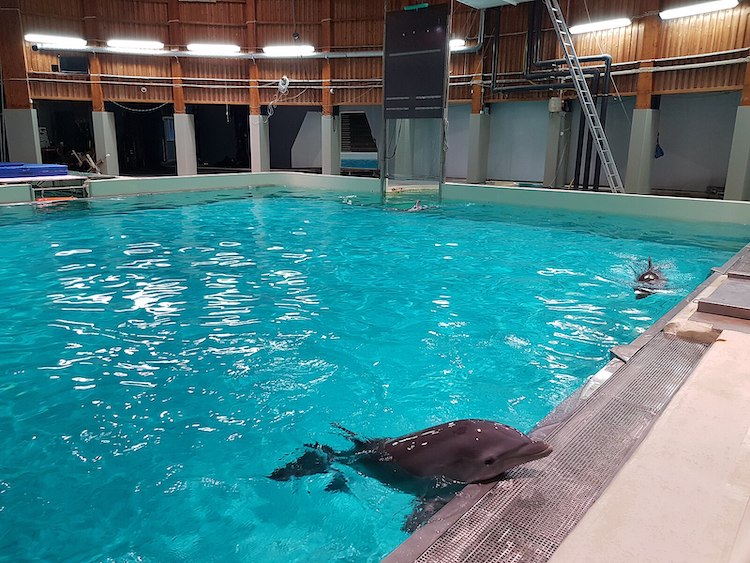
In Kolmården Zoo’s dolphin stadium, two dolphins drift in a world of concrete and steel, stripped of everything that makes a dolphin’s life worth living. Credit: Creative Commons Attribution-Share Alike 4.0 International license, author: Kigsz
Maybe a few hours, or days or even weeks later, from perhaps a place of empathy, or of conscience, a question surfaces:
If dolphins belong in the ocean, why are they in a tank?
And suddenly, you realize you bought into the great lie of the captivity industry. That your “priceless” moment was bought at the expense of their autonomy. That smile on the dolphin’s face? You no longer see it as a reflection of joy, but as a permanent, anatomical feature masking a life of forced imprisonment.
A reality where:
- the dolphins do not leave,
- they swim day after day in the same water, and
- their bodies follow the same path around the same walls.
And where:
- another crowd will arrive,
- another show will begin, and
- another illusion will be cast.
What looked like euphoria now feels like despair.
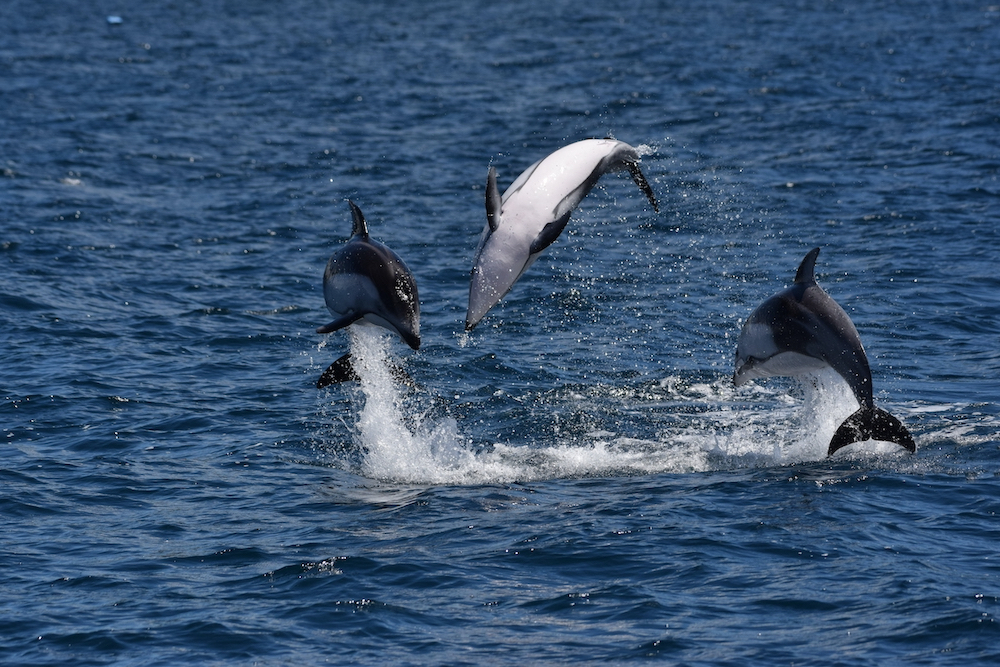
Wild Pacific white-sided dolphins jump and frolic. Credit: Mutsu Bay Dolphin Research
How to crack through the code of “dolphin show” speak
Try watching a captive dolphin show while wearing earbuds or headphones. What do you see in front of you? Chances are, you’ll see the mammals performing tricks, then racing to the front of the stage where trainers will reward them with food. You might see your fellow audience members clapping as if “participating” in the display. Then finally, when the show is over, you might observe the dolphins circling the tank, disengaged with their surroundings. Or possibly “spyhopping” – popping their heads above water – without anyone or anything to interact with.
Next, listen to the script of the dolphin show. What do you hear? Chances are, you’ll hear a combination of such facts as:
- in the wild, dolphins often swim 50-100 miles each day in search of prey,
- they form tight-knit social bonds and live in a complex society, or
- they interact with one another utilizing sophisticated methods of communication
Now put the audio and visual components together.
Do you notice a complete disconnect?
Welcome to the dolphin show.
LEARN MORE about the reality of dolphin captivity, and ways you can help.
Featured image: Blue Horizon Dolphin Show, SeaWorld San Diego (2012), credit: Creative Commons Attribution 2.0 Generic license, author: Curimedia | Photography
