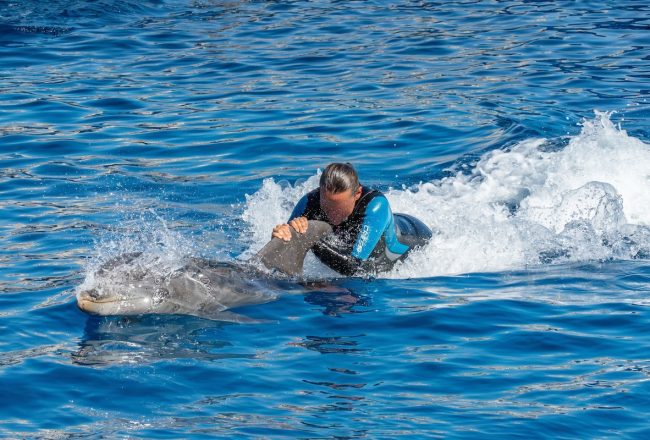
Why Captive Dolphins are Nothing Like Having a Dog
 02Mar
02Mar
I hear this comparison often: “I have a dog at home. My dog is happy, loved, and lives in my house. Isn’t keeping dolphins in captivity the same?”
No. Dogs are domesticated. Dolphins are wild.
Dogs descended from a now-extinct population of gray wolves and evolved alongside humans over thousands of years. Some wolves began living near human settlements, drawn by food scraps. The least fearful were tolerated and stayed. Over time, humans deliberately altered these animals through selective breeding.
This didn’t just affect their behavior; it changed their bodies, too. Humans bred dogs for specific roles and preferences, creating a vast range of sizes, physical builds, coats, and temperaments, from small companions to large working animals. That diversity exists because dogs were molded to fit human lives.
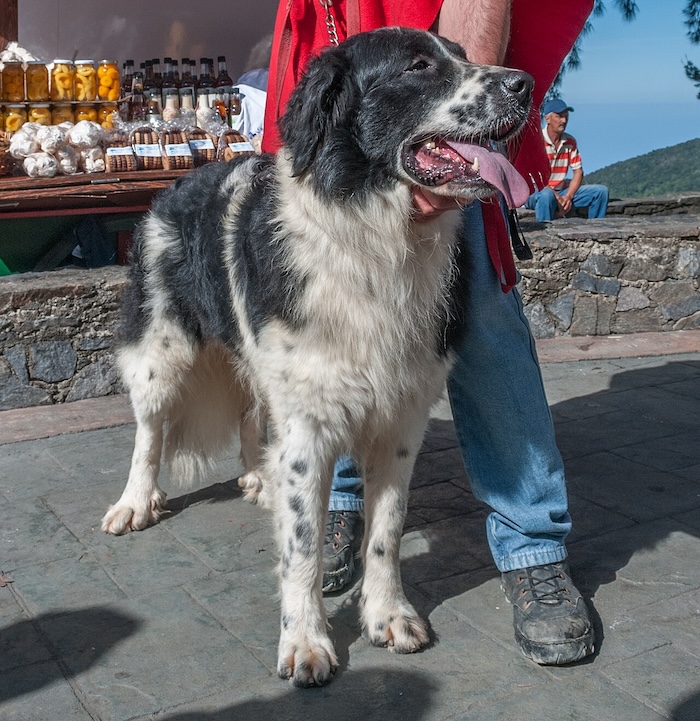
A person and her dog, showing the companionship possible with animals adapted to the human world. Unlike dolphins, dogs were shaped by thousands of years of selective breeding. Licensed under the Creative Commons Attribution-Share Alike 3.0 Unported license, author: Wilfredor
Our relationship with dogs is multi-faceted and complicated. Some dogs live in loving homes and are treated as family members. Others are exploited or abused, used for sport, labor, experimentation, or bred for appearance at the expense of their health. Domestication reshaped dogs to fit human priorities, with outcomes that vary widely for individual animals.
Dolphins, by contrast, have never undergone this transformation. They evolved in the ocean, fully adapted to a vast, complex marine environment. We have played no part in their evolution. Their body shape, intelligence, and physical power have nothing to do with us.
Some argue that long-term captivity could domesticate dolphins. This overlooks how domestication actually occurs. Dogs were not simply wolves kept in homes; they were reshaped over thousands of years through deliberate human selection. Breeding dolphins in captivity will not, over time, create a “mini-dolphin” suited for life in a tank. Captive-born dolphins remain physically and behaviorally identical to their wild counterparts. They are still powerful, streamlined, torpedo-shaped marine mammals built for traveling, diving, foraging, and life in the open ocean. No concrete pool can accommodate who they are.
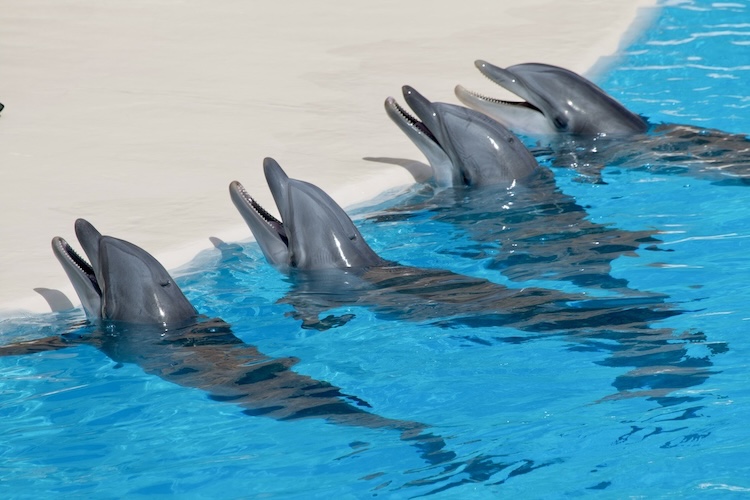
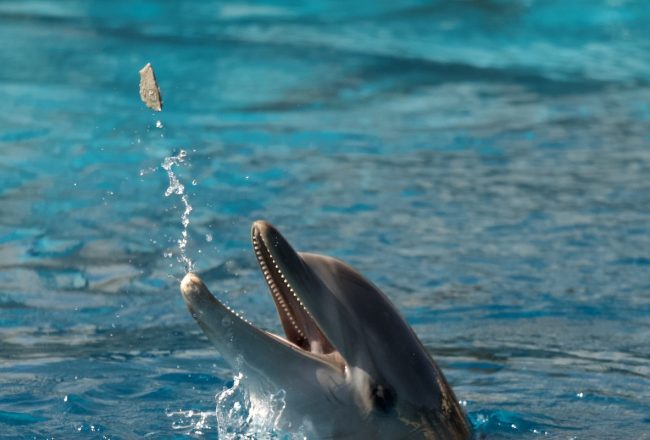
Dolphins trapped in a tank remain powerful, streamlined, and inquisitive marine mammals. They are capable of fast swimming, diving, echolocation, and complex social behaviors, just like their wild counterparts. Suggesting that captive dolphins are domesticated like dogs misunderstands their biology and evolution. Credit: Helene O’Barry
Your dog can go for walks, run, discover new places, and act in ways that suit its capabilities and temperament. A dog trapped in a small cage would rightly be considered a victim of extreme cruelty. Similarly, captive dolphins spend their entire lives in barren concrete tanks, unable to explore, navigate, or raise their young in a natural pod structure. Whether taken from the wild or born in captivity, they are trapped in an environment fundamentally incompatible with their nature. They are trained to perform abnormal behaviors and exist in spaces that cannot meet their physical, social, or psychological needs.
When people compare dolphins to dogs, they are not making a biological argument; they are making an emotional one. The comparison allows dolphins to be mentally placed into a safe, familiar category – animals we keep, love, manage, and control. If dolphins are “like dogs,” captivity can be framed as “care” rather than exploitation.
But dolphins are not pets. Not performers. Not ours to keep. They are forever wild beings who belong in the ocean – not in cramped concrete tanks for human entertainment.
Featured image: WIld dolphins swimming freely, demonstrating the highly evolved social, navigational, and physical behaviors that cannot be replicated in captivity. Licensed under Pixaby content license.

Related posts
Beyond the Cove: How Captivity Sustains the Hunts
Concrete in a Dolphin’s Mouth After Transfer