
About The Hunts
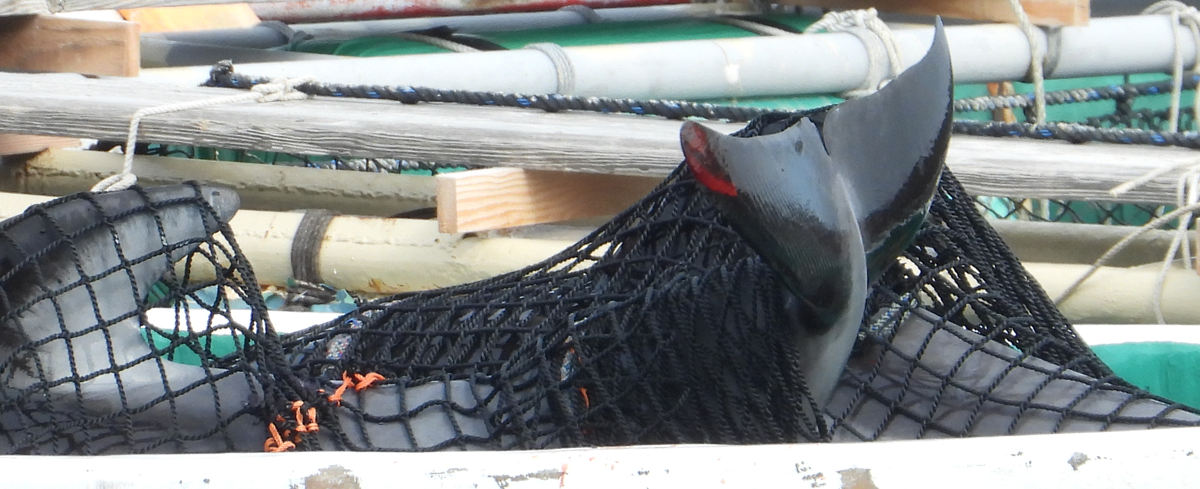
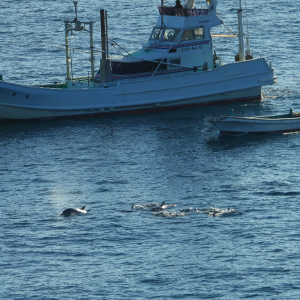
The six month dolphin-hunting season is authorized by the Japan Fisheries Agency and regulated by an annual quota for certain species. The local fishing union organizes and participates in the hunts each year, with support from captive facilities and their trainers to assist in the dolphin selection process.
Who is killing the dolphins?
The capture of dolphins in Taiji is carried out by about 26 fishermen, and the dolphins are legally killed according to permits from the government. Most of the people in the town of Taiji have nothing to do with the hunts, nor do the Japanese people as a whole.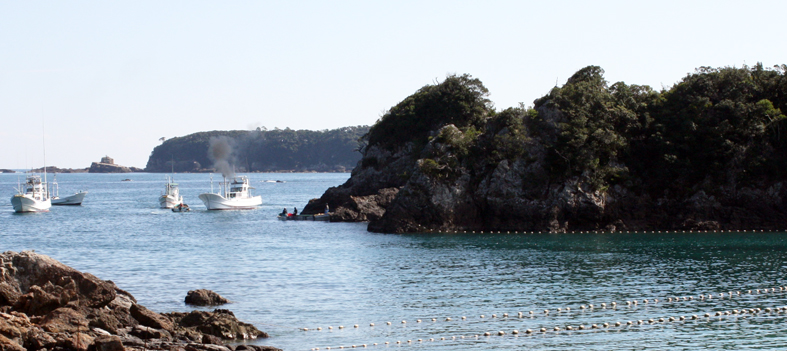
Why are they killing dolphins?
A main stated purpose of the dolphin hunt is to provide dolphin meat to the Japanese people, though it is not widely popular and only a small minority of people in Japan actually eat the meat.
During a meeting with the Taiji fishermen in January 2004, we were also told that in addition to hunting dolphins for their meat and for sale to the dolphinarium industry, they hunt them “as a form of pest control.” Faced with the global issue of overfishing due to unsustainable commercial practices over decades, the fishermen now blame dolphins for their exploitation of ocean resources. As an island nation, Japan has numerous reasons to rely on the sea for its food security, and therefore encourages both the hunting and consumption of wild dolphins.
What is a drive fishery?
The term “drive fishery” derives from the method of driving, or herding dolphins into a designated area for slaughter or selection. We avoid the term “drive fishery,” as it leads many to believe that we are talking about fish rather than large marine mammals. Therefore “dolphin drive hunt” is a more accurate description. The annual dolphin drive hunt in Taiji is one type of coastal whaling conducted in Japan.

Why Dolphin Hunting Should End
The hunting of any species en masse is troubling for environmental reasons. The ocean ecosystem is a carefully balanced network of symbiotic life; removing large numbers of apex predators, such as dolphins, can upset that balance and affect overall marine health. Unlike fish, dolphins are mammals and reproduce slowly, making it more difficult for a population to be restored.
Dolphin Hunting Is Not For Subsistence or Survival
As mentioned earlier, dolphin meat is not a popular food item in Japan, though it is somewhat of a local delicacy in certain regions of the country. It is not considered a main food staple or widely distributed throughout the nation. In addition, serious health concerns have been raised about consuming dolphin or whale meat, due to the toxins that are stored in the fatty tissue of these apex predators. Mercury contamination has been documented in dolphins, similar to tuna.
Dolphin Hunting Is Not Traditional
Taiji is a traditional whaling town, but in a different sense. In the past a single whale would be driven into a net by boats rowed by crews of men. The meat would be shared among the town’s citizens, and only a few whales were hunted each year.
Utilizing a fleet of motorized boats to herd hundreds of dolphins at a time is a newer practice, beginning in the late 1960s. Given that captured dolphins are sold for live captive display indicates that this is a commercial activity, not a traditional subsistence hunting method for community survival.
The hunts are driven by profit from captivity
A single bottlenose dolphin sold to a marine park can generate several thousand dollars for the dolphin hunters, as opposed to several hundred dollars for a slaughtered dolphin’s meat. That captured dolphin will be trained to perform in shows or swim with paying tourists, earning hundreds of thousands for its owners during its lifetime. Ultimately, the hunts are not driven by the need for sustenance, or tradition, but rather the desire to profit from the exploitation of natural resources.
What We Do In Taiji
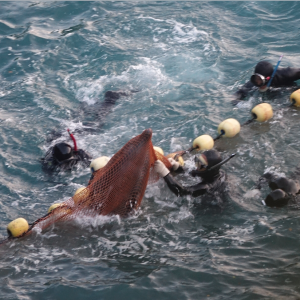
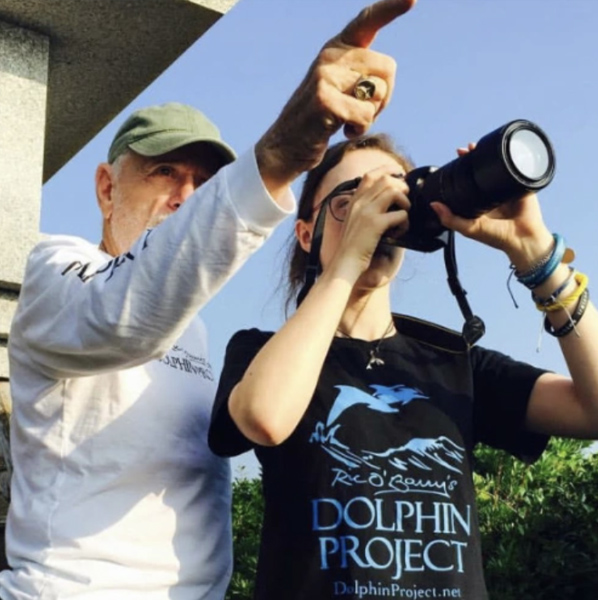
Dolphin Project is the only organization to have had a consistent ground presence in Taiji since 2003, documenting and livestreaming the hunts in hopes of raising awareness of this practice. We also collaborate with various local Japanese activists who are working to end the hunts, including working on several lawsuits which are currently in litigation in Japanese courts.
Lawsuits and Legal Actions
We see legal actions in Japan as one of the best avenues to ending the hunts. We are currently working on cases to defend dolphins, and to defend people who are speaking up for dolphins.
For years, there has been a great effort to conceal the dolphin drive hunts in Taiji, and local media has long spun the story in favor of the hunters. Despite being peaceful and rule-abiding, Dolphin Project Founder/Director Ric O’Barry was detained and put under a deportation order from Japan in February 2016. We took this case to court and won – the verdict representing a huge victory, and one that could very well set a precedent for dolphin advocacy in Japan.
In recent years, we have collaborated with many Japanese activists, including working with Life Investigation Agency (LIA) on lawsuits and legal efforts to defend dolphins. We saw a victory in May 2024, when the Osaka High Court ruled that Taiji’s decision to redact its public records is illegal. This stunning verdict represents a crucial victory for cetacean activists worldwide, as critical information regarding Taiji’s captive dolphin trade had previously been inaccessible.
We are working on a number of other lawsuits and will be sharing more as soon as our lawyers deem appropriate to do so.
Campaigns for Public Awareness
Under the tutelage of Founder/Director Ric O’Barry, Dolphin Project has been on the ground in Taiji since 2003. We document and monitor the captures and slaughters that take place in Taiji, and work with Japanese activists and organizations to increase local support. We operate strictly within Japanese law and further work to educate the people of Japan about the hunts. The photo and video documentation that we collect is also used to expose the hunts to the public, and to educate consumers of the connection between drive hunts and captivity.
We also host Japan Dolphins Day each year on or around September 1st, where advocates all over the world join peaceful demonstrations at Japanese Embassies and Consulates to voice international opposition to the dolphin hunts that occur in Taiji.

Challenges We Face & The Absence of Laws Protecting Dolphins
We are often asked why we don’t intervene to stop the hunters. The hunts are closely guarded by the police and Coast Guard. It is considered a lawful economic activity, and we violate the law if we interfere in the process. If a boat gets too close to the dolphin drive, they are intercepted by Coast Guard vessels. Any effort to steer dolphins out of the area (such as with a noise-making device placed in the water) would be detected and found by the fishermen or the Coast Guard, who would locate and remove it. It is also likely that our Cove Monitors would be arrested and/or deported for any interference in the dolphin hunts.
The hunts are specifically authorized by the Japanese Fisheries Agency at the national level, so there is no local, regional, or national law against the activity. The police maintain a presence to ensure that activists do not interfere with the hunts.
Internationally, there are no laws to protect dolphins and other toothed whale species either. While the International Whaling Commission does exist, it functions as an international governmental organization created by convention, meaning that it is created by agreement among member states. If a country does not join the convention, it does not agree to be bound by the regulations. Japan left the IWC in July of 2019 to resume commercial whaling, so it is no longer subject to the rules set out by the Convention.
Notably, the IWC also has never regulated the class of “small cetaceans,” which include the species targeted in Taiji. Despite several requests over the years and the opinions of some member countries, the body has never adopted hunting regulations on these small cetaceans. Therefore, this body has no ability to impact or legislate the hunts.
The other international mechanism to regulate the hunts is the United Nations Convention on International Trade in Endangered Species of Wild Fauna and Flora (CITES). CITES regulates the trade of animals or animal products based on listed Appendices of species according to extinction threat. All species targeted in Taiji are listed in Appendix II, meaning that international trade is permitted so long as the exporting country’s agency determines that it does not threaten the species’ survival, meaning Japan’s own Fisheries Agency. As with many aspects of international law, national sovereignty plays a major—though at times self-serving—role.
Progress is Being Made
For decades, our team has worked to document and expose the dolphin drive hunts in real time so that people may be moved to take positive action. Thanks to the combined efforts of activists all over the world, measurable progress is being made.
Slaughter and Capture Numbers Decline
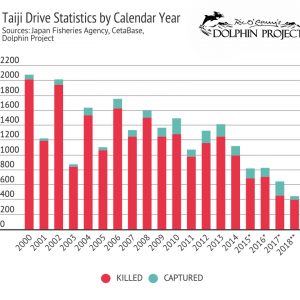
From a record high of about 1,400 dolphin slaughters during the 2007/2008 drive season, the slaughter volume continues to decline. In recent years, the number of captures has also declined, and many of Taiji’s holding pens remain full of wild-caught dolphins. While there are many factors at play, including variations of the Kuroshio current and local climate, we see these lower numbers of captures and slaughters as a positive marker.

Bans on Cetacean Captivity
The captive trade is the biggest economic driver of Taiji’s hunts, as a live dolphin sold to an aquarium brings in a much larger profit than a dead dolphin does for meat. Thus, a crucial factor in ending the dolphin drive hunts is ending the demand for captive dolphins.
In April 2018, South Korea’s Ministry of Environment announced a revised bill on the Protection and Management of Wildlife, banning all imports of dolphins captured in drive hunts.
A growing number of countries and regions around the world have also banned or are currently phasing out dolphin and whale captivity. We look forward to this positive momentum increasing as we continue to educate on the detriments of captivity.
JAZA Bans the Acquisition of Taiji Dolphins
In April 2015, after years of international pressure, the World Association of Zoos and Aquariums (WAZA) suspended the Japanese Association of Zoos and Aquariums (JAZA) as a member of its organization in relation to Taiji’s drive hunts. Only after JAZA banned its members (zoos and aquariums within Japan) from acquiring Taiji-caught dolphins a few months later, they were allowed to rejoin WAZA. The Taiji Whale Museum and five other Japanese aquariums later gave up their JAZA membership to continue acquiring wild-caught dolphins. However, the ban is a victory and set a massive precedent. Presently, around 50 aquariums retain their JAZA membership.

Culture Quandaries
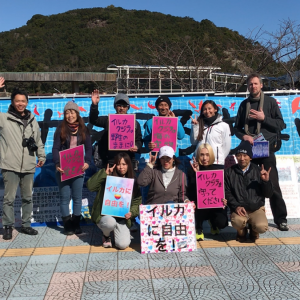
There are a range of complicated issues that surround the hunts, ranging from the ethics of animal consumption to xenophobia. Our mission is centered on ending the mass extermination of dolphins through public awareness, and protecting the health of the species’ populations in the wild. Our organization is adamantly opposed to generalized criticism of the Japanese people or culture as a whole; rather, our emphasis is on the governmental and private decision-makers who enable and profit from the hunts.
Comparisons to Animal Farming
Cows, pigs and other farm animals are also consumed in large numbers in Japan, but animal welfare laws– which do not apply to dolphins–exist to ensure humane slaughter practices. In addition, the hunting of wild species, as opposed to domesticated and farmed animals, generates great concern for species conservation. While none of the dolphin species being killed in Japan’s waters are currently considered endangered, local extinction of populations of these dolphins is quite possible, which would further cause harm to the local marine ecosystem.
Why Boycotts Don't Work, But Empowerment Does
Dolphin Project does not believe that a boycott of Japanese products would be effective or helpful. The number of people within Taiji, to say nothing of the entire nation of Japan, involved in the hunts is incredibly small. Condemning an entire country for the acts of a few is inappropriate.
Many people within Japan are inadequately informed about the hunts, and know virtually nothing of the slaughters. This is by design, as the government actors and hunters have their own agenda, and use culture as a shield to keep the Japanese public from understanding the issue. Our goal is to make the facts known, not to tell people what to believe or what to do. We support the Japanese public’s right to know about the hunts and to make their own decisions about whether to support this action. We believe that change comes from working with people, not against them, and that it is ultimately the people of Japan who hold the power to take action and end the hunts.
LEARN MORE ABOUT THE HUNTS


Understanding the intelligence and complexity of these species, as well as how they behave in the wild helps us understand that their natural ranges in the open ocean are where they thrive. It is vital that we continue to spread awareness about dolphins to help end exploitation in captivity, and to help wild dolphin populations stay healthy!



Education is the first step to moving others to take action. Help spread the word about protecting dolphins!

Explore giving options to help support our mission to protect dolphins from exploitation and slaughter.