
Dolphins Still Waiting at Marineland Antibes
 16Nov
When Marineland Antibes in France closed in January 2025, twelve bottlenose dolphins remained at the park. Eight were transferred to Selwo Marina near Málaga in Spain in July 2026. One of them, Rocky, died in October 2026, leaving seven dolphins at Selwo Marina. Four dolphins are still waiting at Marineland: Sharky, Malou, Nala and Ollie.
Their stories span more than four decades. Sharky was captured in Charlotte Harbor, Florida, in March 1983. After being transferred between several facilities, including Kolmården Zoo in Sweden, she arrived at Marineland in April 2005. Malou was captured in Cuba in 1985 and arrived at Marineland in December 1991. She is the mother of Nala, born at Marineland in June 2010, and Ollie, born there in May 2020.
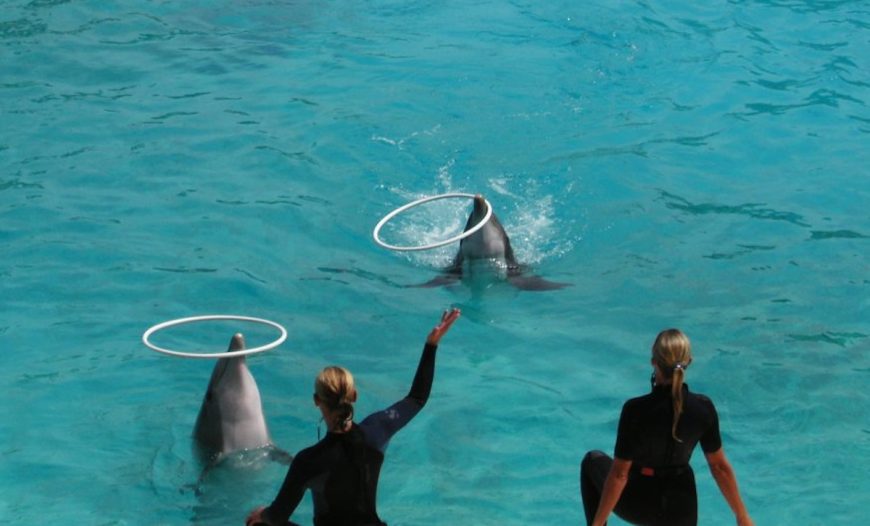
Marineland’s dolphin exhibits were built on the capture of dolphins in the United States, Guatemala and Cuba. According to Cetabase, 23 of the 34 deceased dolphins recorded for Marineland Antibes had been captured from the wild. The others were born at the park or transferred from other facilities.
Marineland and the French authorities who authorized the importation, captive breeding and commercial exploitation of these dolphins have a responsibility to provide the four remaining dolphins with a different future: a real seaside sanctuary. At a sanctuary, they could live in a more natural environment, experience the sea and never again have to perform for visitors.
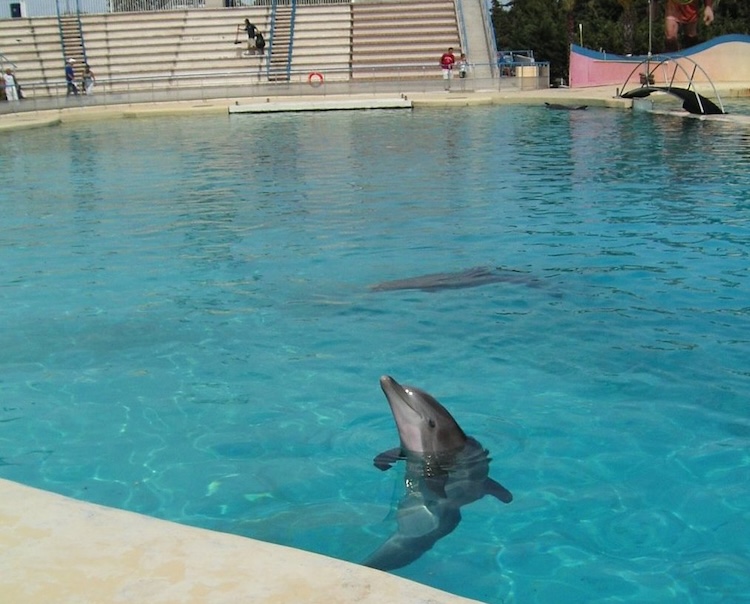
When Marineland Antibes closed in January 2025, eight dolphins were transferred to Selwo Marina in Spain. One of them, Rocky, died there in October 2026. Four dolphins remain at Marineland, still waiting for a different future. Author: Arnaud 25 & Jean Loup P re: Wikimedia Commons
Some will argue that moving captive dolphins to sanctuaries is not realistic. But captive dolphins are already kept in fenced-off areas of the sea. A sanctuary uses this same basic concept for a different purpose: to provide a protected environment where dolphins can live without being exploited for entertainment.
Across Europe, attitudes towards keeping dolphins in captivity are changing, and more dolphinariums are likely to close. The closure of Marineland should have marked a turning point in the way captive dolphins are treated. The industry needs to prepare for this change instead of continuing to move dolphins from one facility to another.
If we keep focusing on what is missing, rather than what can be created, nothing will ever change. The industry must finally take responsibility for creating a different future for dolphins.
Sources used in this blog for historical dolphin records: Cetabase.org
Featured image: Performances at Marineland Antibes were part of an industry built on capturing dolphins in the United States, Guatemala and Cuba. According to Cetabase, 23 of the 34 deceased dolphins recorded for the park had been captured from the wild. Author: Arnaud 25 & Jean Loup P re: Wikimedia Commons

Related posts
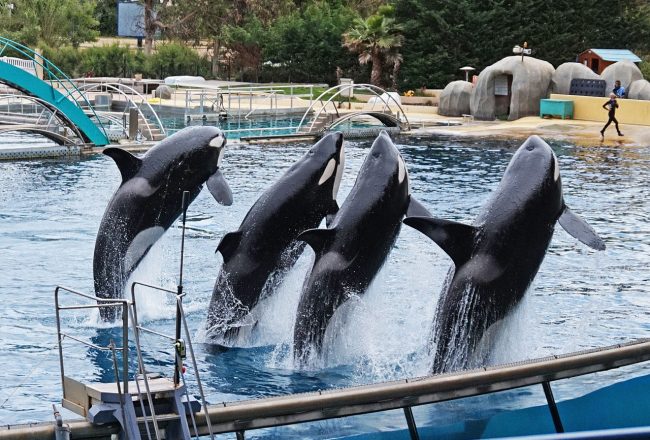
Why Training an Orca to Mimic Human Words Is Cruel

