The Problem with Captive Dolphin Swim Programs
 02Aug
02Aug
Having a close-up encounter with dolphins remains one of the world’s most popular wildlife attractions. The appeal is simple: the encounter is guaranteed. For a price, tourists are promised close contact, a dolphin “kiss,” a handshake, a photograph, and a memory they can take home. There is no waiting, no uncertainty, and no risk of missing out. The dolphins are already there. They cannot leave.
That guarantee is precisely what makes these programs possible, and what makes them ethically troubling.
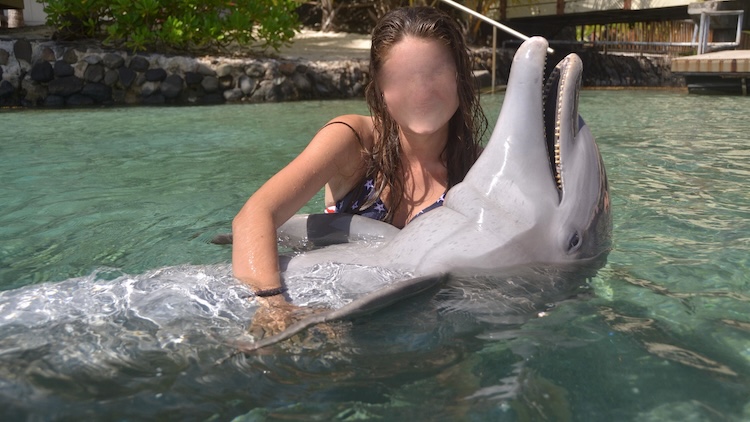
The dolphinarium industry has normalized something that should never have been acceptable: paying for physical access to an intelligent and highly social wild animal. The dolphins don’t choose who touches them, who holds them, or how many times they must repeat the same encounter. This moment is only possible because the dolphins are deprived of the freedom to refuse.
Unlike free-living dolphins, captive dolphins have no choice about whether they want to interact with us. Swim-with-dolphins programs depend on them being available every day, regardless of whether they are tired, stressed, unwell, or simply don’t feel like being around people. They are expected to perform on demand. The dolphins are not there because they have chosen this life. They are confined and trained to respond to trainers’ cues using food rewards. What appears to be cooperation is the result of a training system built to produce dependable and repeatable behaviors for paying tourists. Day after day, they are touched by strangers, photographed with tourists, and used to provide a few minutes of entertainment.
The experience is predictable because it is structured around human expectations. You pay, and the dolphin delivers. That certainty is part of the attraction.
But it comes at the expense of the dolphins’ freedom and autonomy.
Meaningful encounters cannot be manufactured or guaranteed. They require the freedom to choose whether to participate at all. Captive dolphin swim programs erase that freedom entirely. The dolphins cannot refuse the interaction, swim away, or decide they have had enough. None of this would be possible if they were free.
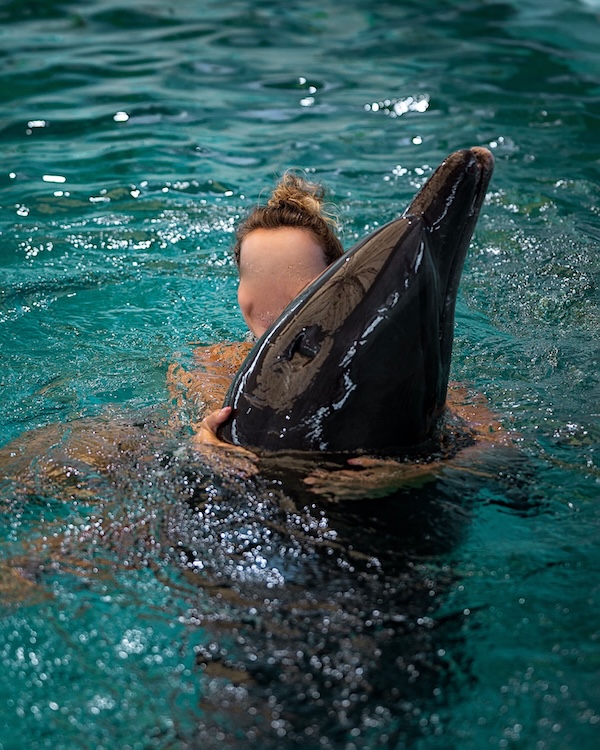
A genuine encounter cannot be bought. When a dolphin is confined, trained, and expected to interact with paying tourists, choice disappears. What remains is not a mutual connection but a commercial transaction where only one side has any say.
The entire captive dolphin industry is built on a false premise: that humans have a right to an encounter with a dolphin. We don’t. Dolphins are not ours to touch, ride, kiss, or turn into holiday attractions. We are not entitled to their attention, their time, or their bodies simply because we are willing to pay for it.
These programs exist solely because intelligent, highly social marine mammals are kept in captivity for human entertainment. What is marketed as a special connection is, in reality, a commercial transaction. The dolphin experience has been turned into a marketable product, sold on a ticket and captured in a souvenir photograph. The dolphin has no say in the transaction.
Dolphins do not exist for our entertainment. They do not belong to us. Nothing gives us the right to take away their freedom just so we can tick an experience off our bucket list.
LEARN MORE about captive dolphin swim programs.
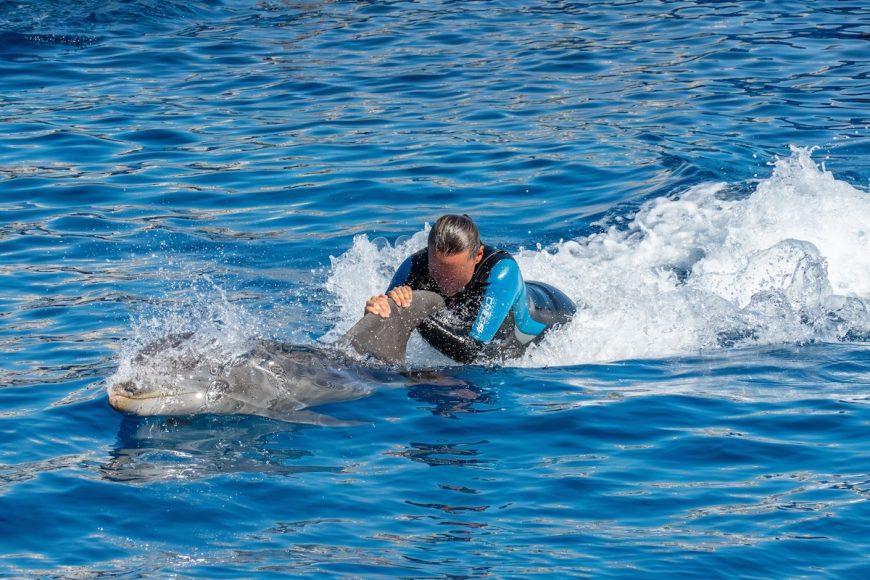
Featured image: When dolphins are used for rides and close-up encounters, they are no longer treated as sentient, wild beings, but as attractions to be touched, handled, and ridden for human amusement. Few practices better illustrate how exploitation has been normalized within the captive dolphin industry.

Related posts
Beyond the Cove: How Captivity Sustains the Hunts
Concrete in a Dolphin’s Mouth After Transfer