
Iberian Orcas: Beyond the Headlines
 20Aug
20Aug
The Iberian orcas are one of the world’s most endangered orca populations, with fewer than 30 individuals remaining. For thousands of years they have been found in the waters off the Iberian Peninsula, with this small, unique community depending almost entirely on Atlantic bluefin tuna for survival. Their future is closely tied to the health of this fishery, making them especially vulnerable to overfishing and increased human activity.
Back in 2020, these remarkable animals found themselves at the center of global headlines after a series of encounters with sailing vessels. Many of these incidents involved damage to boat rudders, and in some cases, the boats even sank. Almost overnight, people around the world began asking the same question: Why are the orcas “attacking” boats?
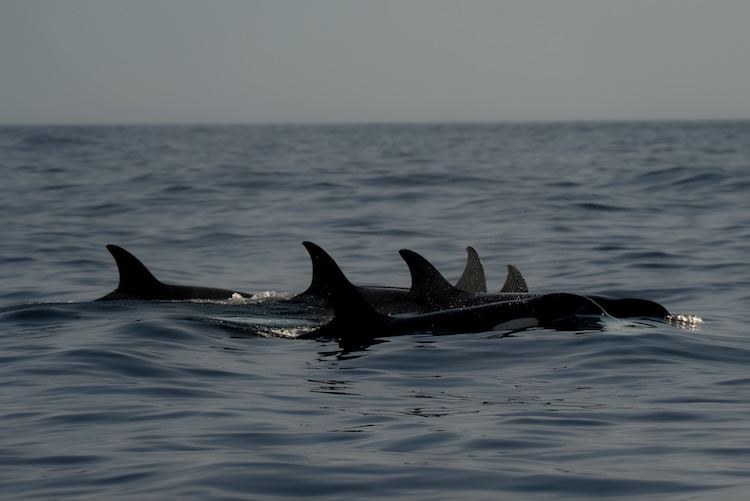
Pictured are some of the Iberian orca females flanked up, including the infamous White Gladis, the orca who supposedly started the interactive behaviour. Here, she is closely followed by her son, Atlas. Credit: Alexandra Johnston, taken under permit (WeWhale Association)
As the encounters increased, so did the theories. Some suggested the behaviour was an act of revenge after traumatic encounters with boats. Others proposed it was retaliation – an orca uprising in response to increasing human pressure. But the truth appears far less sensational.
Researchers believe this is a socially learned behaviour that has spread through the population, likely driven by curiosity and play. Like many other orca behaviours, it appears to have been passed between individuals through social learning – a remarkable example of their intelligence and culture. And while the debate over why continues, another story has received far less attention: As interactions increased, so did the retaliation.
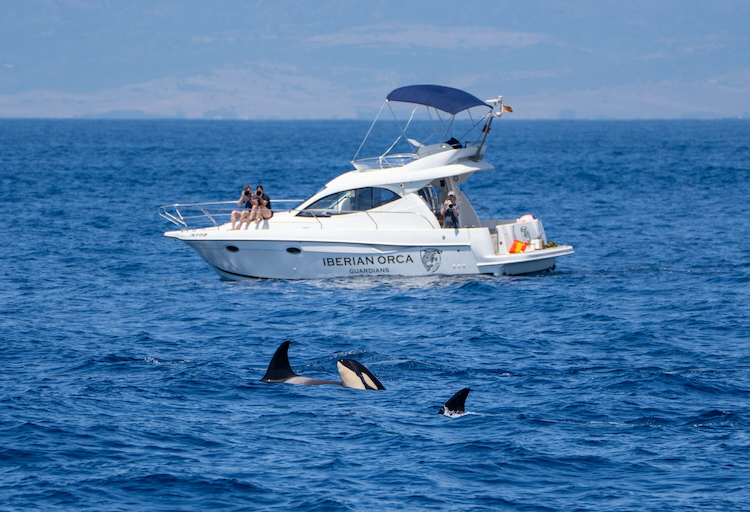
The Iberian Orca Guardians collect photo ID, acoustics and act as a patrol vessel to help monitor and mitigate interactions. Credit: Dr. Ingrid Visser
Some sailors began using firecrackers to scare the animals away. Videos documented sailors discharging firearms into the water. Blades were fitted to rudders in an attempt to injure approaching orcas, and advice circulated online encouraging sailors to reverse their boats when orcas approached. Human responses placed one of the world’s rarest orca populations at even greater risk.
Rather than creating sensational narratives, I believe we should be asking a different question: How can humans and orcas safely coexist in the waters we share?
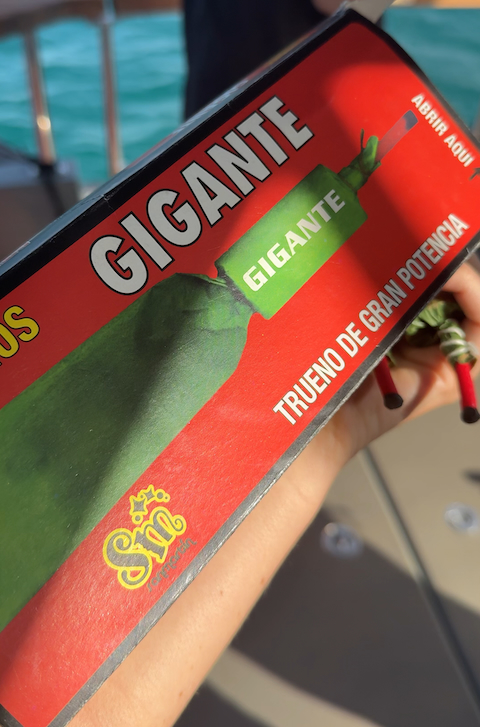
Firecrackers are being illegally used against the orcas by vessel users in attempts to scare the cetaceans away. Credit: Alexandra Johnston, taken under permit (WeWhale Association)
I’ve spent more than a decade working with Dolphin Project, documenting the dolphin hunts in Taiji, Japan. My conservation work has always focused on the relationship and conflict between humans and cetaceans.
Six years ago, shortly after moving to Portugal, I experienced my very first encounter with the Iberian orcas while working as a whale watch guide. During that unforgettable encounter, a tiny calf surfaced beside the group. I managed to photograph him, and that image later became the very first photo identification of a young male now known as Atlas. That single encounter changed everything for me and my involvement in the conservation efforts for the Iberian Orcas began.
Over the years I watched Atlas grow into a bold, endlessly curious ( somewhat mischievous) young orca. I can’t lie – he quickly became my favourite! Like so many young animals, his curiosity seemed boundless, and every season he revealed a little more of his personality. Then, in May 2025, everything changed.
Atlas surfaced alongside the WeWhale and Iberian Orca Guardians patrol vessel with devastating propeller injuries. Deep lacerations stretched from his eye patch almost all the way to his flukes. The wounds were so severe that many of us genuinely didn’t know if he would survive.
We’ll never know exactly what caused those injuries. However, one piece of advice still commonly shared amongst sailors is to reverse their boats when orcas approach. Whether or not this played any role in Atlas’s injuries can never be proven, but I often wonder whether they were the result of two worlds colliding: the fearless curiosity of a young orca meeting the fear and uncertainty of humans trying to protect their vessels. Against the odds, Atlas survived.
Seeing him again this season has been incredibly emotional. His wounds have healed remarkably well, although the deep scars he carries will make him instantly recognisable for the rest of his life. Thankfully, so too will his bold, inquisitive and playful personality.
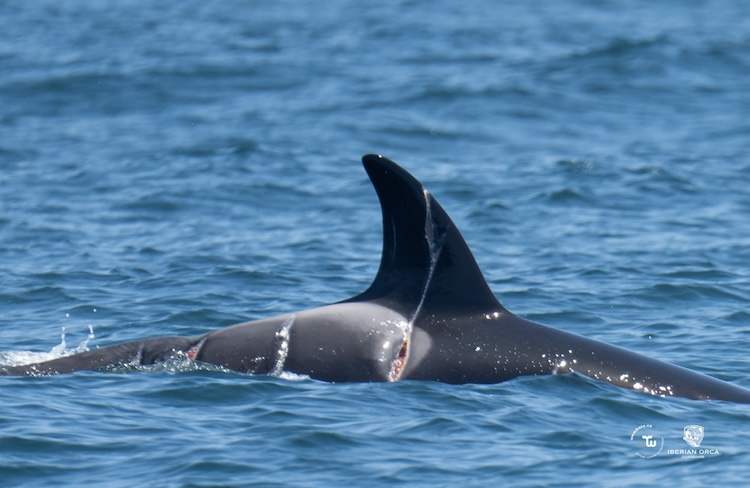
Atlas suffered severe propeller strike wounds from a vessel interaction. Luckily he survived, but he has been left with deep scars. Credit: Sea Shepherd France
“The Iberian orca is the most endangered orca population we know about in the world and at the same time the most misunderstood. I founded Iberian Orca Guardians and the Save The Iberian Orca campaign because I believe these extraordinary beings deserve more than headlines about boat interactions – they deserve a future. Our mission is simple: protect the last Iberian orcas through science, education, and coexistence – showing that humans and orcas don’t have to be enemies but can share the sea with respect.” ~ Janek Andre, Co-Founder, WeWhale and Iberian Orca Guardians
As I became more immersed in their world, one of the greatest privileges has been witnessing the Iberian orcas in their natural environment. Yet every encounter comes with a responsibility to put their welfare first and to share the reality of their lives, challenging the sensational narrative that has portrayed them as “bloodthirsty” or “revenge-seeking.” Since 2024, I’ve been part of the WeWhale and Iberian Orca Guardians team, joining their frontline conservation efforts to monitor and protect the orcas, alert sailors to their presence, document behaviour, collect scientific data and support research aimed at reducing conflict between people and wildlife. Co-founded by Janek André and Sarah Connor, with Dr Cristina Otero Sabio as scientific lead, the project has also built strong relationships with local communities through education, outreach and collaboration, helping people better understand why these critically endangered animals deserve protection.
To date, nine vessels have sunk following these interactions, highlighting that this is a genuine challenge requiring practical solutions for everyone who shares these waters. Across the Iberian Peninsula, researchers, conservationists, sailors, volunteers and local organizations work tirelessly, often with limited funding and resources, to protect both people and orcas. Many of those dedicating their lives to this work urgently need greater government support, stronger collaboration and sustained investment if this population is to have a future.
“As a scientist, I have the privilege of studying these incredible animals in their natural habitat. But with that privilege comes a responsibility: to give them a voice and help change the narrative surrounding them. Iberian orcas have lived in these waters for thousands of years. They belong here. They are part of our history, our culture and our natural heritage, and we simply cannot afford to lose them. The better we understand them, the better we can protect them and ensure they remain part of these waters for generations to come.” ~ Cristina Otero Sabio, Scientific Lead, WeWhale and Iberian Orca Guardians
The Iberian orcas have become known around the world because of sensational headlines, but they deserve to be known for so much more: their intelligence, resilience, family bonds and remarkable culture. Together we refuse to let the “Jaws” narrative become their legacy. If history remembers the Iberian orcas, I hope it isn’t as the whales that interacted with boats, but as the population that inspired people to choose coexistence over conflict, compassion over fear and action over indifference before it was too late.
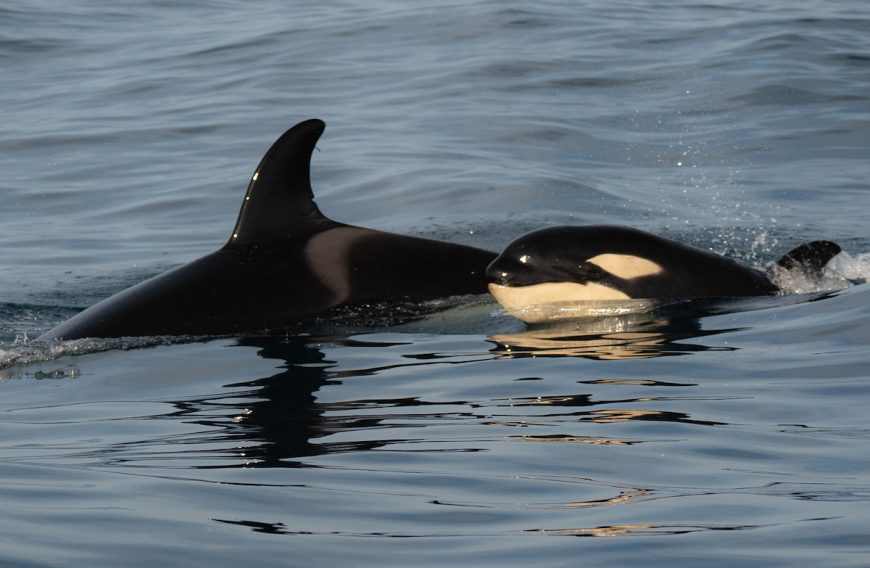
Featured image: Sintra with her new sibling IB57. Credit: Alexandra Johnston taken under permit (WeWhale Association)
