
Why Shutting Down a Dolphinarium is a Victory
 26Aug
26Aug
Closing a dolphinarium can feel like an incomplete victory when the dolphins are simply moved to another facility. They remain in captivity—usually transferred to another tank where the cycle of theatrical shows and captive breeding continues. It’s understandable, then, that people ask: “What’s the point if they’re still not free?”
But every dolphinarium that closes is a real victory. It’s a crucial step forward—one that sends ripples far beyond any single tank.
No, transferring dolphins from one concrete tank to another is not the goal. It’s deeply frustrating to watch them move from one bleak amphitheatre to the next. The ultimate victory would be relocation to spacious ocean sanctuaries—places where dolphins no longer perform, and where their well-being—not profit—is the priority.
But even without that ideal outcome, every closure matters. Each shutdown is a visible crack in an industry built on exploitation and secrecy. It’s one less venue profiting from the confinement of intelligent, social beings. One less stage normalizing the outdated notion that dolphins exist for our entertainment. And each closure sends a powerful message: this exploitative business model is no longer viable.
Public demand is finally declining in some parts of the world. Social attitudes are shifting. And that shift influences more than just other dolphinariums—it shapes policy decisions, tourism trends, and community values worldwide. It also makes it much harder for entrepreneurs to establish new dolphinariums.
Some defenders of captivity argue that animal welfare advocates are harming dolphins by forcing change. They claim that without activist pressure, dolphins could remain in familiar surroundings—avoiding the stress of relocation.
But this argument overlooks a key reality: public sentiment is changing. More and more people are recognizing the inherent suffering of dolphins in captivity. As empathy grows, ticket sales drop, and it’s often this financial decline, not just activism, that drives closures. Several dolphinariums in Europe shut down simply because they were no longer profitable.
Suggesting the public should continue supporting a cruel system just to maintain the status quo is backwards. You can’t ask people to ignore their conscience. Compassion isn’t the problem—it’s the only way forward.
When countries ban dolphin captivity, captive breeding, or imports, they do more than protect local dolphins—they set a new global standard. These legal victories are not symbolic. They dismantle the industry’s infrastructure. With fewer venues, the ability to breed and trade dolphins weakens. Demand declines. The cycle of captivity begins to collapse. And when one country enacts a ban, it puts pressure on others to follow suit.
This is how progress works—country by country, law by law, closure by closure.
We believe more closures are coming in Europe—driven by advocacy, media scrutiny, and shifting public values. Of the roughly 300 dolphins still in captivity across the continent, most were born in tanks and will never be released into the wild. They have no “home” to return to.
That’s why we urgently need ocean sanctuaries—places where dolphins can live in more natural environments while still receiving human care. Just because some dolphins can’t be released doesn’t mean they must live out their lives in barren concrete stadiums. It’s unjust that, after lifetimes of performing for crowds of spectators, their lives remain unchanged. So far, not a single sanctuary in Europe houses dolphins. Why? Because the industry has fought sanctuaries at every turn.
The captive dolphin industry is built on a self-sustaining network. Facilities support and protect one another—and they resist any alternative models that might threaten their survival.
Sanctuaries are that threat.
The moment sanctuaries become a reality in Europe, the contrast becomes undeniable. The public will see—clearly and starkly—that dolphins don’t belong in concrete stadiums. The industry will no longer be able to hide behind outdated justifications.
Sanctuaries challenge the core narrative: that captivity in concrete tanks is necessary, and there are no alternatives. That’s why some European dolphinariums have chosen to sell surplus dolphins to China, where animal welfare laws are nonexistent, rather than support the creation of sanctuaries.
Critics sometimes point to the lack of sanctuaries as a failure of the animal welfare community. But that’s not an accurate reflection of the situation. The multi-billion-dollar dolphinarium industry had decades to build sanctuaries. It never did. Now, we’re trying to clean up their mess. We’re working to build sanctuaries even as the industry resists at every step.
This same industry bred for more dolphins than it can now manage—even by its own standards. Yet it refuses to take responsibility. It won’t acknowledge the suffering, the unethical breeding practices, the surplus, or the urgent need for change. Instead of engaging in solutions, they deny wrongdoing. They ignore ethical alternatives. They continue shipping dolphins off to other stadiums as if they were furniture—out of sight, out of mind.
But these dolphins deserve better.
It’s time for the industry to own the harm it has caused—and to help create a future where non-releasable dolphins can live with quality and dignity.
Real change isn’t just legal or institutional—it’s cultural. Every dolphinarium that closes reflects a shift in values. It sparks conversation, inspires new activism, and pressures lawmakers to act. It normalizes compassion.
Yes, it’s heartbreaking when dolphins aren’t moved to sanctuaries. But even then, each closure is a milestone. It brings us closer to a world where dolphins are no longer seen as performers—but as wild beings with an inherent right to space, respect, and freedom.
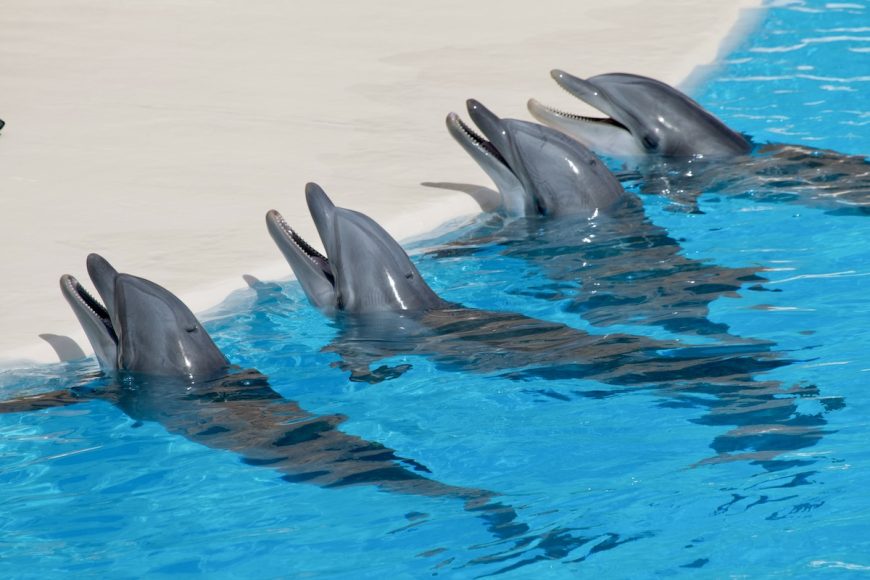
Featured image: At Loro Parque in Tenerife, Spain, dolphins are confined to barren concrete tanks, begging for food and attention. Deprived of freedom and natural stimulation, they endure lives of monotony and boredom―worlds away from the diverse, complex existence they would know in the wild. For decades, the dolphinarium industry has tried to justify this cruelty by framing dolphin shows as conservation and education. But as public awareness grows, so does the support for ethical alternatives―like ocean sanctuaries where former show-dolphins can live out their lives in a more natural setting, free from exploitation. Credit: Helene O’Barry

Related posts
Dolphin Project: 56 Years and Going Strong!

2025: A Year in Review
