Wikie and Keijo: From One Tank to Another?
 05Jun
05Jun
Wikie and her son Keijo, the last two surviving orcas at Marineland of Antibes in France, have been the center of ongoing discussions about their future since the amusement park’s closure in January 2025. Several NGOs in France have spent months urging Marineland and authorities to support the creation of a seaside sanctuary in Europe for them.
Last month, the Minister for Ecological Transition, Mathieu Lefèvre, was quoted in French media as supporting a plan to send the orcas to Loro Parque in Tenerife Spain, where four orcas are currently held in tanks and promoted as tourist attractions. Any transfer would also require approval from Spanish authorities.
Sending Wikie and Keijo to Loro Parque would be a serious animal welfare failure. It represents the easiest way out for the authorities: moving the orcas to another marine park rather than improving their living conditions in a meaningful way. Instead of preparing another transfer between parks, Marineland and the decision makers involved should have focused their resources on creating a sanctuary in Europe for them. If a real commitment had been made, such a refuge could already have been a reality.
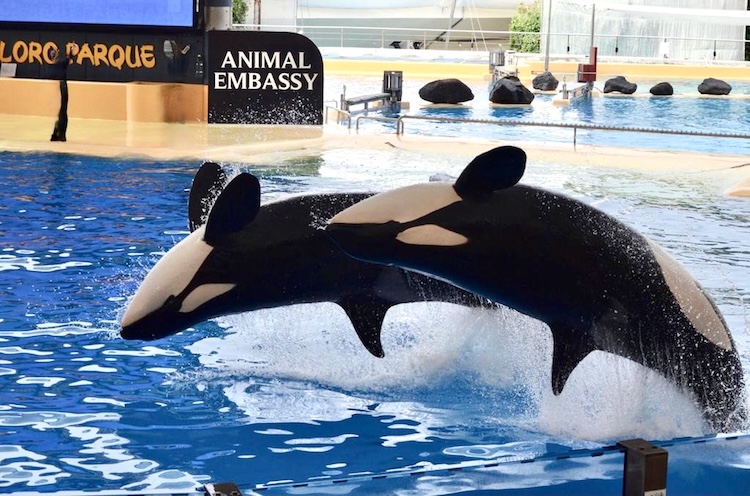
If Wikie and Keijo are sent to Loro Parque, they will not be entering a different future. They will be transferred into the same system of captivity they have already spent their entire lives in: small concrete tanks, daily performances, and captive breeding. Loro Parque presents itself as an “animal embassy,” yet orcas there continue to perform for spectators while the facility maintains a breeding program that perpetuates captivity into the next generation. Credit: Helene O’Barry
The failure to create a refuge for captive orcas stands in stark contrast to the determination once invested in capturing and exploiting orcas for entertainment. Creating a seaside sanctuary for orcas would have required far less effort than was once devoted to their capture and exploitation.
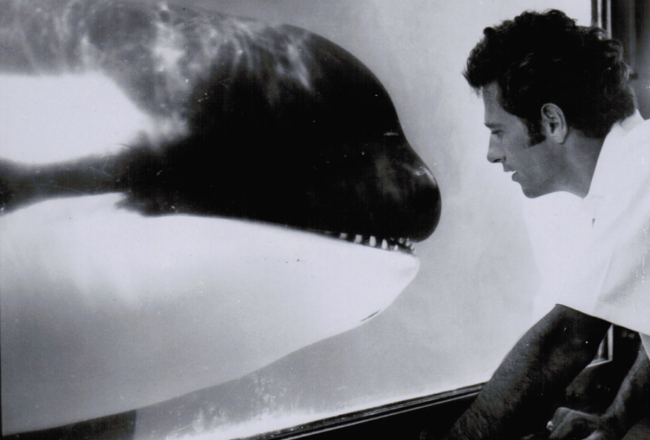
During the 1970s and 1980s, tremendous resolve, coordination, and planning went into capturing Icelandic orcas for the entertainment industry. Entire capture operations were organized around locating pods at sea, using a fishing vessel to attract them into range before deploying nets and lifting equipment to pull selected individuals from the water. The animals were then held in temporary sea enclosures or indoor tanks before transport across continents to aquariums and marine parks.
Young calves were targeted, as they were considered the most desirable: they were easier to train and handle.
More than 50 orcas were taken from Iceland during this period in coordinated procedures. Buyers were secured, permits granted, contracts signed, and transport arranged. Facilities were built, seating installed for audiences, and large sums invested.
Marineland of Antibes was deeply embedded in the international captive orca industry. It imported six Icelandic orcas and became one of the key facilities in Europe participating in this trade. Two of the last four orcas ever captured in Iceland, shortly before capture operations ended permanently, were sent to Marineland with permits granted by French authorities.
In total, France issued permits for the import of one wild-caught orca from the United States, one from Canada and six Icelandic orcas between 1970 and 1990. Six offspring were also born at Marineland under a breeding program authorized by the authorities. Ten orcas have died at Marineland: seven wild-caught and three born in captivity. This number does not include several stillbirths. Marineland’s history reflects the massive scale of France’s involvement in the capture, import, breeding, and commercial exploitation of orcas.
France once devoted enormous resources and expertise to moving orcas from the ocean to concrete tanks. Today, there is no equivalent effort being made to move even two survivors in the opposite direction: from tanks to a coastal sea enclosure where they could live closer to nature, without ever having to perform tricks for humans again.
Loro Parque calls itself an “animal embassy,” words displayed prominently at the orca stadium. Yet the facility continues the same captive display model that has existed for decades: orcas confined to barren tanks, used in daily performances, and bred to sustain the industry. There, Wikie and Keijo would be used in shows and would likely also be incorporated into the facility’s controversial breeding program, potentially creating even more non-releasable orcas destined to be lifelong performers.
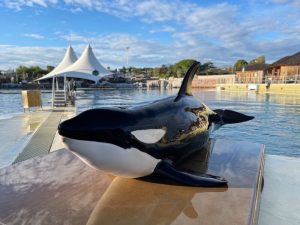
Keijo was born at Marineland in France in 2013 and has spent his entire life inside a concrete stadium. Like his mother Wikie, he has never experienced anything resembling a natural habitat. Keijo cannot be released into the wild, but that does not mean his future must consist of performances and more years in a concrete tank. A coastal ocean sanctuary could offer Wikie and Keijo a more natural life, without shows and crowds of spectators. Credit: Katerina Studios; Inherently Wild: https://inherentlywild.co.uk
Wikie and Keijo are 100 percent Icelandic, descendants of wild-caught whales imported to Europe during the peak of the capture era. Both orcas have spent their entire lives under human control. Keijo is believed to be the result of inbreeding: his mother, Wikie, and his presumed father, Valentin, were paternal half-siblings who shared the same father, the wild-caught Kim II. Release into the wild is impossible. They will remain dependent on human care for the rest of their lives. But that doesn’t mean they should be kept forever in a small concrete stadium. What is at stake is not whether they remain in captivity, but what kind of captivity they endure. That question becomes especially urgent when applied to policy decisions. What is the point of banning the commercial exploitation of orcas in France if its last two orcas are sent to a facility that continues exactly that practice?
After decades of capture, import, and breeding for profit, authorities have not matched the same level of drive for an alternative outcome that puts the long-term welfare of the orcas first. This is not a logistical issue but a question of political will. France has ended orca shows within its own borders, yet Wikie and Keijo may still spend the rest of their lives performing in another country’s tanks. Their role as captive display animals will not end. It will simply be transferred elsewhere.
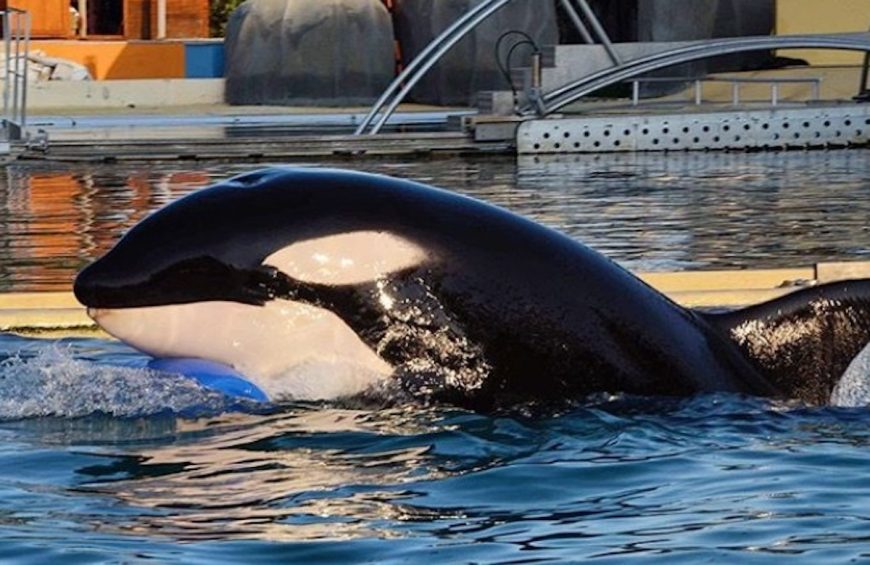
Featured image: Wikie was born at Marineland in France in 2001 to the wild-caught Icelandic orcas Sharkane and Kim II. In 2011, she gave birth to her first calf, a male named Moana, who died in 2023. In 2013, Wikie gave birth to Keijo, the last surviving orca remaining with her at Marineland today. Credit: Credit: @xrealeyes (IG); Inherently Wild: https://inherentlywild.co.uk

Related posts
Freedom Is a Relative Concept
Concrete in a Dolphin’s Mouth After Transfer
