Kolmården Zoo: Another Dolphin Dies
 05Sep
05Sep
Another dolphin has died at Kolmården Zoo in Sweden. His name was Cecil, and he was 42 years old.
According to SVT Nyheter, a Swedish public broadcaster, Cecil was euthanized on August 17, 2026, after being unwell for some time. Norrköpings Tidningar, a Swedish regional newspaper, reports that he had recently suffered an infection. The infection cleared, but Cecil remained in poor health. He began showing signs of aging and had a failing immune system, and a decision was made to end his life.
Cecil was born in May 1984 at SeaWorld Orlando. During his life, he was repeatedly transferred between dolphinariums in the United States and Europe before arriving at Kolmården in 2021.
Cecil’s life and death are part of Kolmården’s troubling history with captive dolphins. Since the dolphinarium opened in 1969, with several wild-caught dolphins from Florida, more than 60 dolphins have reportedly died there, including both wild-caught and captive-born dolphins.
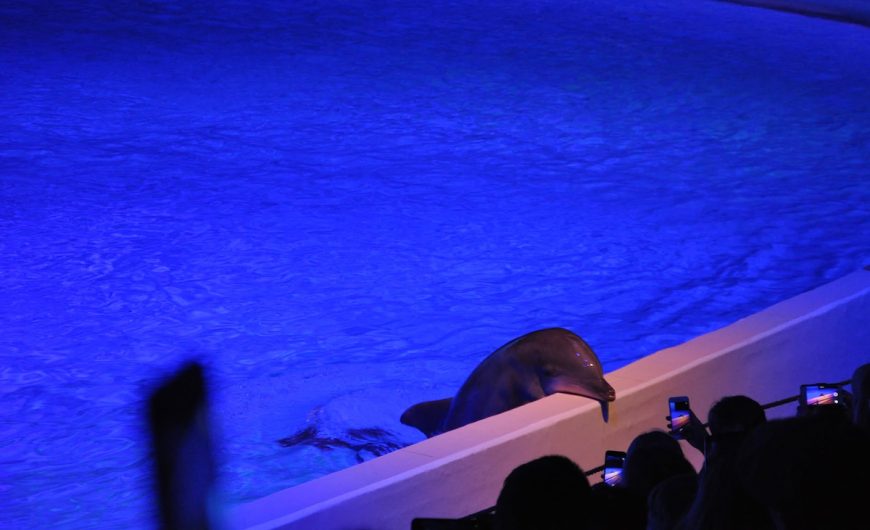
The water at Kolmården Zoo’s dolphinarium has been found to contain Mycobacterium marinum, a bacterium that can infect both animals and humans and causes difficult-to-heal skin lesions. Kolmården believes that all of its dolphins may be more or less affected, and some require treatment and regular examinations. Credit: Helene O’Barry
And now, the dolphins at Kolmården face another serious problem: A bacterium that can infect both animals and humans has been found in the water at the dolphinarium.
The bacterium is Mycobacterium marinum, which spreads through water and causes difficult-to-heal skin lesions. Veterinarian Hampus Hällbom of the Swedish Veterinary Agency says infected dolphins are very likely to experience itching and possibly pain from the lesions. In humans, treatment can require several strong antibiotics for around six months. Infected dolphins are also difficult to treat.
Kolmården believes that all of its dolphins may be more or less affected by the bacterium. Some require treatment and regular examinations.
Now Kolmården faces the problem of how to get rid of the bacterium. The zoo says this would require draining all of the dolphinarium’s pools. Kolmården’s chief veterinarian points out that the dolphins cannot remain on land for an extended period, which is one reason the zoo wants to send them to another facility.
Kolmården does not know how the bacterium entered the dolphinarium, but the zoo has some theories, including the possibility that it came in through the fish used to feed the dolphins. The situation is serious for the dolphins and for the staff who work in the water.
The bacterium was not identified as the cause of Cecil’s death. However, Norrköpings Tidningar reports that a connection cannot be ruled out. Cecil will undergo a necropsy.
In 2022, Kolmården announced that its dolphinarium would be phased out. Four years later, Kolmården has not been able to find new “homes” for the dolphins, and the dolphinarium is still operating.
Kolmården says its main focus is to give the dolphins the “opportunity” to move somewhere else. But where can nine dolphins go when the water they have been living in contains a bacterium that is difficult to eliminate?
When Norrköpings Tidningar asked Kolmården about this, the zoo’s Head of Animals, Research and Education said that there are facilities that could receive the dolphins and keep them in quarantine. She also said that some facilities may offer environmental conditions, such as sunlight, that could have a positive effect.
When SVT asked what will happen to the dolphins, Kolmården said it does not know. SVT also asked Kolmården’s chief veterinarian whether euthanasia might be considered for the remaining dolphins. She acknowledged that this was a question they were aware of, but said the focus was currently on finding another facility for the dolphins.
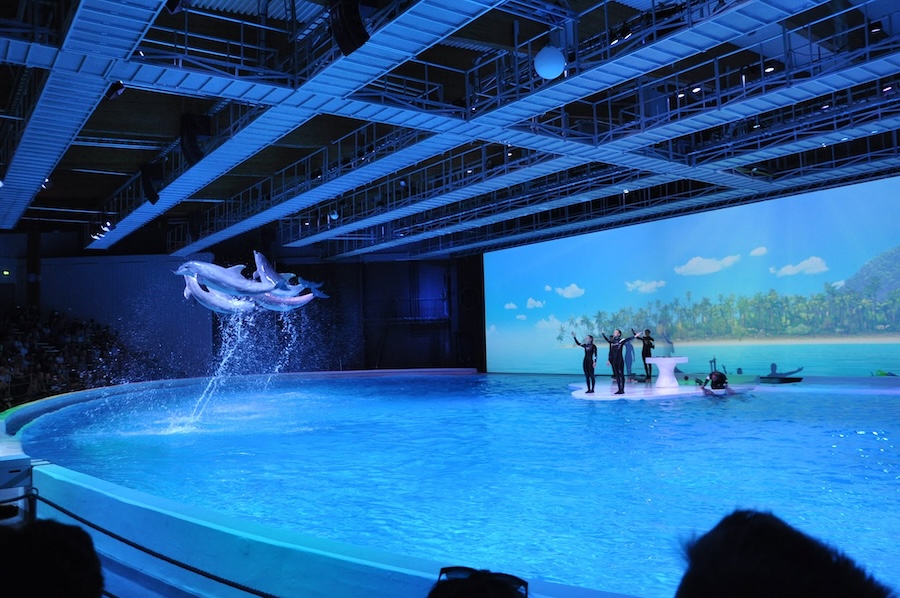
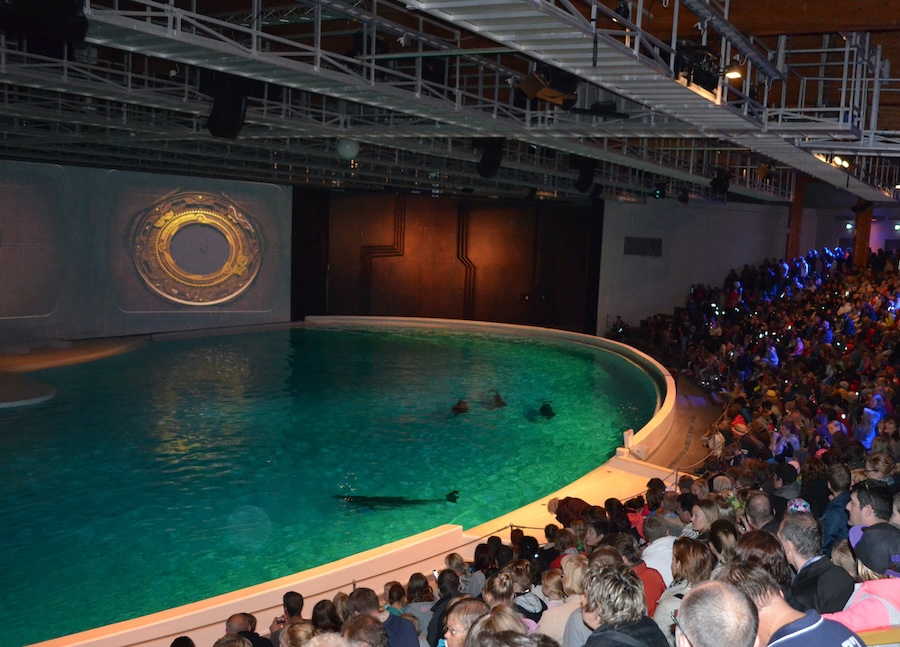
Dolphins performing in Kolmården Zoo’s dolphin theater. The dolphins spend their entire lives inside of a building with a roof over their heads, never experiencing real sunlight. Credit: Djurrättsalliansen/Animal Rights Alliance, Sweden.
Nine dolphins remain at Kolmården. After more than four years of saying the dolphinarium will close, Kolmården still has no clear answer about their future. Now there is another complication: a bacterium in the water that the zoo does not know how to eliminate.
These dolphins are the victims of a system that has exploited them for decades. After years in captivity, they are facing yet another threat in the very water they are forced to live in.
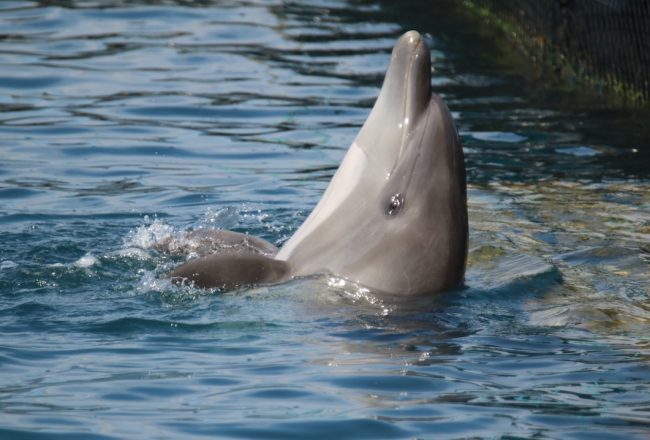
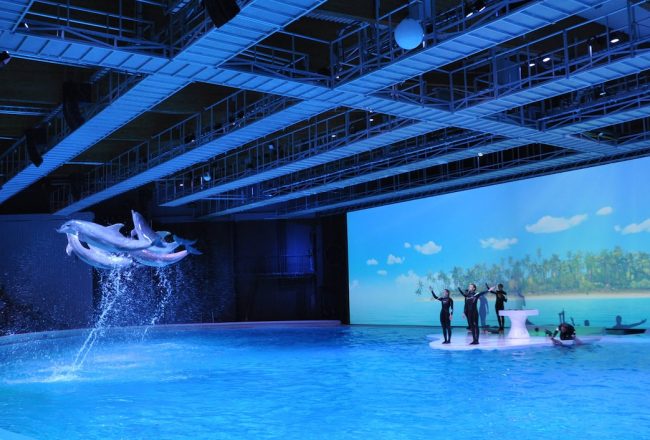
Featured image: Since the dolphinarium opened in 1969, more than 60 dolphins have reportedly died at Kolmården Zoo in Sweden. Several were born as part of the facility’s captive dolphin breeding program, which supplied “show quality” dolphins to other dolphinariums throughout Europe. Credit: Djurrättsalliansen/Animal Rights Alliance, Sweden

Related posts
Luna the Dolphin is Dead
The Forgotten Dolphins at Kolmården Zoo