The Façade of Dolphin Captivity
 11Aug
11Aug
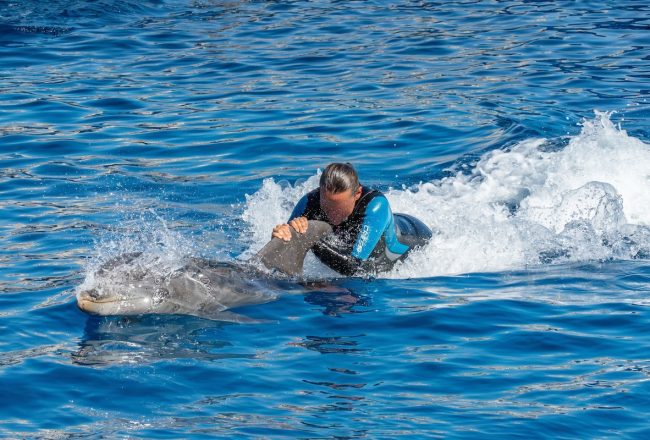
Consider for a moment what emotions the following generates: the sight of a dolphin torpedoing through the water, spinning in open air, or using its powerful flukes to slap and splash. Except that this animal is in a tank, not in the ocean. And these behaviors? They are all part of a reward-based system, where a dolphin follows a trainer’s commands for food.
Patrons visiting aquariums and marine parks will end their day feeling privileged to have experienced something so awe-inspiring. But what was witnessed wasn’t a miracle in nature. Instead, it was part of the commercial exploitation of captive dolphins, which is truly no miracle at all.

Wild-caught bottlenose dolphin transferred to an unknown destination, Taiji, Japan. Credit: DolphinProject.com
Dolphin Project, for over 55 years, has been educating on the realities of dolphin captivity. We have exposed the connection between Taiji, Japan’s brutal drive hunts and captivity (which presumably will re-commence on September 1), documented the cruel conditions under which dolphins endure endless performances for profit, and have created a path forward with the creation of the Umah Lumba Rehabilitation, Release and Retirement Center in Banyuwedang Bay, West Bali, Indonesia – the first and only permanent dolphin rehabilitation, release and retirement facility for formerly performing dolphins.
The good news is that captivity is being banned and/or phased out in many places across the world, including Mexico, Canada, France, Greece and in several states in the United States. But there are still many locations where dolphin captivity is surging, with facilities proudly stating that their dolphin exhibits feature only captive-bred mammals with “no dolphins captured from the wild.”
At first glance this might sound ethical, and maybe even conservation-focused. However, dolphins are big business, with each mammal potentially generating thousands of dollars in revenues from paying patrons. Doesn’t this sound like a conflict of interest? And wouldn’t it make sense that facilities would view this as a strong incentive to breed them?
Unlike rehabilitation programs where dolphins are taught how to detach themselves from an above-the-water world dictated by human commands, and re-learn their innate skills for the purposes of either retirement or release, the goal of captive breeding is to make money. And this leads to generations of dolphins born into a life where they will never experience the open ocean, and will forever be equated to a fiscal value. This is not conservation at all.

Wild and free bottlenose dolphin, Florida. Credit: Gwen McKenna
Alternatives to Captive Exploitation
Just. Say. NO. Instead of spending your hard-earned dollars on captive exploitation, consider the following:
- virtual reality experiences that allow one to “interact” with dolphins without contributing to their harm,
- educational tourism that promotes seeing dolphins and other whales in the wild with responsible tour operators, and
- advocating for their welfare by participating in events such as Empty the Tanks.
The more we learn about dolphins – their intelligence, complex emotional bonds, and social structure – the harder it is to justify keeping them in tanks for our amusement. Instead, let’s permit them the grace to live on their own terms, wild and free.

Related posts
Beyond the Cove: How Captivity Sustains the Hunts
Concrete in a Dolphin’s Mouth After Transfer