Kolmården Zoo: A Dolphin’s 213 Days of Misery
 20Jul
20Jul
A chronically ill dolphin at Kolmården Zoo in Sweden may have been subjected to unnecessary suffering. The Swedish news outlet TV4 News reports that the dolphin underwent 40 blood tests and received antibiotics for 213 days over a ten-month period.
The County Administrative Board found that the treatment led to serious side effects in the dolphin. Another Swedish news outlet, SVT Nyheter, provides further details about the side effects, including effects on the dolphin’s liver and stomach, as well as fungal infections that required additional medication. The Board notes that the dolphin had been ill for many years and had been subjected to various treatments.
The case has resulted in a veterinarian at the zoo being reported to the Veterinary Disciplinary Committee.
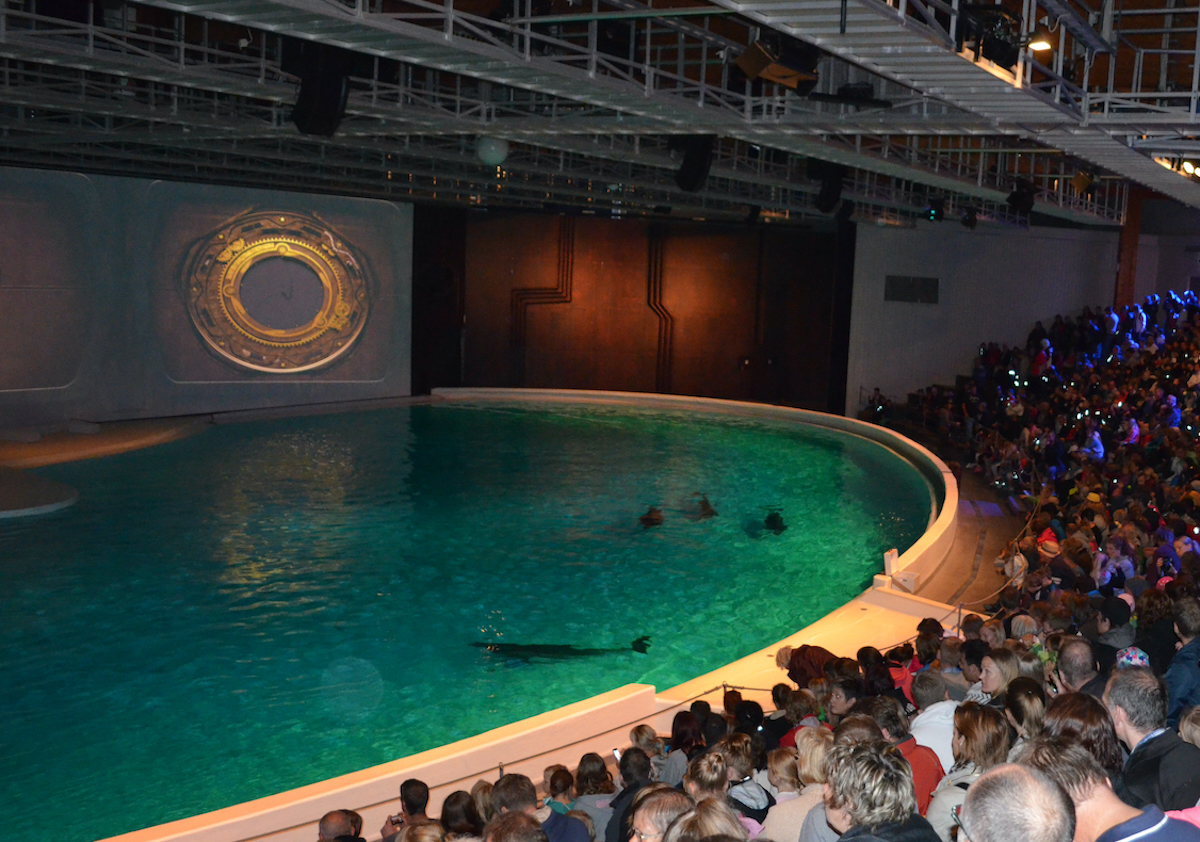
The ten surviving dolphins at Kolmården Zoo in Sweden are confined in a stark indoor amphitheater of concrete and glass, cut off from the natural world. Since the dolphinarium opened in 1969, dozens of dolphins have died there. Credit: Helene O’Barry
According to TV4 News, the County Administrative Board concluded that the treatment should have been revised, that changes to the dolphin’s environment or husbandry should have been implemented, or that the dolphin should have been euthanized on animal welfare grounds.
The TV4 News report does not mention the dolphin by name. Longtime dolphin freedom campaigner Daniel Rolke, Director of the Swedish organization Animalkind, identifies her as Luna. She was born in 2001, and both of her parents were captured from the wild.
“This is yet another tragic example of the problems that arise when dolphins are kept in captivity,” Rolke said. “When an animal is given intensive medical treatment over a long period and authorities question whether it may have suffered unnecessarily, we have to ask what this system is doing to them.”
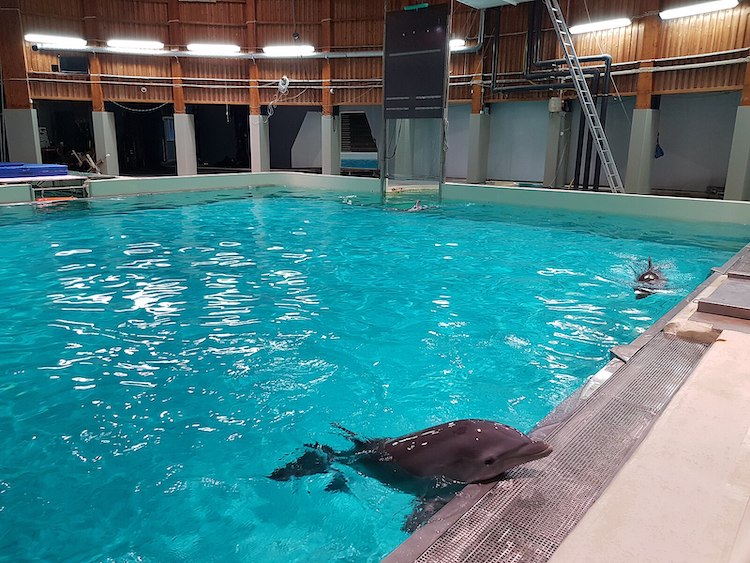
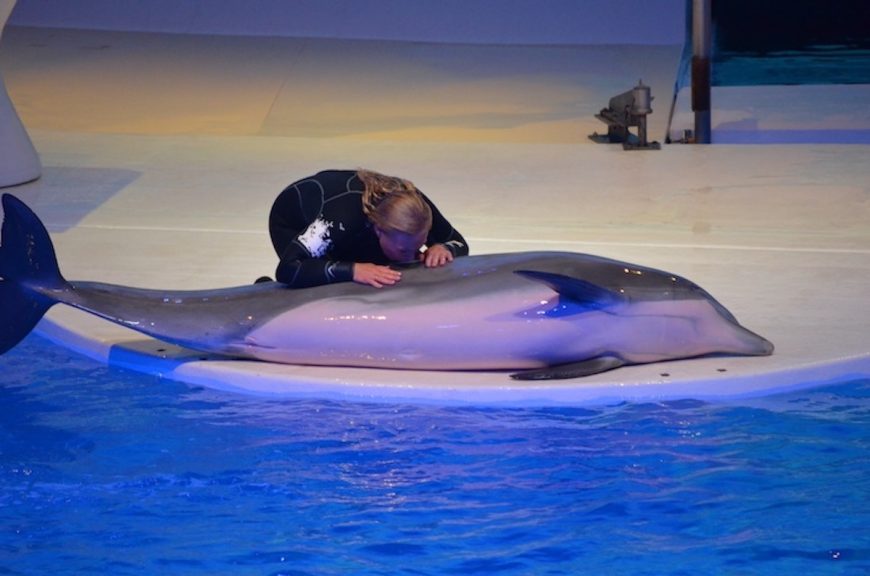
At Kolmården Zoo in Sweden, a chronically ill dolphin reportedly underwent 40 blood tests and 213 days of antibiotic treatment over ten months, raising serious animal welfare concerns. Earlier this year, an official inspection also found deficiencies in animal husbandry following public complaints about possible health issues linked to water quality. Credit: Creative Commons Attribution-Share Alike 4.0 International license, author: Kigsz
This is not the first time concerns have been raised about Kolmården’s dolphinarium. Earlier this year, the Östergötland County Administrative Board carried out an inspection after receiving complaints from the public that the dolphins could be suffering from health problems linked to water quality issues. The Board found deficiencies in animal husbandry, confirming that basic welfare standards were not being met.
Since the dolphinarium opened in 1969, with several wild-caught dolphins from Florida, USA, more than 60 dolphins have reportedly died there, including both wild-caught and captive-born individuals. One dolphin, Nephele, who was captured in the Gulf of Mexico in 1989, died in 2024 after choking on artificial seaweed placed in the tank as enrichment.
Kolmården announced in 2022 that it would close its dolphinarium, yet the dolphins remain confined and performing.
Luna’s story is about more than a failed treatment plan. It is about a dolphin who was born in captivity 25 years ago and has spent her entire life in a stark indoor show stadium. The latest allegations focus on medical care, but they also highlight a much larger question: why are dolphins still being kept in places like this at all?
More than two decades after her birth, Luna is still paying the price for a dolphinarium industry that should have been stopped long ago.
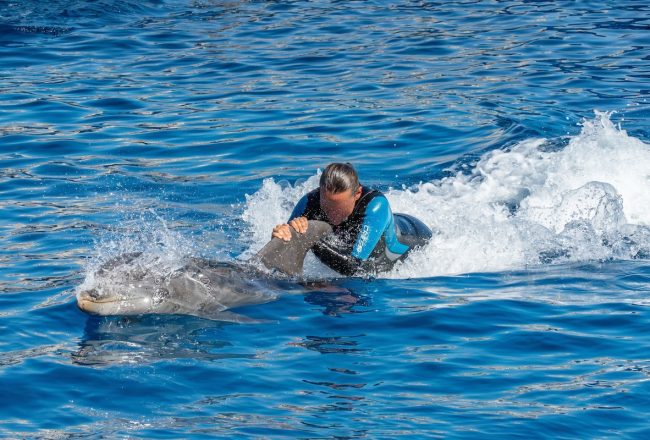
Featured image: For years, Kolmården Zoo operated as a breeding facility, supplying young “show-quality” dolphins to other dolphinariums across Europe. Despite announcing the closure of its dolphinarium in 2022, it has not been able to find new “homes” for the dolphins. Luna’s story highlights the consequences of using dolphins for entertainment: a life shaped by confinement, prolonged illness, and interventions that have raised serious animal welfare concerns. Credit: Helene O’Barry

Related posts
Beyond the Cove: How Captivity Sustains the Hunts
Concrete in a Dolphin’s Mouth After Transfer